
Image by Vocablitz, from Pixabay
Lack Of Disclosure In AI Facial Recognition Arrests Raises Concerns
- Written by Kiara Fabbri Former Tech News Writer
- Fact-Checked by Justyn Newman Former Lead Cybersecurity Editor
In a Rush? Here are the Quick Facts!
- Hundreds arrested using facial recognition technology without awareness of its use.
- Over 1,000 cases revealed police concealed reliance on facial recognition.
- Federal law does not require disclosure of facial recognition technology usage.
An investigation published today by T he Washington Post reveals that hundreds of Americans have been arrested due to facial recognition technology, without ever being informed of its use.
The investigation uncovered more than 1,000 criminal cases across 15 states where police failed to disclose their reliance on the technology, often masking its role by attributing suspect identification to “investigative means” or witnesses.
This lack of transparency raises concerns about fairness, particularly as facial recognition software has been shown to be prone to errors, especially in identifying people of color.
For instance, the case of Robert Williams , a Black man, who reached a settlement with the City of Detroit following his wrongful arrest in 2020 due to faulty facial recognition.
The Post reports that federal tests indicate leading facial recognition software is more likely to misidentify certain groups, including people of color, women, and older individuals.
The reason for this is that their facial features are underrepresented in the data used to train the algorithms. This information comes from Patrick Grother, who leads biometric testing at the National Institute of Standards and Technology in Washington, as reported by The Post.
The Post reported that in Evansville, Indiana, and Pflugerville, Texas, suspects were identified using facial recognition technology, but were never informed of its role in their arrest. Police cited physical features or investigative databases instead, concealing the software’s involvement.
This pattern was common across many departments, with only 30 out of 100 providing relevant records to The Post, reflecting a broader reluctance to disclose the use of facial recognition.
The Post explains that facial recognition software, such as Clearview AI, works by comparing images from crime scenes to vast databases of photos, including mugshots and social media images.
Critics argue that this practice puts innocent people at risk of being falsely implicated in crimes simply because their image appears online, as reported by The Post. Civil rights groups and defense lawyers argue that people have a right to know when they are identified by such technology, especially given its susceptibility to error, notes the Post.
The Post states that in some recent court cases, facial recognition results have been successfully challenged due to questions about the technology’s reliability. However The Post notes that police departments continue to defend their practice of non-disclosure, with some citing investigative privilege as justification.
Despite growing concern, federal law does not currently require police to disclose the use of facial recognition, said The Post. In some states, such as New Jersey, courts have ruled that defendants have the right to know if facial recognition was used in their case.
However, most states have no such requirement, leaving defendants in the dark about the role AI may have played in their arrests, noted The Post.
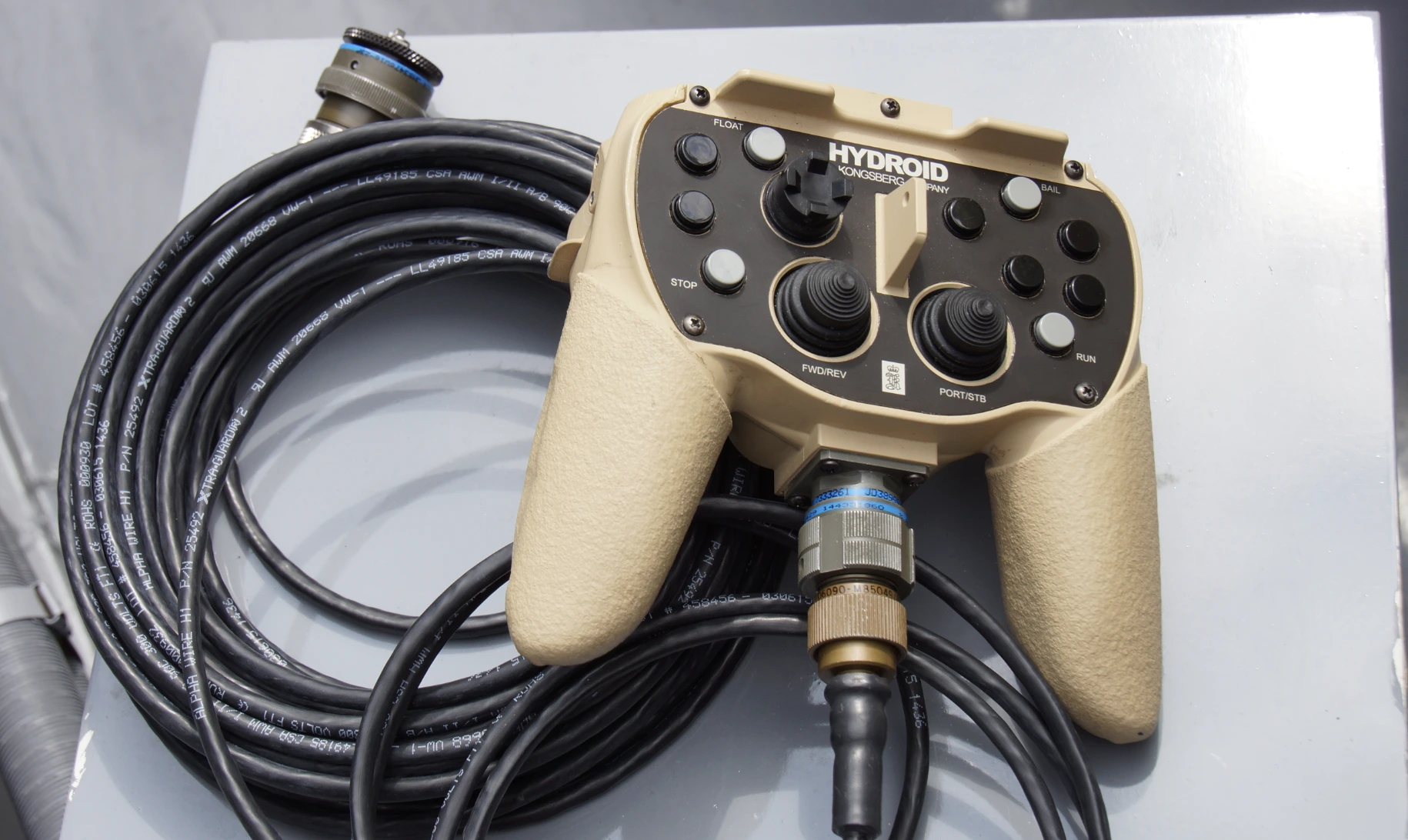
Image by Hunini, from Wikimedia Commons
Video Game-Style Controllers: The US Military’s New Weapon Of Choice
- Written by Kiara Fabbri Former Tech News Writer
- Fact-Checked by Justyn Newman Former Lead Cybersecurity Editor
In a Rush? Here are the Quick Facts!
- Pentagon integrates video game controllers for advanced weapons systems.
- Freedom of Movement Control Unit handsets are now primary control units.
- Xbox controllers have been used by the military for over a decade.
The US military has adopted video-game-style controllers as its preferred weapon control system, reports today WIRED .
After decades of relying on traditional buttons, switches, and toggles, the Pentagon is increasingly utilizing ergonomic controllers familiar to millions of potential recruits, according to WIRED.
Over the past few years, the Defense Department has integrated variants of the Freedom of Movement Control Unit (FMCU) handsets as the primary control units for several advanced weapons systems.
Imagery from the department’s Defense Visual Information Distribution System media hub shows the FMCU being used in various military applications, as noted by WIRED.
Among these systems is the Navy Marine Corps Expeditionary Ship Interdiction System (NMESIS) launcher, designed to fire the new Naval Strike Missile, crucial for the Marine Corps’ strategy in a potential conflict with China in the Indo-Pacific, reports WIRED.
The Army’s Maneuver-Short Range Air Defense (M-SHORAD) system, equipped with FIM-92 Stinger and AGM-114 Hellfire missiles, is also utilizing the FMCU as part of its anti-air capabilities in a possible clash with Russia in Eastern Europe, reports WIRED.
Furthermore, the Air Force employs the FMCU in the MRAP-based Recovery of Air Bases Denied by Ordnance (RADBO) truck, which uses lasers to clear explosive devices, notes WIRED.
The system is also being tested in the Humvee-mounted High Energy Laser-Expeditionary (HELEX) laser weapon system, according to WIRED.
The military’s use of video-game-style controllers isn’t entirely new, as service branches have experimented with commercial off-the-shelf console handsets for operating novel systems, notes WIRED.
For over a decade, the Army and Marine Corps have utilized Xbox controllers for various unmanned vehicles, including ground units and airborne drones, as reported by WIRED.
While the extent of FMCU’s usage in the military remains unclear, the Pentagon confirmed its use in several platforms, including the NMESIS, M-SHORAD, and RADBO systems, reports WIRED.
The adaptability and familiarity of these controls make them likely to persist in military applications, much like the joystick has in aviation since its inception, according to WIRED.
