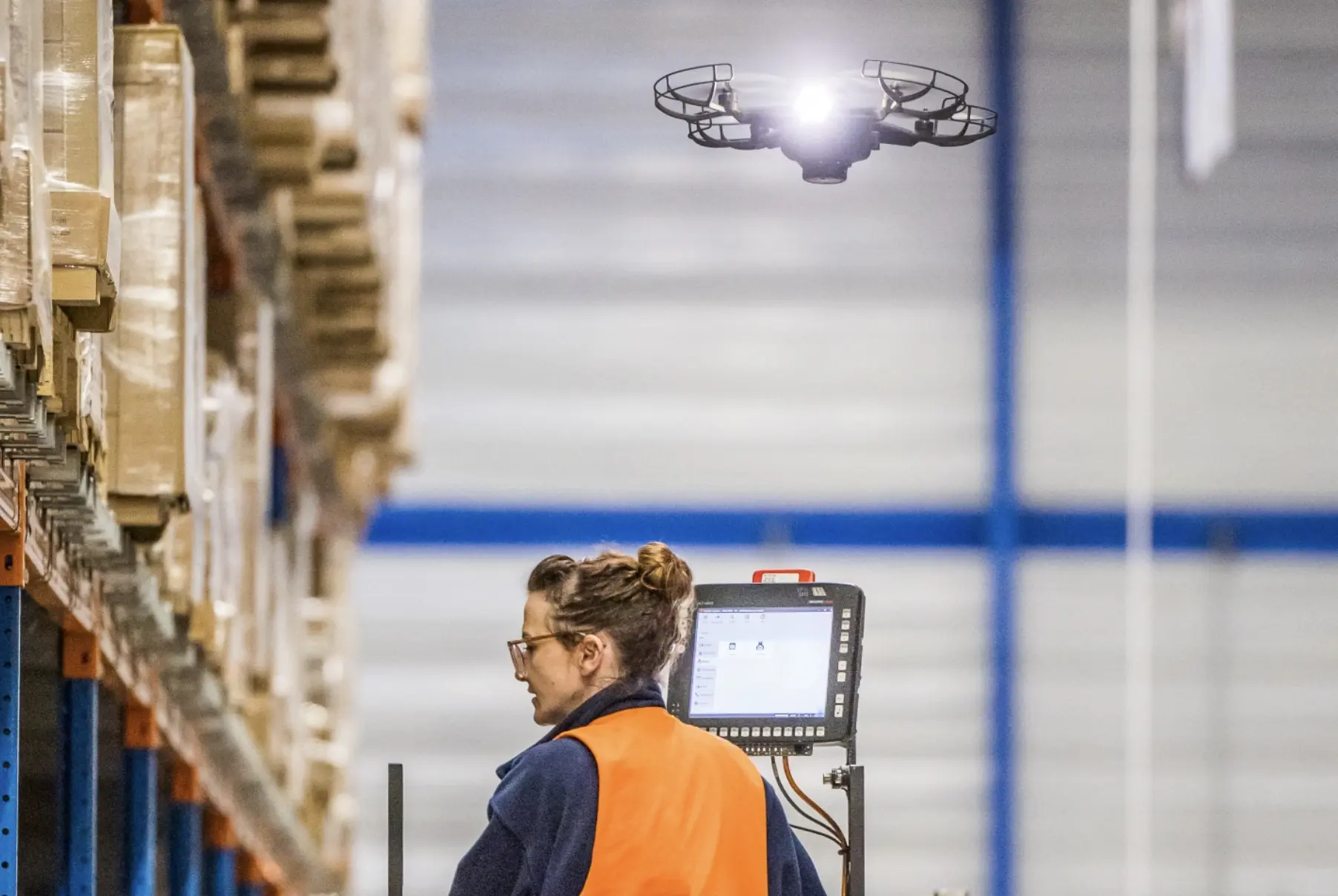
Image from IKEA press release
IKEA Expands Drone Program For Improved Warehouse Efficiency And Employee Well-Being
- Written by Kiara Fabbri Former Tech News Writer
- Fact-Checked by Justyn Newman Former Lead Cybersecurity Editor
IKEA announced today in a press release that it is advancing its warehouse operations with an upgraded AI-powered drone system designed for 24/7 operation.
The enhanced drone system is designed to streamline inventory management by automating stock checks. Using artificial intelligence, the drones identify and photograph product storage locations. Their flights are pre-scheduled to navigate high storage levels, equipped with obstacle detection to prevent collisions.
IKEA expects that the deployment of the drones will improve employee well-being. By automating the physically demanding task of inventory checks, the drones are anticipated to reduce ergonomic strain on employees, allowing them to focus on less demanding tasks.
This shift aims to minimize the risk of repetitive strain injuries associated with manual labor, creating a healthier and safer work environment, and ultimately enhancing job satisfaction and long-term health.
Additionally, the system enables simultaneous inventory checks, eliminating the need to block aisles and disrupt workflow. Employees can respond to real-time data from the drones, improving product accuracy and further reducing their workload.
Building on the success of a pilot program at its Winterslag distribution center in Belgium, IKEA plans to expand its drone-based inventory system to other locations in Europe and North America. The company has already initiated installation at the Perryville distribution center in the United States.
Tommy Niemierowski, Fulfilment Project Implementation Manager at IKEA Belgium, states, “Implementing a solution that truly makes a difference in our warehouses is an immensely rewarding experience. The installation process itself is relatively straightforward, and the reward is monumental, as it facilitates collaboration amongst various stakeholders.”
The company states that future development of the technology will focus on expanding the drones’ capabilities, including inspecting unit loads and racks, as well as improving data analysis and insights.

Image by Daria Nepriakhina, from Unsplash
Study Report Reveals That Interactive Mobile Ads Increase Brand Preference
- Written by Kiara Fabbri Former Tech News Writer
- Fact-Checked by
A new report published yesterday by Digital Turbine, highlights that interactive elements in ads (especially within mobile apps) enhances engagement and brand recall since viewers spend more time with the ad, as found by researchers from Bayes Business School, King’s College Business School, and Vrije Universiteit Amsterdam.
The report also found an increase in purchase intent by allowing users to explore products in a more engaging way. Furthermore, the ads are customized to individual preferences, leading to more relevant messaging.
The study analyzed 250 mobile advertising campaigns involving 270,000 consumers across 24 countries. It identified three key interactive elements—Browse, Sample, and Play—that have been proven to increase brand choice among consumers.
The Play feature integrates brands into game environments. It allows consumers to interact by playing. This approach boosts brand choice by an average of 36.6%. It is especially effective in the entertainment, technology, and retail sectors.
The Browse feature lets users explore products through hotspots or picture galleries. This increases brand choice by an average of 31.5%. It has a strong impact in technology, retail, and entertainment.
The Sample feature uses visual and virtual effects to mimic in-store experiences. This enhances brand choice by an average of 29.6%. It is most effective in fast-food restaurants, consumer packaged goods, and automotives.
The report highlights several challenges with interactive mobile video ads. Seamless integration is essential, as QR codes and links often disrupt user engagement.
Interactive elements may also be underused if users are not already interacting with their device. Placing ads within engaging environments like games was advised.
Additionally, while many interactive ads rely on simple actions like tapping, mobile devices offer more advanced options like swipes, pinches, augmented reality, and artificial intelligence.
Dr. Yusuf Oc, one of the lead researchers of the report, said in a Bayes Business School announcement , “In-app mobile ads cleverly integrate brand messaging into a game or interactive experience […] therefore building into the longer-term memory of key target audiences.”
