
Image by Freepik
Hand Exoskeleton Boosts Pianists’ Skill
- Written by Kiara Fabbri Former Tech News Writer
- Fact-Checked by Justyn Newman Former Lead Cybersecurity Editor
A study published in Science Robotics explores how exposure to fast, complex finger movements using a hand exoskeleton can help expert pianists overcome the plateau commonly known as the “ceiling effect.”
In a Rush? Here are the Quick Facts!
- Passive training with exoskeleton improved performance in both trained and untrained hands.
- The intermanual transfer effect showed improved skills in the untrained hand.
- Neuroplastic changes reorganized motor patterns to enhance complex finger movements.
The ceiling effect happens when, despite extensive training, experts such as musicians or athletes can no longer improve their skills. This new study challenges this limitation by utilizing passive training that involves a robot-generated sensory experience.
Pianists, who had already reached a plateau in their finger speed, were exposed to movements they could not perform on their own using a hand exoskeleton. This exoskeleton moved individual fingers quickly and independently, allowing the participants to experience complex finger motions faster than they could achieve voluntarily.
Remarkably, the researchers report that this exposure helped them play faster and more efficiently, improving their piano performance beyond their prior limits. The passive training technique worked not only on the trained hand but also improved performance in the untrained hand.
The researchers explain that this is known as the “intermanual transfer effect,” where the motor skills learned with one hand transferred to the other, even without direct training of the second hand.
The key takeaway from the study is that passive exposure to unfamiliar movements can lead to neuroplastic changes. These changes reorganize the brain’s motor patterns to enhance skill performance.
While voluntary practice may fail to break the performance plateau, passive exposure to new, complex motions induces changes in how the brain processes and coordinates movements. This provides a solution to the limitation of reaching a skill ceiling.
Unlike previous robotic exoskeletons designed for rehabilitation or daily tasks, this technology focuses on enhancing fine motor skills without being worn on the body. It was specifically designed to provide fast, controlled, and precise finger movements, enabling experts to achieve impossible speeds.
The study’s findings suggest this technology could benefit not only musicians but also individuals with neurological disorders affecting hand dexterity.
This research opens up new possibilities for training in fields that require complex motor skills and could be crucial for applications in both performance enhancement and rehabilitation. The hand exoskeleton holds promise for improving motor learning and restoring capabilities in individuals with motor impairments.
While the study suggests significant advances, future research will be needed to explore the full range of benefits, including the underlying neuroplastic mechanisms that allow for such dramatic skill improvement.
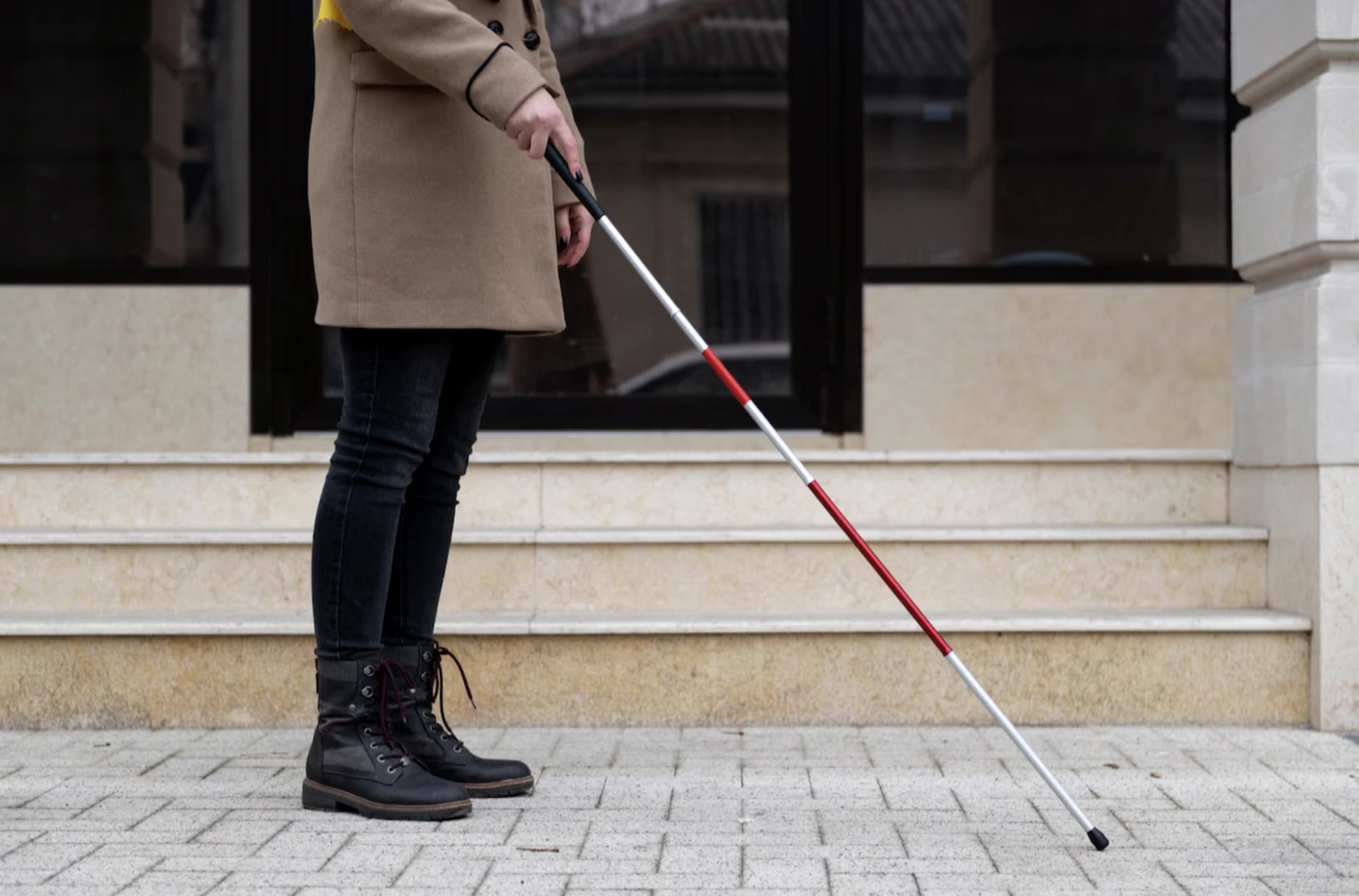
Image by Freepik
New Fly’s Eye-Inspired Smartglasses Offer Vision Correction
- Written by Kiara Fabbri Former Tech News Writer
- Fact-Checked by Justyn Newman Former Lead Cybersecurity Editor
At CES 2025, Soliddd Corp. introduced its SolidddVision smartglasses , a new technology aimed at addressing vision loss caused by macular degeneration.
In a Rush? Here are the Quick Facts!
- The technology uses unique lens arrays to project multiple images onto the retina.
- AI software adjusts images, improving vision clarity for individuals with macular degeneration.
- Clinical trials show a 50% improvement in reading ability for some patients.
The device is designed to offer a potential solution for individuals experiencing central vision impairment, a condition affecting millions globally.
The smartglasses feature a unique optical system that projects multiple images to the retina using a specialized lens array. This lens, which resembles a fly’s eye, directs separate images to undamaged areas of the retina, allowing the brain to combine them into a single, focused image.
This process, called stereopsis, enables users to experience a more natural visual field, despite the presence of macular degeneration.
Soliddd’s technology, which has been in development for over a decade, uses parallel-ray light field optics and AI software to deliver this correction. The device captures video through two forward-facing cameras, while two inward-facing cameras track the user’s gaze and map the eye’s interior for precise fitting and adjustment.
The software then processes the images, addressing optical issues like chromatic aberration, and sends the adjusted visuals to displays behind the lenses.
In beta testing, the SolidddVision smartglasses have shown promise in improving the visual acuity of patients with macular degeneration. A clinical study conducted by the Lighthouse Guild demonstrated improvements in reading ability among participants, with many showing a 50% or greater improvement in vision.
The technology has received support from medical professionals in the field, including ophthalmologists and vision rehabilitation specialists, who have observed positive outcomes in user trials. While the product is still in its beta phase, the company aims to bring the device to market following additional patient testing in 2025.
Megan Lisenby, one of the participants who tested the glasses, stated , “Since the age of 19, I’ve lived with a black, empty smudge in the center of my vision due to central cone dystrophy. When I tried the SolidddVision technology, for the first time in almost 30 years, that smudge disappeared and was replaced by an actual image.”
