
Image by Drazen Zigic, from Freepik
Hackers Use Neptune RAT to Spy, Steal, and Wipe Victim Computers
- Written by Kiara Fabbri Former Tech News Writer
- Fact-Checked by Sarah Frazier Former Content Manager
A dangerous new version of Neptune RAT, a powerful Remote Access Trojan (RAT), has been discovered by cybersecurity researchers at CYFIRMA . This malware can steal passwords, hijack cryptocurrency transactions, spy on victims in real time, and even destroy Windows systems.
In a rush? Here are the quick facts:
- It steals passwords from 270+ apps, including Chrome and Brave.
- The malware swaps crypto wallet addresses to hijack transactions.
- It disables antivirus software and corrupts system files to avoid detection.
The malware is being spread on GitHub, Telegram, and YouTube, often advertised as the “Most Advanced RAT.” Attackers use PowerShell commands to download and execute the malware.
Attackers use a harmful script located on catbox.moe to perform silent downloads and executions. The victim’s AppData folder receives Neptune RAT installation which establishes remote server connections that give attackers complete control of infected machines.
The Neptune RAT poses a significant threat because it includes a range of capabilities. It’s able to steal passwords and extract login information from over 270 applications — including popular web browsers like Chrome, Opera, and Brave.
It also functions as a crypto clipper, replacing copied cryptocurrency wallet addresses with the attacker’s own to hijack transactions. In more extreme cases, it operates as ransomware, encrypting files and demanding Bitcoin payments for their release.
The malware can even monitor the victim’s screen in real time, and in severe attacks, it can corrupt the Master Boot Record (MBR), making the system unbootable. It also disables antivirus software upon installation to avoid detection.
Neptune RAT remains hidden through code obfuscation methods. These include Arabic text and emojis, which makes it harder for researchers to analyze its programming. Additionally, the malware includes anti-virtual machine protection, which activates shutdown procedures when it detects analysis activities.
According to CYFIRMA, malware’s creator, who goes by the name “Mason Team,” has uploaded demonstrations on YouTube and offers a free version of Neptune RAT on GitHub. The research reports that the developer claims to be a Moscow-born coder currently residing in Saudi Arabia, with public Discord and YouTube activity linked to the malware’s development.
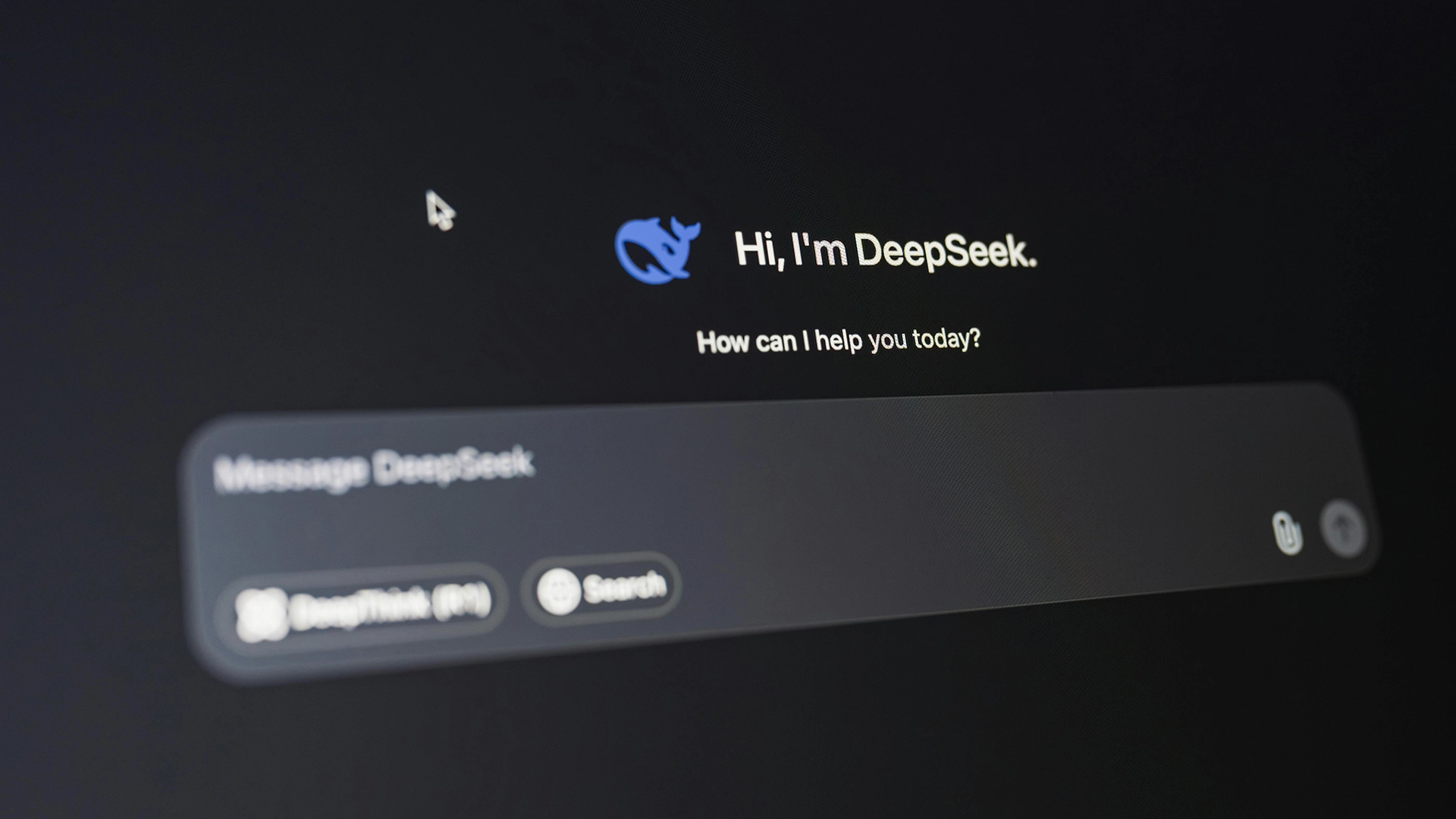
Image by Matheus Bertelli, from Pexels
DeepSeek’s AI Learns To Think For Itself
- Written by Kiara Fabbri Former Tech News Writer
- Fact-Checked by Sarah Frazier Former Content Manager
Chinese startup DeepSeek, in partnership with Tsinghua University, says it has developed a smarter way to help artificial intelligence models think better and faster, without needing huge computers or expensive resources.
In a rush? Here are the quick facts:
- DeepSeek created a self-improving AI using Self-Principled Critique Tuning (SPCT).
- SPCT teaches AI to judge its own work using self-generated rules.
- The method boosts performance without massive computing power.
The breakthrough comes from a new technique called Self-Principled Critique Tuning (SPCT). SPCT is different from simply making AI models larger to improve performance – SPCT does not require a lot of energy and computing power to teach the AI to judge its own work using a set of self-created rules.
The way that it works is via a built-in “judge” which verifies that the AI response both adheres to its internal reasoning rules, and appears suitable for human output. When the AI provides a solid response it receives positive feedback, which helps it improve its ability to answer similar questions in future instances.
DeepSeek implements this method as part of its DeepSeek-GRM system which stands for Generative Reward Modeling. GRM operates differently from traditional methods because it performs parallel checks to enhance both accuracy and consistency.
“We propose Self-Principled Critique Tuning (SPCT) to foster scalable reward generation behaviors,” the researchers wrote in their paper . “SPCT enables [the model] to adaptively posit principles and critiques based on the input query and responses, leading to better outcome rewards.”
With this system, DeepSeek claims its AI can now perform better than competitors like Google’s Gemini, Meta’s Llama, and OpenAI’s GPT-4o, especially when it comes to complex tasks like reasoning or decision-making, as noted by Euronews .
Importantly, DeepSeek says it plans to release these new tools as open-source software, though no release date has been shared.
