
Image by Asterfolio, from Unsplash
Hackers Exploit WhatsApp In New Phishing Campaign
- Written by Kiara Fabbri Former Tech News Writer
- Fact-Checked by Justyn Newman Former Lead Cybersecurity Editor
A Russian hacking group, Star Blizzard, has been targeting WhatsApp accounts for compromise, Microsoft Threat Intelligence reported on January 16. This marks a shift in the group’s tactics, with Microsoft noting it as the first instance of Star Blizzard adopting a new access vector, diverging from their established methods.
In a Rush? Here are the Quick Facts!
- Star Blizzard used WhatsApp for the first time in a spear-phishing campaign.
- The attack impersonated a U.S. official and targeted Ukraine-related organizations.
- Victims unknowingly gave hackers access to WhatsApp via malicious QR codes.
In November 2024, Microsoft Threat Intelligence detected a significant shift in the tactics of “Star Blizzard,” a Russian hacking group known for targeting government officials, diplomats, and NGOs.
The group introduced a new phishing method, using WhatsApp as an access point, marking a departure from their traditional strategies. The attack began with a spear-phishing email impersonating a U.S. government official.
It invited targets to join a WhatsApp group purportedly focused on supporting Ukrainian NGOs. The email included a QR code, claimed to link users to the group, but deliberately malfunctioned to prompt recipients to respond.
Once the targets replied, they received another email with a shortened URL that led to a fraudulent webpage resembling WhatsApp’s legitimate site.
Here, victims were asked to scan a QR code to join the group. Instead, this code granted the hackers access to victims’ WhatsApp accounts by exploiting the platform’s account linking system. Using browser plugins, Star Blizzard could exfiltrate sensitive messages.
Star Blizzard, previously known for targeting journalists and civil society organizations, adapted to operational disruptions. Since 2023, the group has employed spear-phishing campaigns to steal information and disrupt activities, as noted on the Microsoft report.
Microsoft and the U.S. Department of Justice took down over 180 phishing domains linked to the group in October 2024. Despite these efforts, the hackers quickly transitioned to new domains and methods.
This recent campaign, which concluded by late November, underscores the group’s persistence and adaptability. It also highlights the evolving cybersecurity challenges organizations face.
To mitigate such risks, Microsoft advises using tools like Defender for Endpoint, enabling anti-phishing measures, tamper protection, and real-time cloud-delivered antivirus updates. Organizations should also train employees to recognize phishing attempts, particularly those involving links or QR codes.
For enhanced security, experts recommend verifying suspicious emails by contacting the sender through trusted channels and using safe browsing practices.
This incident reinforces the importance of proactive cybersecurity measures as threat actors develop new ways to breach defenses, turning even commonly used tools like WhatsApp into potential attack vectors.
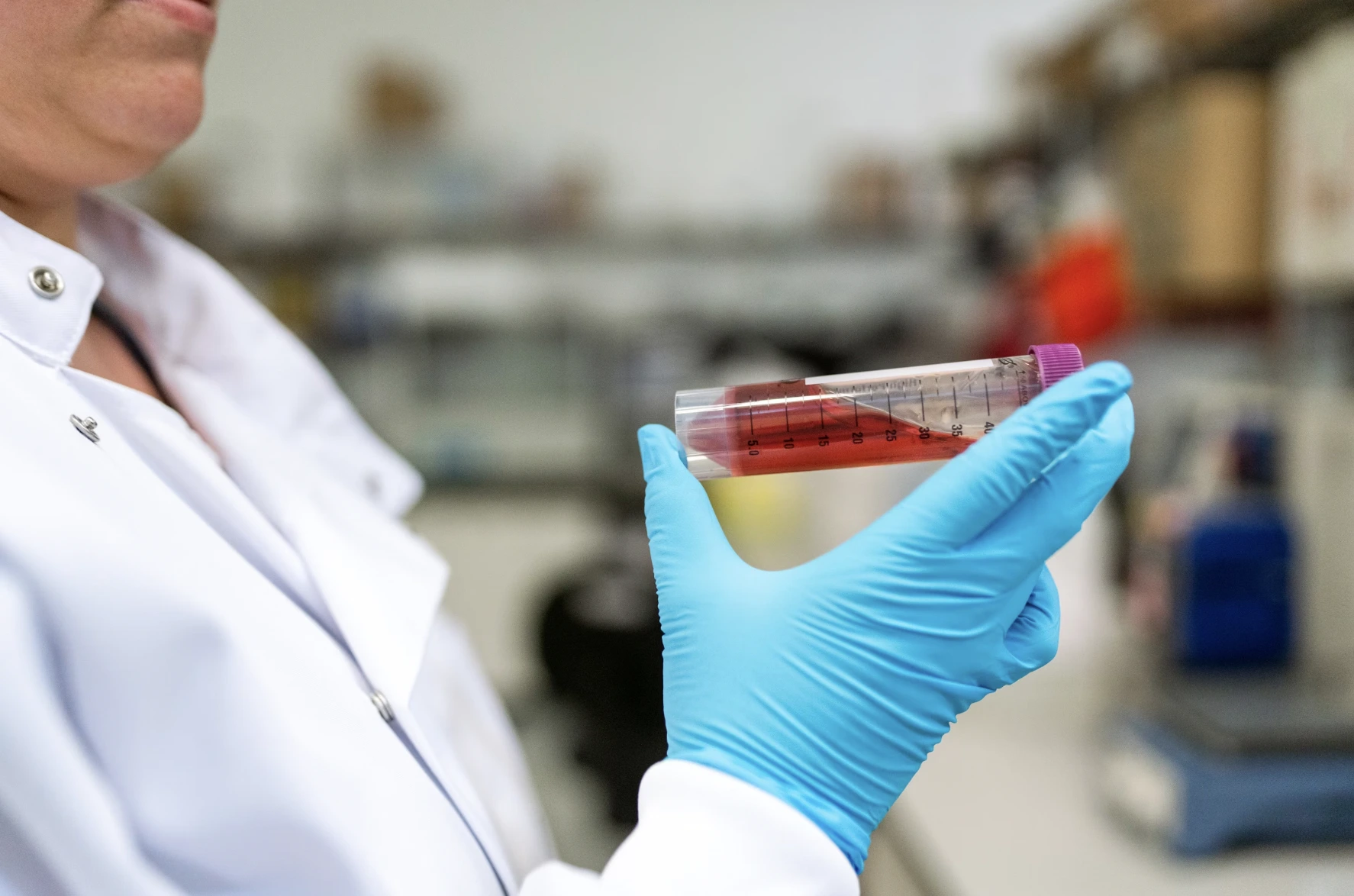
Image by TisisEngineering, from Unsplash
OpenAI Develops AI Model To Advance Longevity Science
- Written by Kiara Fabbri Former Tech News Writer
- Fact-Checked by Justyn Newman Former Lead Cybersecurity Editor
OpenAI has developed an AI model aimed at improving stem cell manufacturing, a collaboration with Retro Biosciences focused on longevity research, as first reported by MIT Technology Review .
In a Rush? Here are the Quick Facts!
- OpenAI developed GPT-4b micro to improve stem cell manufacturing for longevity research.
- GPT-4b micro was trained on protein sequences and interactions from multiple species.
- Early results show the model’s suggestions outperform traditional stem cell reprogramming methods.
The model, GPT-4b micro, marks OpenAI’s first venture into biological data and could significantly impact stem cell reprogramming, a key area in aging and regenerative medicine.
Retro Biosciences, a company funded by OpenAI CEO Sam Altman, studies the Yamanaka factors—proteins that can reprogram human skin cells into stem cells, capable of differentiating into various tissue types, as reported by MIT.
While this process offers potential applications in rejuvenating tissues and growing organs, it is currently inefficient, with less than 1% of cells undergoing successful reprogramming. GPT-4b micro was trained on protein sequences and interactions to suggest ways to optimize the Yamanaka factors, enhancing their effectiveness, as reported by MIT.
MIT further explains that early results show that the model’s suggestions led to improvements in the Yamanaka factors, with preliminary tests indicating a more than 50-fold increase in their efficiency.
The collaboration between OpenAI and Retro Biosciences started a year ago, and it is part of OpenAI’s broader efforts to explore how AI can contribute to scientific discovery.
Although OpenAI has not released the model for public use, the project showcases how AI can be applied to biological problems, offering a glimpse into the future of AI-driven research in areas like aging and regenerative medicine.
MIT notes that unlike Google’s AlphaFold, which focuses on protein folding, OpenAI’s model is tailored to the unique characteristics of the Yamanaka factors. It uses a focused dataset and a “few-shot” prompting technique to generate protein redesigns.
These alterations were tested in the lab, where researchers found that the model’s predictions often led to better outcomes than traditional methods.
The full impact of OpenAI’s model on stem cell research remains to be seen, but early results are promising. Experts in the field, including Harvard researcher Vadim Gladyshev, have expressed interest in the potential of AI to address longstanding challenges in cell reprogramming, as reported by MIT.
However, the model’s predictions are not yet fully understood, and the collaboration between OpenAI and Retro Biosciences is still in its early stages, noted MIT.
As OpenAI continues to explore the intersection of AI and biological sciences, the collaboration with Retro Biosciences serves as an example of how AI may soon play a role in accelerating discoveries in fields such as longevity and regenerative medicine.
