Google Maps Introduces AI Tech to Improve EV Charging Location Searches
- Written by Deep Shikha Content Writer
- Fact-Checked by
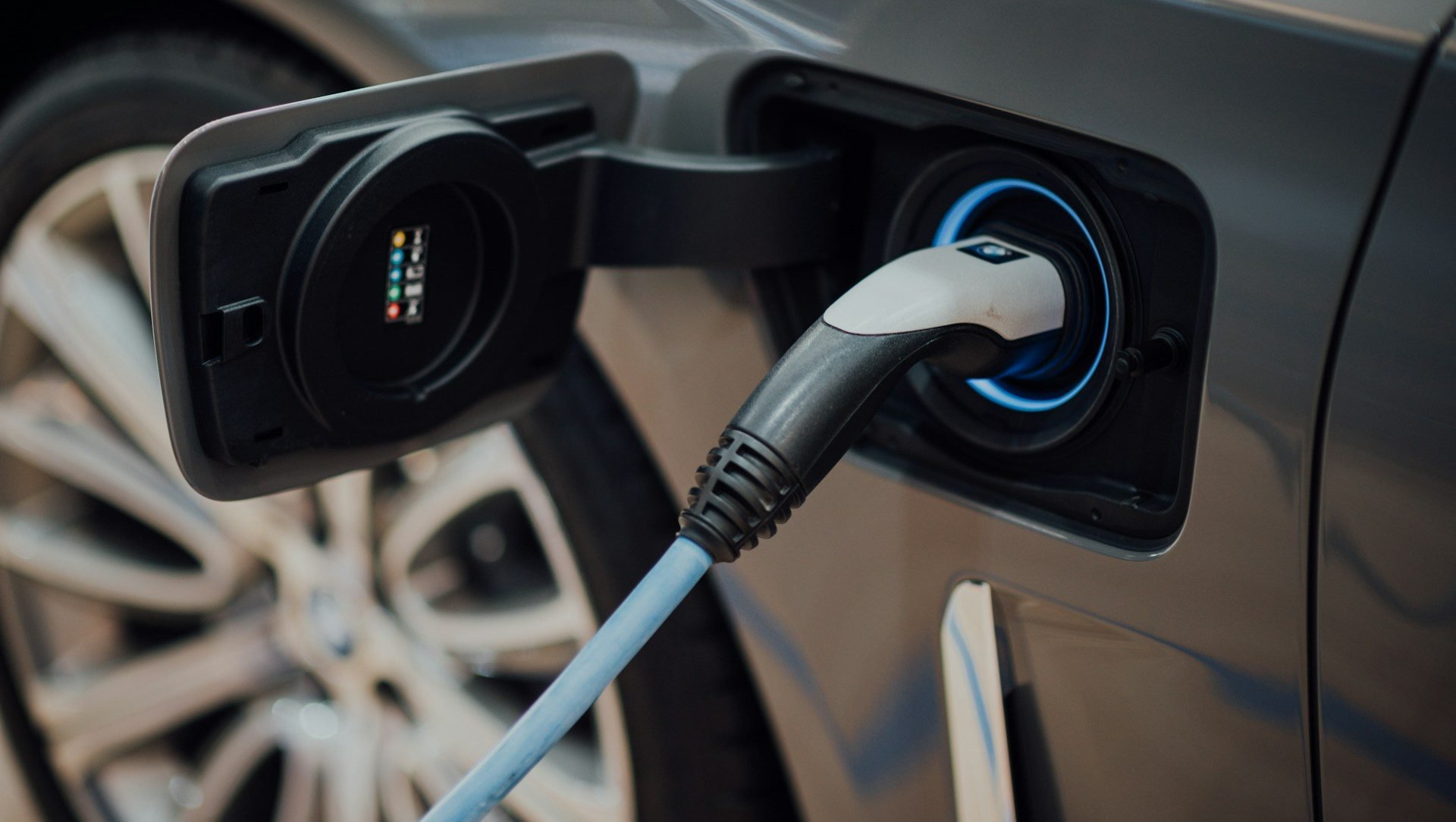
Google Maps will now leverage AI to enhance the search for electric vehicle (EV) charging stations. In a blog post on April 17, Google announced that Google Maps will use AI to summarize reviews of EV chargers, providing precise directions to hidden stations, even in parking garages or other inconspicuous locations.
Google stated that the information about charging stations is made possible by the millions of reviews posted daily on Google Maps. Once an EV station is used as a result of the Maps AI location tech, new prompts will ask for additional details about the charging experience, such as the type of plug used and the waiting time, to further improve the capability.
According to Google, in the coming months, users will be able to find nearby chargers on the in-car map, including details like real-time port availability and charging speed. This update will be available globally, starting with vehicles equipped with Google built-in.
Google says that the upcoming update will also simplify complex trips by suggesting the best charging locations for vehicles with Google built-in. This capability, initially announced last year for single-stop trips, is now expanding to multi-stop journeys.
The Verge reports that Google has previously emphasized its use of AI to enhance the experience for electric vehicle (EV) owners. In 2021, the company deployed AI tools for route planning and locating EV plugs .
EV owners will now be able to see quick and helpful information about charging when their vehicle’s battery starts to get low. Real-time plug availability and charging speeds will be viewable on native versions of Google Maps in cars with the company’s built-in software, like some existing Volvo and Polestar models. These cars are also getting native versions of Google Maps that suggest charging breaks on multi-stop journeys.
In addition, Google’s Travel Services now includes a filter to find hotels that offer onsite EV charging to help eliminate unnecessary charging stops on road trips.
China Introduces New Brain Chip Neucyber at Zhongguancun Forum
- Written by Shipra Sanganeria Cybersecurity & Tech Writer
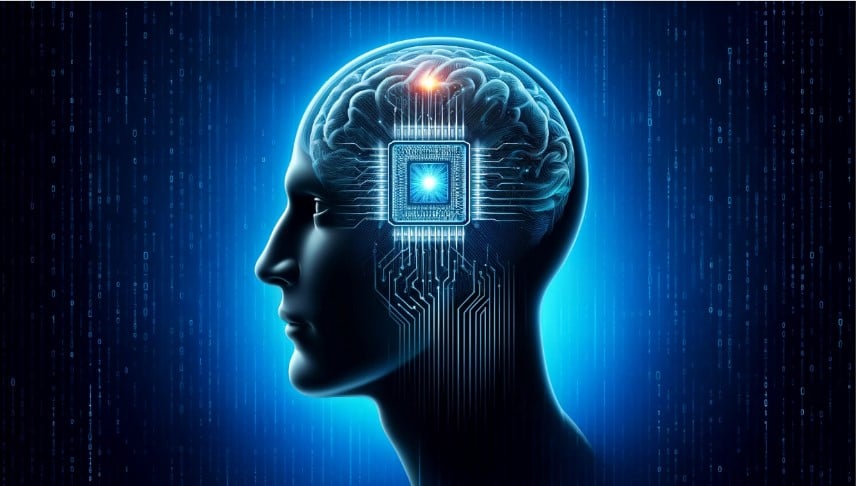
China revealed its first brain-machine interface (BMI) at the Zhongguancun (ZGC) forum on April 25. The brain chip implant, called Neucyber , which is similar to Elon Musk’s Neuralink technology, was independently developed by a Chinese state-backed company and brain research institution, according to Xinhua, a state-run news agency.
The Nuecyber BMI technology was tested on a monkey with its hands physically restrained. The technology allowed it to use its thoughts to manipulate a robotic arm and grasp a strawberry.
“The BMI serves as the ‘information highway’ for the brain, facilitating communication with external devices and providing cutting-edge technologies in human-machine interaction and hybrid intelligence,” said Luo Minmin, director of the Chinese Institute for Brain Research, Beijing .
Termed as China’s first “high-performance invasive BMI technology,” Neucyber, which involves multiple technologies, “still is a long way in terms of technological refinement and iteration,” says Luo.
While Neuralink has showcased its first human brain-chip implant user engaging in online chess , China has yet to initiate human trials utilizing its own BMI technology.
Earlier in February, China’s Tsinghua University announced its first brain-computer interfaces (BCI) rehabilitation trial. According to state-backed news outlet Global Times , a different wireless minimally invasive BCI (brain-computer interface) called Neural Electronic Opportunity (NEO) was successfully implanted in a quadriplegic patient in 2023.
These technologies come after the country’s Ministry of Industry and Information Technology identified BCI as “ innovative, iconic products “.
In conjunction with its announcement, the government also founded a 60-researcher laboratory in 2023, with a primary focus on expediting innovation and development within BMI technology.
Additionally, it aims to create user-friendly and secure brain-computer interface products with potential applications in various fields, including medical rehabilitation, autonomous driving, and virtual reality.
The Chinese government also aims to accelerate innovation and develop key technologies like brain-computer fusion, brain-like chips, and brain-computing neural models.
