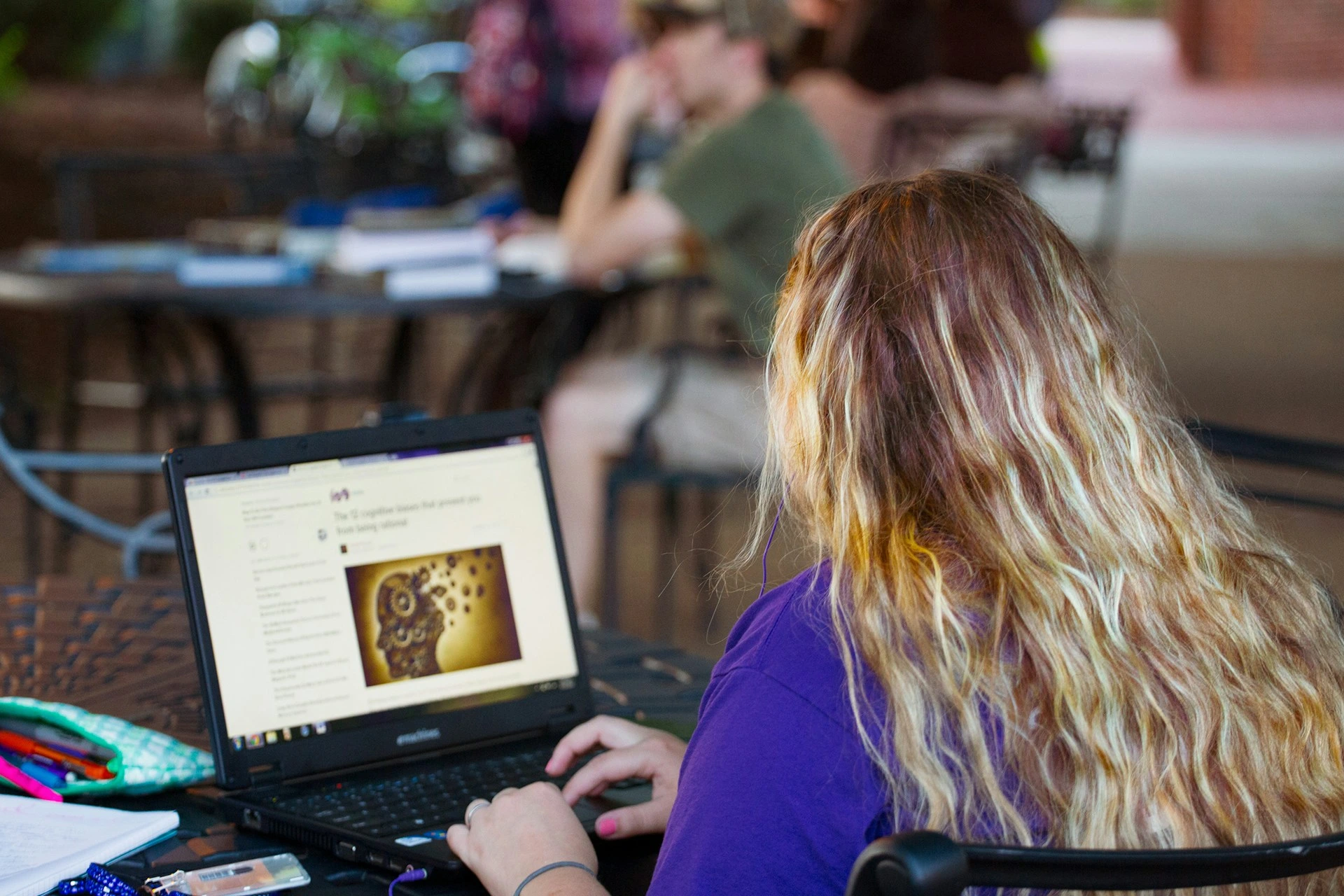
Photo by Michael S on Unsplash
Google Launches New AI Learning Tool Called “Learn About”
- Written by Andrea Miliani Former Tech News Expert
- Fact-Checked by Sarah Frazier Former Content Manager
In a Rush? Here are the Quick Facts!
- Learn About has been built into the AI model LearnLM
- The AI tool engages in interactive conversations with users on topics like history, astronomy, biology, and more.
- The AI tool is rolling out and is not available in every region
Google has started rolling out a new free AI feature for educational purposes called Learn About.
According to TechCrunch , it’s a new experimental tool built on the AI model LearnLM, which was introduced earlier this year as “grounded in educational research and tailored to how people learn.”
The new tool provides educational information—textbook-style—with interactive content including text, videos, highlights, and an appealing design with vocabulary boxes, warnings, and lists. The interface is different from Gemini or NotebookLM.
On Learn About’s website , Google suggests users ask big questions like “What’s the biggest wave ever surfed?” or “What causes the northern lights?” to engage in a learning experience. There are different topics the AI is trained to teach like Astronomy, Sports, History, Biology, and Home and Life skills.
“Grasp new topics and deepen your understanding with a conversational learning companion that adapts to your unique curiosity and learning goals,” states the site.
However, not every user with a Google Account has access to the feature yet. It is uncertain when exactly Google released this tool as there is no official announcement and many users have reported a message saying they cannot use the technology: “Learn About isn’t currently available in your location.” The tech giant could still be analyzing its performance with selected users during this early stage.
Yesterday, Youtuber Ryan Doser shared a review of the new tool and showed how, after asking a question and getting a response, the tool shares three buttons for the user to choose from: simplify, go deeper, and get images.
Google also recently launched Audio Overview , an AI tool for generating audio discussions with AI hosts from content users added to NotebookLM.
Other companies like Eureka Labs—created by former OpenAI researcher and Tesla head of AI, Andrej Karpathy— have also been developing educational tools using AI.

Image by peoplecreations, from Freepik
Meta Expands Education With Digital Twin “Metaversities” Across Europe
- Written by Kiara Fabbri Former Tech News Writer
- Fact-Checked by Sarah Frazier Former Content Manager
In a Rush? Here are the Quick Facts!
- Meta and VictoryXR partner to create digital twin “metaversities” for immersive learning.
- Meta partners with French and Dutch organizations for VR educational resources.
- VR faces privacy, ethical, and social challenges in educational applications.
In addition to the “ Meta for Education ” beta program, Meta has announced that it is pioneering digital twin “metaversities”—immersive VR replicas of physical university campuses, designed to create an entirely new dimension of learning.
Meta announced that it is working with VictoryXR to create “digital twin” metaversities. These digital replicas of physical campuses allow students and educators to explore, socialize, and attend live classes within VR environments that closely mirror their real-world counterparts.
At the University of Leeds, VR-based courses in Performance and Theater launched in September, giving students a new way to practice their craft. The University of the Basque Country will begin VR classes in Physiotherapy and Anatomy in February 2025, enhancing hands-on training remotely.
Additionally, institutions in Hannover, Germany, including Clausthal University of Technology, Ostfalia University of Applied Sciences, and the University of Göttingen, are set to implement immersive courses next semester.
To support these initiatives, Meta is collaborating with organizations like France Immersive Learning, which has developed a guidebook on using VR in education, and the Netherlands’ Immersive Learning Academy, which focuses on high-quality VR content for lifelong learning.
Meta says that studies indicate VR boosts comprehension, retention, and engagement, making these digital twin campuses a promising leap forward in educational accessibility and interactivity across Europe.
However, the adoption of VR in education comes with notable challenges.
Research indicates that it can lead to potentially weaker social connections and privacy risks, the opportunity for crime due to the anonymity of virtual spaces, and the risk of real-world maladaptation for students who have not yet formed a strong personal identity.
A systematic literature review highlighted barriers such as the high cost of equipment, the need for VR-specific teaching methodologies, and technical skills gaps.
Additionally, another study pointed out that privacy and ethical considerations also loom large, particularly for younger or vulnerable users. This research has raised concerns that VR environments might lead to social isolation or maladaptation, especially if students lack established identities in physical settings.
Another pressing ethical issue involves data privacy and user consent. High levels of realism in VR can deeply impact users, potentially leaving lasting impressions that may be difficult to correct if inaccuracies are present.
The researcher points out that the introduction of AI in content creation adds another layer of concern, as automated, unmonitored content might expose students to inappropriate materials. Future developments in VR combined with brain-computer interfaces (BCIs) may further reduce user autonomy, warranting closer scrutiny as these technologies advance.
Overall, Meta’s digital twin campuses signify a groundbreaking shift in education, making learning more accessible and interactive.
Yet, as universities across Europe embark on this journey, addressing technical, ethical, and social challenges will be essential to creating an effective, responsible VR-based education system.
