Photo by Onur Binay on Unsplash
Google Launches Free Gemini Code Assist for Individual Developers
- Written by Andrea Miliani Former Tech News Expert
- Fact-Checked by Sarah Frazier Former Content Manager
Google launched Gemini Code Assist for individuals yesterday, a free version of its AI coding assistant. The new coding tool is powered by Gemini 2.0 and is available globally.
In a Rush? Here are the Quick Facts!
- Google launched Gemini Code Assist for individuals, a free AI coding assistant with up to 180,000 code completions per month.
- The tool supports all programming languages and integrates with GitHub, JetBrains, and Visual Studio Code.
- Google’s move challenges GitHub Copilot and other AI tools by offering significantly higher free usage limits.
According to the official announcement, Gemini Code Assist for individuals has been optimized considering the developer’s needs and supports all programming languages.
The tech giant explained that recent research shows that 75% of developers use AI to generate code. They want to make AI tools more accessible for everyone and bridge the gap by helping those who can’t afford paid tools or face strict usage limits for code completion.
“We’re offering practically unlimited capacity with up to 180,000 code completions per month using Gemini Code Assist – a ceiling so high that even today’s most dedicated professional developers would be hard-pressed to exceed it,” wrote Ryan J. Salva, Senior Director of Product Management at Google Cloud.
Google also launched Gemini Code Assist for GitHub, to assist developers in reviewing codes and accelerate editing processes. Gemini Code Assist’s free version is also available in integrated development environments (IDEs) such as JetBrains and Visual Studio Code.
The usage limit has been set to 6,000 requests per day—180,000 per month—, 90 times higher than popular free coding assistants according to Google.
According to The Verge , Google could consider big competitors such as GitHub Copilot which offers a free version of its AI tool limited to 2,000 code completions and 50 chat messages per month.
This announcement comes just days after DeepSeek started sharing the codes for their AI models as part of its OpenSourceWeek initiative and other AI companies like OpenAI expanded access to their AI tools to reach more users worldwide.
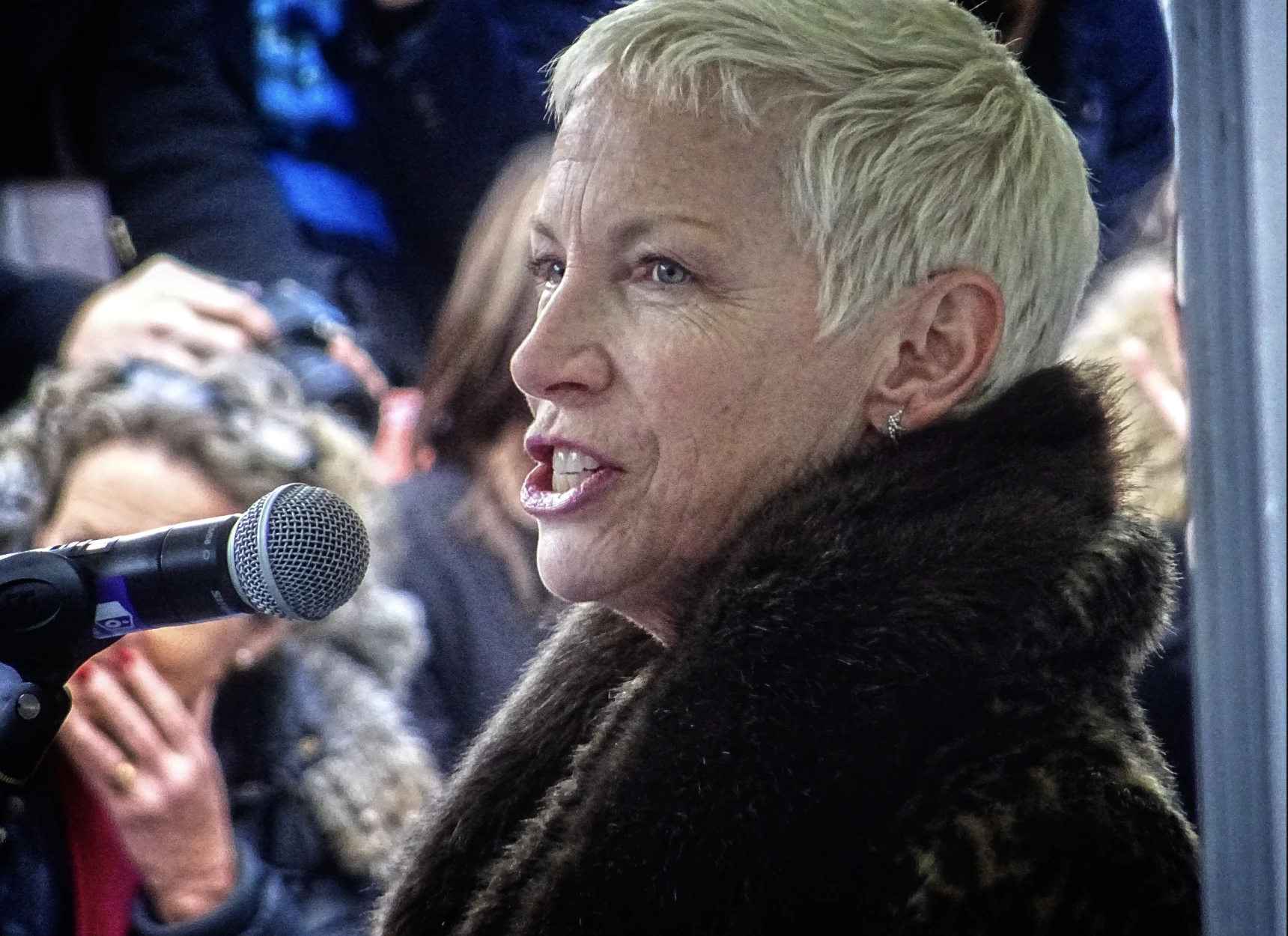
Image by Garry Knight, from Wikimedia Commons
1,000 Artists Release Silent Album To Oppose AI Copyright
- Written by Kiara Fabbri Former Tech News Writer
- Fact-Checked by Sarah Frazier Former Content Manager
More than 1,000 musicians, including Kate Bush, Annie Lennox, Damon Albarn, and Cat Stevens, have released a silent album titled Is This What We Want? to protest proposed UK government changes to copyright law.
In a Rush? Here are the Quick Facts!
- Artists fear AI firms will use copyrighted work without permission under proposed UK law.
- Paul McCartney, Kate Bush, and Elton John oppose the UK’s AI copyright exemption plans.
- The UK government claims its consultation balances AI development with creative rights protection.
The album, featuring recordings of empty studios and performance spaces, aims to highlight concerns that AI companies could freely train their models on copyrighted music without explicit permission from artists.
The UK government is consulting on a policy that would allow AI developers to use online creative content unless rights holders actively opt out. Critics argue that this provision places the burden on artists to prevent unauthorized use of their work rather than requiring AI companies to obtain prior consent, as reported by BBC .
“The British government must not legalize music theft to benefit AI companies,” spells out the 12-track album’s listing, as noted by AP .
Composer and AI developer Ed Newton-Rex, who spearheaded the project, warned of the potential consequences. “The government’s proposal would hand the life’s work of the country’s musicians to AI companies, for free, letting those companies exploit musicians’ work to outcompete them,” he said, as reported by The Guardian .
“It is a plan that would not only be disastrous for musicians, but that is totally unnecessary: the UK can be leaders in AI without throwing our world-leading creative industries under the bus,” he added.
The album, available on streaming platforms such as Spotify, features contributions from renowned artists, including Paul McCartney, Elton John, and Hans Zimmer, as well as rising musicians. All proceeds will be donated to Help Musicians , a UK charity supporting artists.
Kate Bush, one of the contributors, voiced her concerns about the future of the music industry in a statement: “In the music of the future, will our voices go unheard?,”as reported by The Guardian.
The protest is part of a wider backlash from the creative community. Actors Julianne Moore, authors Val McDermid and Richard Osman, and members of The Clash and Radiohead have also spoken out against the proposed changes, as noted by BBC.
A letter published in The Times and signed by 34 leading cultural figures, including Andrew Lloyd Webber, Ed Sheeran, and Tom Stoppard, accused the government of handing creative rights to Big Tech. The proposal “represent a wholesale giveaway of rights and income from the UK’s creative sectors to Big Tech,” the letter stated.
A government spokesperson defended the consultation, stating that “as it stands, the UK’s current regime for copyright and AI is holding back the creative industries, media and AI sector from realising their full potential – and that cannot continue,” as reported by The Guardian.
“That’s why we have been consulting on a new approach that protects the interests of both AI developers and rights holders and delivers a solution which allows both to thrive,” he added.
With the consultation closing Tuesday, the battle over AI and copyright intensifies, as artists fight to ensure their work remains protected in the age of artificial intelligence.
