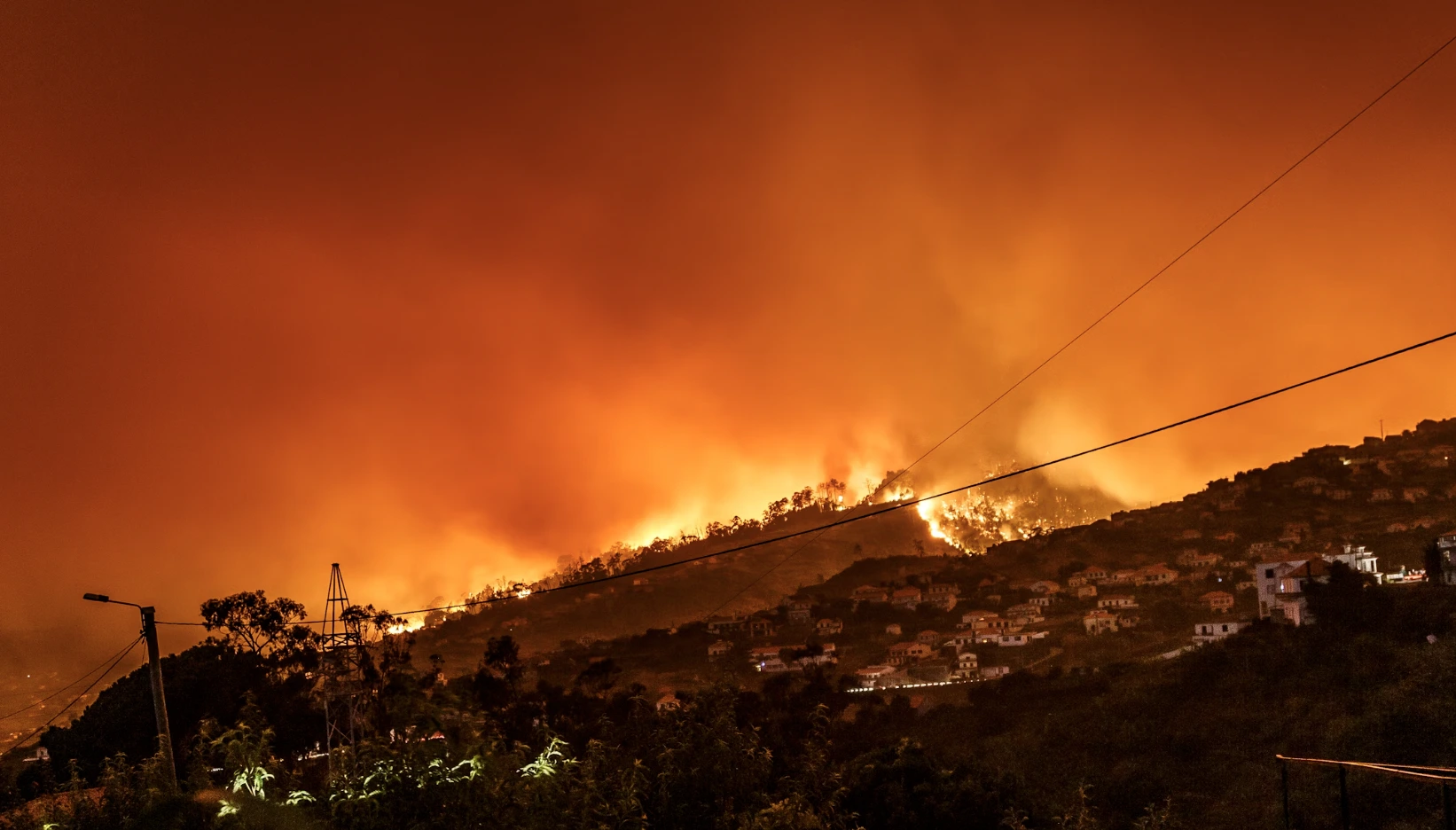
Image by Michael Held, from Unsplash
Google Launches FireSat: A New AI Tool For Wildfire Detection
- Written by Kiara Fabbri Former Tech News Writer
- Fact-Checked by Justyn Newman Former Lead Cybersecurity Editor
In a Rush? Here are the Quick Facts!
- Google is launching FireSat, a satellite system to detect wildfires within 20 minutes.
- Using AI, FireSat quickly identifies fires by comparing satellite data with past imagery.
- Launching in 2025, FireSat will provide real-time updates and build a wildfire history archive.
Google announced today its partnership with wildfire authorities to launch FireSat, a satellite constellation aimed at detecting and tracking wildfires, aiming to improve response by providing near real-time information on fire location, size, and intensity.
FireSat uses custom infrared sensors and AI to monitor wildfire activity by comparing new satellite data with historical images. The system also factors in local weather and infrastructure to quickly identify fires.
FireSat is set to detect fires as small as a classroom (5×5 meters) within 20 minutes. This is a significant improvement over current methods, which often rely on ground-based observations or less sensitive satellite imagery.
The first satellite is expected to launch in early 2025, with a full constellation planned in the coming years.
Developed in collaboration with the Earth Fire Alliance, Muon Space, and the Environmental Defense Fund, FireSat will provide high-resolution imagery updated every 20 minutes, allowing authorities to spot small fires before they become uncontrollable.
Once operational, FireSat will provide near real-time data to help fire agencies respond faster. In addition, FireSat will build a global historical record of wildfire behavior. This archive will enhance existing fire simulation models, helping scientists and emergency agencies to better understand and predict the spread of fires.
The Verge reports that former California state fire marshal Kate Dargan Marquis hailed FireSat as a “game changer,” particularly in light of the increasing severity of wildfires. “Information like this will make a life-saving difference,” she explained, highlighting the critical need for real-time data as wildfires become more frequent.
Christopher Van Arsdale, lead researcher at Google’s Climate and Energy group, emphasized the gap in current wildfire data, which prompted the development of this satellite system. “There is a significant gap between the data we have available today and what we could have with better satellite coverage,” Van Arsdale stated, as reported by The Verge.
MIT Technology Review notes that the importance of this technology is underscored by the current wildfire situation in the western U.S., where major fires like the Line Fire in Southern California, and the Shoe Fly Fire in Oregon have already ravaged vast tracts of land.
The FireSat project is expected to cost over $400 million, but experts argue that this investment is minor compared to the annual economic losses caused by wildfires in the U.S. alone, as noted by the MIT Review.
Despite the advances FireSat promises, experts caution that improved satellite data alone cannot fully mitigate wildfire risks.
Effective land management, including prescribed burns and better urban planning in fire-prone areas, is essential to reducing fire fuel and ensuring the success of firefighting efforts, as suggested by the MIT Review.
Google’s recent development of a new weather prediction model demonstrates the company’s commitment to advancing climate science and technology. This AI model could potentially enhance our understanding of long-term weather patterns, including those related to wildfires.

Image by GuerillaBuzz, from Unsplash
UK Hosts Global Coalition To Tackle Growing Cyber Threats
- Written by Kiara Fabbri Former Tech News Writer
- Fact-Checked by Justyn Newman Former Lead Cybersecurity Editor
In a Rush? Here are the Quick Facts!
- The UK Government is formulating a response to ever-increasing cyber attacks
- £1.3 million is being allocated to better cyber skills training in England & Northern Ireland
- The funding will be distributed via grants for local projects & apprenticeships
The UK Government has just announced plans to convene a global coalition to address the increasing threat of cyberattacks and bolster cyber skills.
The three-day talks, starting on Monday at Wilton Park in West Sussex, will bring together leading nations like the US, EU, Canada, and Japan, as well as international organizations like the WEF and OECD.
The meeting comes in response to recent cyber incidents impacting UK institutions and reveals a significant skills gap, with nearly half of British businesses lacking adequate cyber protection.
Examples include cyberattacks on London public institutions like the NHS and Transport for London . Additionally, a South London school was recently forced to close due to a cyberattack .
A recent report has also revealed that the number of active ransomware groups has increased significantly in the first half of 2024.
The coalition’s discussions will focus on enhancing cyber skills and developing new standards, with a report on these topics expected by the end of the year.
In addition to the international talks, the UK is launching a new £1.3 million scheme to support cyber skills training in England and Northern Ireland. This funding will provide grants of up to £150,000 for local projects, including apprenticeships and new cyber security innovations.
The UK government has also designated data centres as Critical National Infrastructure (CNI) to bolster security and support during critical incidents. This move aims to enhance national cyber resilience, and support the growing cyber security industry.
Additionally, the UK is collaborating with CREST International to launch the CREST Cyber Accelerated Maturity Programme (CAMP). This program aims to offer mentoring to cyber service providers. It will also invite countries from Europe, Africa, South-East Asia, and the Middle East to participate as partners.
Cyber Security Minister Feryal Clark highlighted the need for improved cyber defenses and legislative changes.
“But this is a shared challenge, which is why we’re bringing together global allies to discuss and agree steps to keep us safe online, improve cyber skills and protect our economy and public services,” Clark adds.
