
Photo by Bastian Riccardi on Unsplash
Google Expands AI Overviews to More Countries and Languages
- Written by Andrea Miliani Former Tech News Expert
- Fact-Checked by
Google announced this Thursday that the AI-powered search feature AI Overviews will be extended to more countries and in more languages in the next few weeks. The company also issued new updates for the search tool.
According to the document shared by the tech giant on its site, the expansion of AI Overviews will begin in six countries and it will consider local languages. The company also announced new features that users registered in the Search Labs program for testing experiments will be able to try.
“After extensive testing and positive feedback, including in the U.S. and Search Labs globally, we’re bringing the helpfulness of AI Overviews to six new countries: United Kingdom, India, Japan, Indonesia, Mexico, and Brazil – along with local language support in each country,” states the announcement.
AI Overviews was launched in May in the United States only and has raised multiple concerns, from how it will affect traffic on websites to the relevance of the results. The AI-powered feature gained an embarrassing reputation among users just a few weeks after it was deployed because it kept giving users inaccurate and absurd information to users.
However, Google highlighted in the update that it has improved its feature and that the new expansion is focused “on maintaining Search’s high bar for information quality.”
Along with the expansion, selected users who have joined the Search Labs programs—across 120 countries—will be able to test a new icon and the inclusion of links to relevant pages so that users can keep reading more information about the topics they want to learn. These new updates come with a different look on the AI Overviews results and as a part of the solution to address concerns regarding the decrease in traffic to websites.
Those in the U.S. will be able to try a new feature to save AI Overview results during searches and explore a new “interests” page.
Google also recently announced other AI features for its Gemini models and the new Pixel 9 devices .
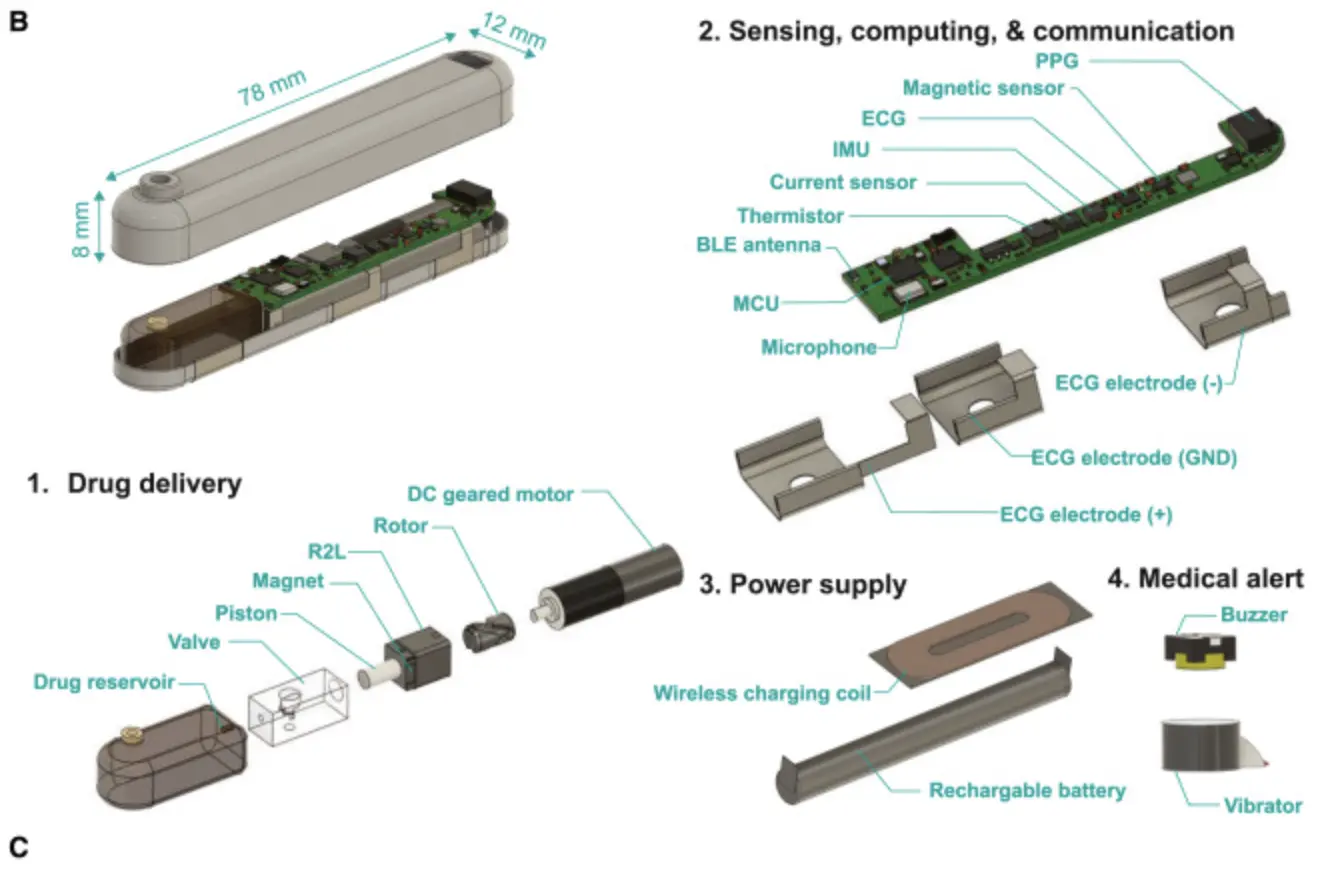
Screenshot of a figure from the research article, DOI: 10.1016/j.device.2024.100517.
Researchers Develop An Implantable Sensor To Combat Opioid Overdoses
- Written by Kiara Fabbri Former Tech News Writer
- Fact-Checked by Justyn Newman Former Lead Cybersecurity Editor
Researchers at MIT and Brigham and Women’s Hospital have developed an implantable device aimed at addressing the opioid overdose crisis. This small, gum-sized device, implanted under the skin, is designed to monitor vital signs and deliver naloxone, an opioid antidote, in the event of an overdose.
The study published on August 14 in the journal Device showcases the functionality of this new device. The implanted robotic device aims to overcome the limitations of current overdose reversal systems.
While naloxone is effective in reversing overdoses, the research paper reported that with current systems, less than 5% of overdose victims survive. This low survival rate is often due to delays or the absence of first responder intervention. Contributing factors include low user compliance with existing reversal systems, inaccurate overdose detection, and slow drug delivery.
To address these limitations, the researchers developed a subcutaneously implantable robotic first responder . The device continuously monitors vital signs, and employs an algorithm to detect opioid overdoses based on cardio-respiratory patterns. In case of an overdose, the device rapidly delivers a 10mg dose of naloxone in under 10 seconds.
The study trials demonstrated the system’s effectiveness in reviving 96% of overdosed pigs within 3.2 minutes. Additionally, the device was effective in distinguishing overdoses from other conditions, such as sleep apnea.
These results highlight the potential of this implantable technology to significantly improve survival rates.
“This could really address a significant unmet need in the population that suffers from substance abuse and opiate dependency to help mitigate overdoses, with the initial focus on the high-risk population,” said Giovanni Traverso, a senior author of the study, in an MIT News Announcement .
As reported in the MIT News Announcement, the researchers aim to further refine the device to enhance user comfort and integration. The next steps involve testing the device in human trials, which could commence within the next three to five years. They also plan to address the device’s miniaturization and battery life to ensure it remains effective over extended periods.
