
Photo by Amanda Vick on Unsplash
Google Enhances Shopping Experience with AI-Powered Fashion Idea Generator
- Written by Andrea Miliani Former Tech News Expert
- Fact-Checked by Sarah Frazier Former Content Manager
Google announced new AI features for Google Shopping—a platform designed to compare products and help users make a purchase decision—this Wednesday. Gemini will enhance features such as “vision match” for fashion products, AR beauty to help shoppers envision how products will look on them, and virtual try-ons to visualize garment combinations.
In a Rush? Here are the Quick Facts!
- Google Shopping introduces AI-powered features like vision match, AR beauty, and virtual try-on to enhance online shopping.
- The new vision match tool lets users describe an outfit, and AI suggests real products available in stores.
- Google expands virtual try-ons to dresses, pants, and skirts, using AI to showcase outfits on diverse body types.
According to the official announcement , users make more than 1 billion purchases through Google every day. The tech giant is now releasing, in the United States, new AI-powered features—a few of them previously tested on the Google Labs experiment program—to help users with new and enhanced shopping experiences.
Starting this week, mobile users can try Google’s “vision match” feature, where they describe to Gemini the outfit or product they are looking for and the AI tools suggest real-life products available in the market. The feature will be available on the Shopping tab and on the regular search.
“Vision match lets you describe any garment you have in mind and then uses AI image generation to show you a few ideas of what it could look like and similar shoppable products,” wrote Lilian Rincon, Vice President of Product for Google Shopping.
Users are encouraged to provide as many details as they can and to try the prompt feature to get ideas and suggestions on the next purchase.
The Tech giant has also enhanced its AR beauty feature, including popular makeup products among celebrities, influencers, and current trends, as well as specific styles and looks to help shoppers see how the products would look on them.
Want to reach your customers where they are? See how Google and YouTube Ads, powered by Google AI, help businesses connect with people where they’re streaming, searching, scrolling, and shopping! Watch now 👉 https://t.co/oDHvRt8Hzn pic.twitter.com/SyYk5gegCs — Think with Google (@ThinkwithGoogle) March 6, 2025
The virtual try-on feature has expanded, it now features dresses, pants, and skirts from multiple brands in multiple sizes and considering different models as reference.
“You can see what the garment looks like on a diverse set of real models ranging from XXS-XXL,” added Rincon. “To improve length accuracy and brand styling, we’ve updated our Machine Learning models to generate the full look from the matching top all the way to the shoes the model is wearing.”
In October, Google added personalized AI tools and experimental features to its shopping platform, encouraging shoppers to interact and provide feedback. The tech giant seems to be getting ahead of the changes AI has been generating in shopping experiences and the e-commerce and retail industries.
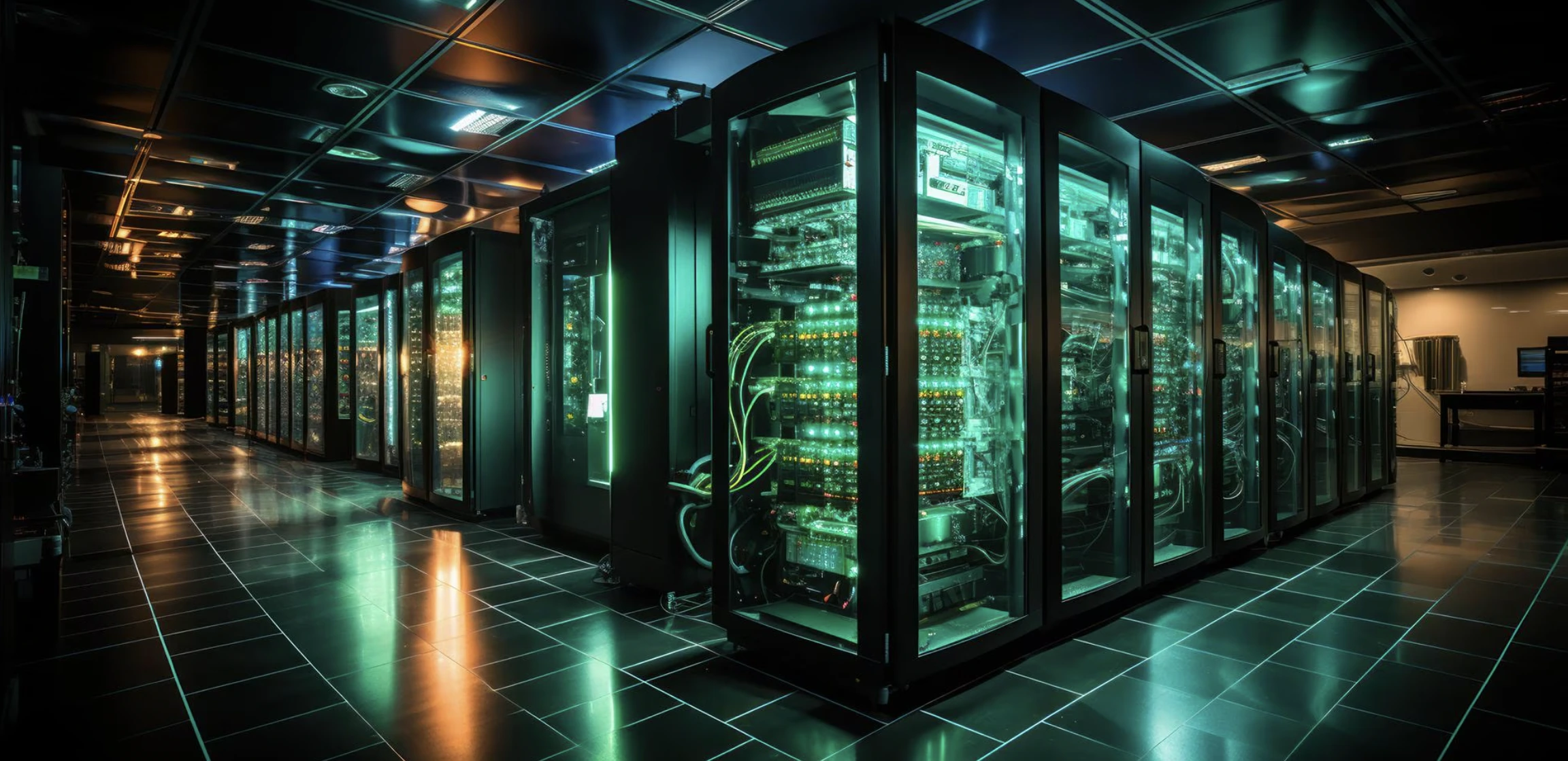
image by roroza, from freepik
AI Data Centers Are Driving Up Energy Use, But Transparency Is Lacking
- Written by Kiara Fabbri Former Tech News Writer
- Fact-Checked by Sarah Frazier Former Content Manager
AI is rapidly increasing energy demands, but the true scale remains unclear due to a lack of transparency from tech companies.
In a Rush? Here are the Quick Facts!
- AI data centers consume as much power as tens of thousands of homes.
- In Ireland, data centers use over 20% of national electricity.
- AI model training is energy-intensive, but answering user queries consumes even more.
A recent analysis by Nature highlights the growing but largely opaque energy demands of AI. Nature reports how in Virginia’s Culpeper County, large data centers are transforming rural landscapes. These centers, essential for running generative AI models like ChatGPT, require massive amounts of electricity.
Each facility can consume as much power as tens of thousands of homes, potentially driving up costs and straining local grids. Virginia, already the world’s data-center capital, could see its electricity demand double in the next decade.
Nature notes that the issue extends beyond Virginia. AI-driven data centers are concentrated in clusters worldwide, significantly impacting local energy grids. Unlike steel mills or coal mines, data centers are built close together to share resources and optimize efficiency.
In Ireland, they account for over 20% of national electricity consumption, and in five U.S. states, they exceed 10%.
Despite AI’s rising power consumption, data on its energy use is scarce. Nature reports that researchers struggle to obtain precise figures from companies, forcing them to estimate using indirect methods. One approach is supply-chain analysis.
In 2023, researcher Alex de Vries calculated that if Google integrated generative AI into all searches, it would require up to 500,000 NVIDIA A100 servers, consuming 23–29 terawatt hours (TWh) annually—up to 30 times more energy than a standard search, as reported by Nature.
Another method involves measuring the energy use of individual AI tasks. Researchers use tools like CodeCarbon to estimate consumption from AI-generated images or text.
These studies suggest that generating an image consumes about 0.5 watt-hours (Wh), while text generation requires slightly less. However, these estimates are conservative since they don’t account for cooling or proprietary chips like Google’s TPUs, as reported by Nature.
Training AI models is also energy-intensive, but the energy spent answering billions of user queries is even greater. Training a model like GPT-3 requires around one gigawatt-hour, whereas daily AI queries consume terawatt-hours annually, says Nature.
With increasing competition, companies have become more secretive about AI’s energy demands. Some, like Google and Microsoft, acknowledge rising carbon emissions due to data-center expansion but do not provide specific data, noted Nature.
Despite AI’s local impact, its global energy footprint remains relatively small, argues Nature. The International Energy Agency estimated that data centers used 240–340 TWh in 2022, about 1–1.3% of global electricity.
However, as AI adoption grows, demand could surge. Without better data-sharing, policymakers may struggle to manage the environmental consequences of AI’s energy-intensive future.
