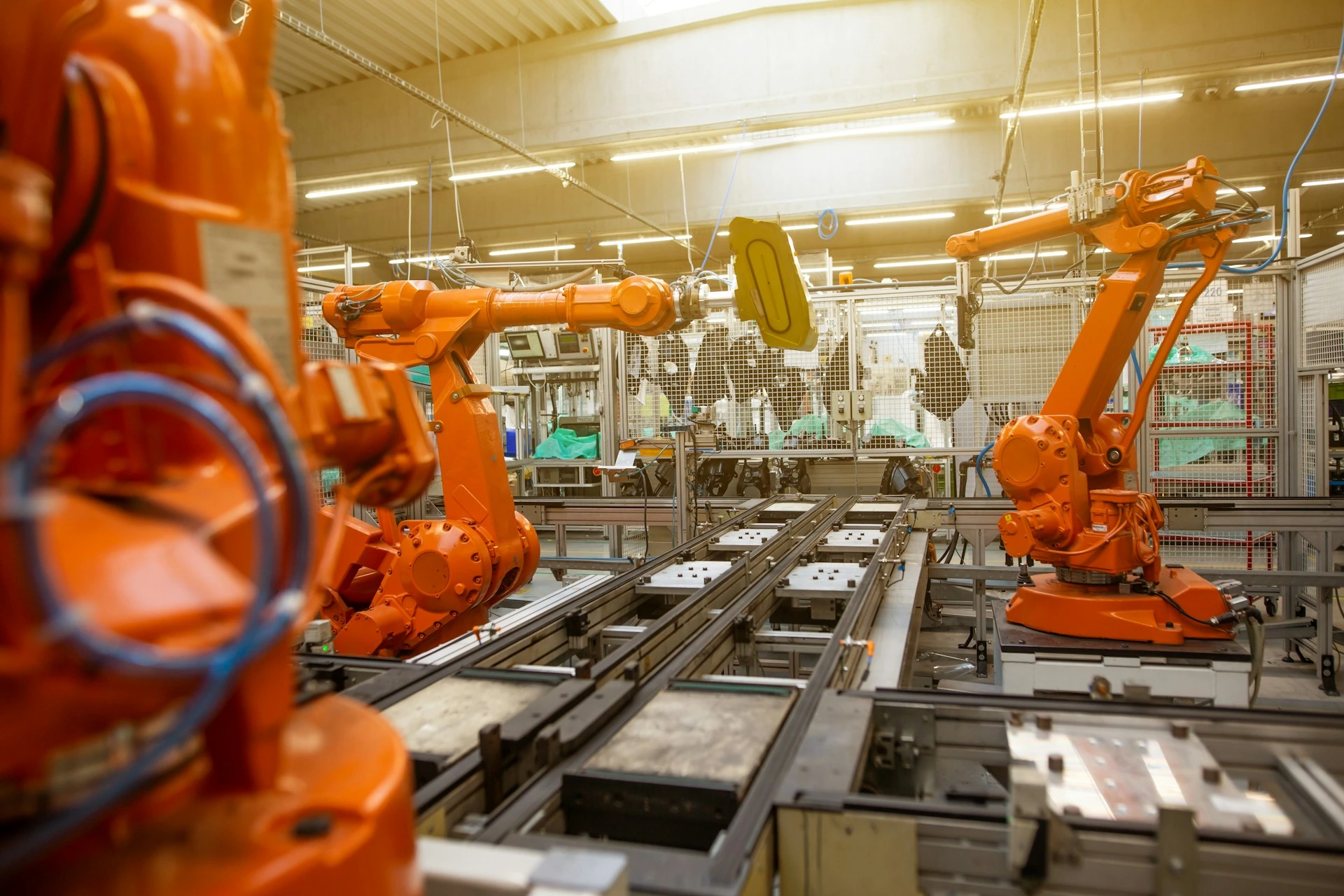
Photo by Simon Kadula on Unsplash
Google DeepMind’s New AI Systems Teach Robots to Tie Shoelaces And Hang Clothes
- Written by Andrea Miliani Former Tech News Expert
- Fact-Checked by Justyn Newman Former Lead Cybersecurity Editor
Google DeepMind’s robotic team published two papers on their research in robot dexterity, featuring its new AI systems DemoStart and ALOHA Unleashed. With the new developments, researchers managed to make two robotic arms tie a shoelace, hang clothes, and repair another robot autonomously.
In the update published yesterday , the robotics team explains that performing simple tasks like tightening a screw or tying shoelaces can be extremely difficult for robots as they require high dexterity and coordination between two arms.
Google’s Deepmind team had been working with just one arm. They recently created a human-level competitive robot that can play ping pong with “just one arm”.
Now, researchers have developed AI systems to train two-armed devices to perform more complex tasks that humans get to do daily.
“To make robots more useful in people’s lives, they need to get better at making contact with physical objects in dynamic environments,” wrote the team.
The AI system ALOHA Unleashed—based on the open source and low-cost system ALOHA developed by Stanford University—taught two-arm robots to manipulate elements and work simultaneously to tie a shoelace, hang a shirt, clean a kitchen, and insert a gear.
DemoStart, on the other hand, developed a “reinforcement learning algorithm” that teaches robots during simulations with the open-source program MuJoCo. This AI system is for more complex tasks involving more robot parts like fingers, sensors, and joints.
“The robot achieved a success rate of over 98% on a number of different tasks in simulation, including reorienting cubes with a certain color showing, tightening a nut and bolt, and tidying up tools,” explained researchers. Later, in real life, the robot performed with a 97% success rate in the lifting and cube reorientation tasks, and 64% in a complex task requiring plug-socket insertion.
Introducing 2️⃣ new AI systems for robotics: 🤖 ALOHA Unleashed to perform two-armed manipulation tasks 🦾 DemoStart to control a multi-fingered robotic hand They learned to tackle a range of actions requiring dexterity. Here’s how. 🧵 https://t.co/SV3TsXIhhh pic.twitter.com/JnbZEMwB1j — Google DeepMind (@GoogleDeepMind) September 12, 2024
The company provided videos and images of the experiments and the robots to demonstrate the capabilities of the new AI systems.
“One day, AI robots will help people with all kinds of tasks at home, in the workplace and more,” wrote the team regarding the future of this area in robotics. “Dexterity research, including the efficient and general learning approaches we’ve described today, will help make that future possible.”

Image by yousafbhutta, from Pixabay
Android TV Boxes Infected With Vo1d Malware
- Written by Kiara Fabbri Former Tech News Writer
- Fact-Checked by Justyn Newman Former Lead Cybersecurity Editor
On Thursday, security experts from Doctor Web revealed the discovery of a new Android-based malware, dubbed Android.Vo1d, which has infected nearly 1.3 million devices across 197 countries.
The malware primarily targets streaming TV boxes, utilizing vulnerabilities in outdated Android versions. According to Doctor Web, the infection has spread widely, with the largest number of cases being detected in countries such as Brazil, Morocco, and Russia.
The Android.Vo1d malware acts as a backdoor, embedding itself within the system storage area of affected devices. Once in place, it allows attackers to remotely command the device, installing third-party software without the user’s knowledge.
The Hacker News (THN) notes that the source of the infection remains unknown, but it is suspected to be related to either compromised devices or the use of unofficial firmware. The malware is known to replace the “debuggerd” daemon file and introduce new files containing malicious code.
Forbes reports that the malware is particularly persistent, running scripts that enable it to survive reboots and continue its malicious activities.
The attack does not target Android TV devices specifically, but focuses on off-brand streaming boxes running older versions of the Android Open Source Project (AOSP), as noted by Forbes.
One reason for the widespread infection is that many TV boxes run on outdated Android versions, which are more vulnerable to attacks due to unpatched vulnerabilities. These older versions are often used by budget device manufacturers to make their products more attractive.
Users of TV boxes may mistakenly believe these devices are better protected than smartphones, leading them to neglect installing anti-virus software or downloading unofficial firmware. This can increase their risk of infection, as noted by Forbes.
Google has confirmed that the infected TV models were not Play Protect certified, meaning they did not undergo rigorous security testing. The company advises users to only purchase devices that are Play Protect certified to ensure their safety, as reported by TNH.
It is important for users to keep their devices updated with the latest security patches and avoid downloading apps from untrusted sources. Installing anti-virus software can also help protect against malware infections.
