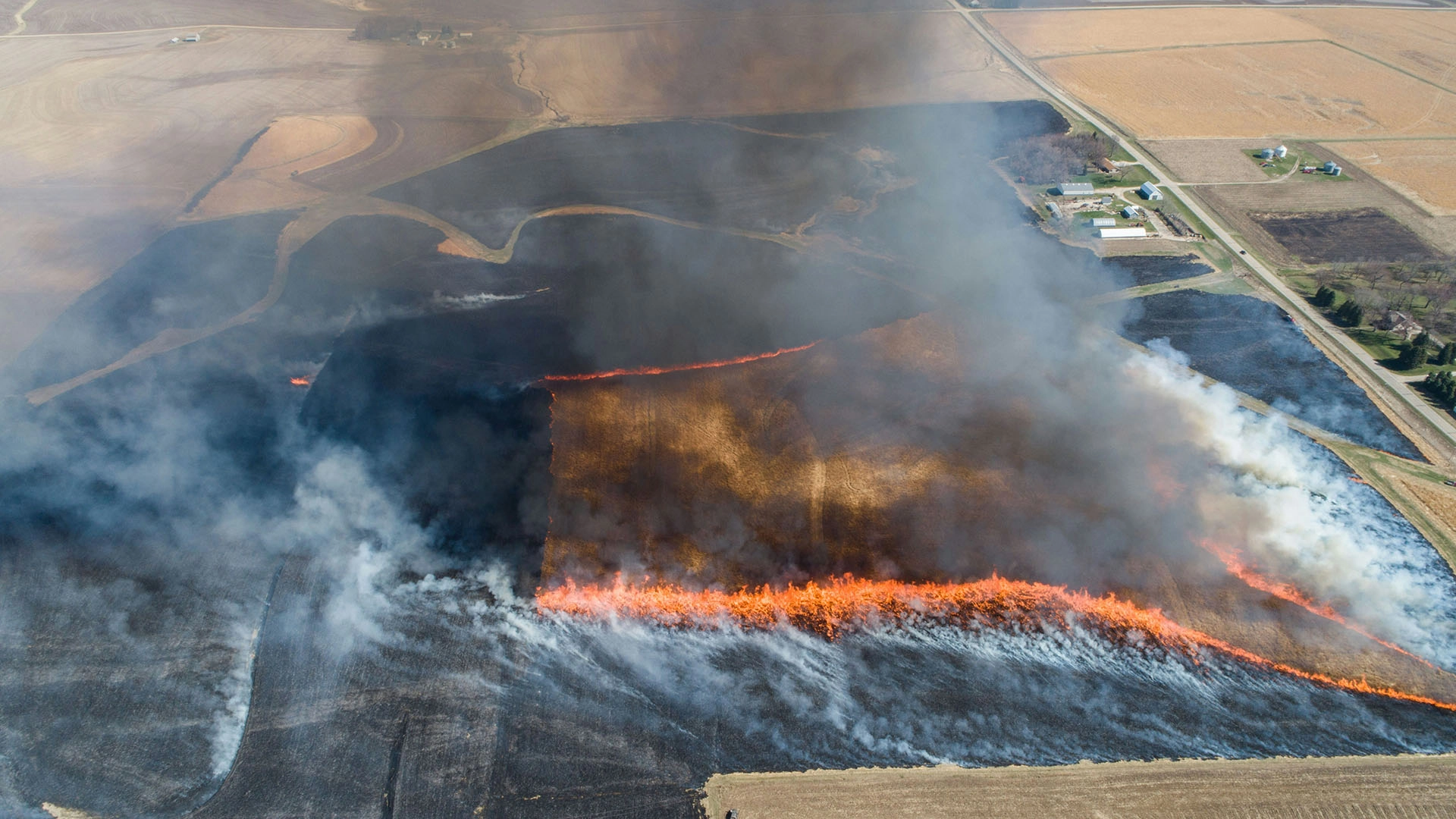
Photo by Josh Berendes on Unsplash
Google-Backed FireSat Launches First Satellite For Early Wildfire Detection
- Written by Andrea Miliani Former Tech News Expert
- Fact-Checked by Sarah Frazier Former Content Manager
Google announced that FireSat launched the first satellite of its over 50 constellation network and made contact with Earth successfully this Monday.
In a rush? Here are the quick facts:
- FireSat’s first satellite was successfully launched to enhance wildfire detection using AI technology.
- The FireSat project, backed by Google Research and wildfire experts, aims to provide real-time satellite monitoring of wildfires with updates every 20 minutes.
- This AI-driven satellite network is set to replace outdated, low-resolution wildfire detection systems.
According to the tech giant’s announcement , the spacecraft has been launched aboard SpaceX’s Transporter-13 mission from the Vandenberg Space Force Base located in California.
FiatSat—a collaborative initiative between the Moore Foundation, Earth Fire Alliance, Muon Space, Google Research, and wildfire authorities—has been designed to monitor and detect wildfires in real-time using advanced AI technology through its satellite-based system.
The tool for wildfire detection was announced in September last year, and, as promised, the first satellite was launched early this year.
The new technology is expected to provide high-quality images—better than the current satellite imagery used by wildfire authorities, which contains low-resolution data—that will be updated every 20 minutes, to help authorities catch fires, even those as small as 5×5 meters area, and prevent their spread.
According to Google’s official blog The Keyword , Juliet Rothenberg—Product Director of Climate AI efforts at Google Research—was affected by a California wildfire 4 years ago and said she remembers the satellite images update every 12 hours, making it difficult to make quick and safe evacuation decisions.
The experts behind FiatSat have included advanced AI technology to spot fires at an early stage.
“Some satellites today take a picture about every five minutes, but they’re coarse,” said co-founder Chris Van Arsdale. “You’re lucky if you can see the city of San Francisco in the image. You’re certainly not going to see where a fire is until it’s a few acres in size.”
FireSat developers have faced multiple challenges like differentiating “noise” from real fires but developed scientific solutions and sensors to optimize the system,
“FireSat is more than just an emergency response tool,” said Rothenberg. “It’s also an incredible tool for reducing greenhouse gas emissions.”
The shortcomings of fire detection technologies used in recent years have driven new initiatives like FireSat and also Watch Duty, an app based on collaborative information sharing among neighbors to assist during fires. With the support of volunteers and firefighters, the Watch Duty app reached 2 million downloads in January during the Los Angeles wildfires.
Photo by Valent Lau on Unsplash
Microsoft Warns Windows Users About StilachiRAT Malware Targeting Cryptocurrency Wallets
- Written by Andrea Miliani Former Tech News Expert
- Fact-Checked by Sarah Frazier Former Content Manager
Microsoft Incident Response researchers issued a new warning this Monday on a remote access trojan (RAT) that uses advanced techniques to steal data. The malware, named StilachiRAT by the company’s experts, can access information stored in browsers and targets digital wallets.
In a rush? Here are the quick facts:
- Microsoft warns about StilachiRAT, a stealthy remote access trojan (RAT) that steals credentials and targets cryptocurrency wallets.
- The malware exploits vulnerabilities in Google Chrome extensions to access sensitive financial data from 20 different digital wallets.
- Microsoft urges users to enhance security by using trusted software sources and security tools.
According to the document shared by Microsoft , the research team identified the threat in November 2024. The researchers have not been able to attribute the malware to a specific geolocation or threat actor, but analyzed the WWStartupCtrl64.dll module, which contains the RAT capabilities and methods to steal credentials and information.
“Based on Microsoft’s current visibility, the malware does not exhibit widespread distribution at this time,” states the document. “However, due to its stealth capabilities and the rapid changes within the malware ecosystem, we are sharing these findings as part of our ongoing efforts to monitor, analyze, and report on the evolving threat landscape.”
Microsoft Incident Response revealed that the malware can be installed in multiple ways and noted Google Chrome as a vulnerable browser. The study shows that the malware scans 20 digital wallets added as cryptocurrency wallet extensions in Chrome—including Trust Wallet, MetaMask, Coinbase Wallet, BNB Chain Wallet, and more—to collect, monitor, and steal data.
The researchers also noted StilachiRAT’s sophisticated anti-forensic tactics—to evade detection and erase traces of malicious activities—as it clears event logs, detects analysis tools, and implements sandbox-evading behaviors.
As mitigation strategies, Microsoft’s team recommends users multiple strategies such as always downloading software from official websites or reputable sources, using browsers that support their security feature SmartScreen such as Microsoft Edge, and turning on Safe Attachments and Safe Links tools.
Users should take precautions without becoming alarmed. According to Forbes , this new report may be a bit “awkward” as there could be hidden business interests, and it may not be an independent report.
The publication points out that Microsoft has been campaigning more intensely this year to gain more users for its Edge browser, and this could be part of that strategy.
However, the threat of StilachiRAT remains real and worthy of attention, and the recommendations from Microsoft’s team are still of great value to netizens. Last year, other RATs were reported and identified across popular video-calling platforms such as Zoom, Skype, and Google Meet.
