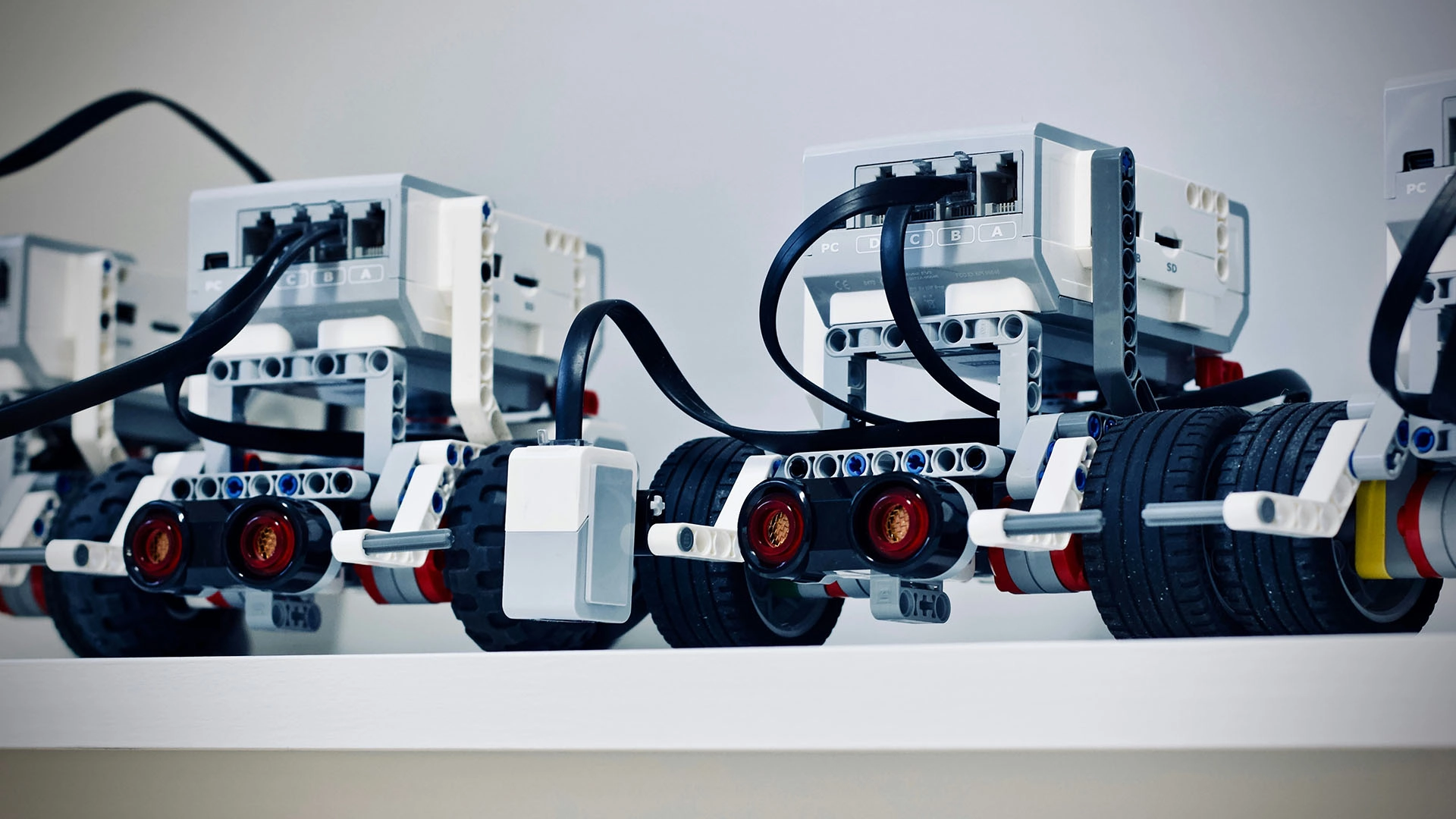
Photo by Jelleke Vanooteghem on Unsplash
Former Cruise CEO’s Robotics Startup, The Bot Company, Hits $2 Billion Valuation
- Written by Andrea Miliani Former Tech News Expert
- Fact-Checked by Sarah Frazier Former Content Manager
The American startup The Bot Company, founded by entrepreneur and former Cruise CEO Kyle Vogt, raised $150 million in a recent funding round, reaching a $2 billion valuation. The company will use artificial intelligence to develop hardware and software for non-humanoid household robots
In a rush? Here are the quick facts:
- The Bot Company raised $150 million, bringing its valuation to $2 billion.
- Founded by Kyle Vogt and ex-Tesla and Cruise engineers, the startup focuses on non-humanoid household robots.
- Despite no product or revenue yet, investors are betting on AI, robotics, and the team’s proven track record.
According to Reuters , the funding round was led by the firm Greenoaks. This recent round follows another $150 million investment from a round led by investors such as Nat Friedman—former GitHub CEO—and Spark Capital last year, when the startup reached unicorn status.
The Bot Company was founded in 2024 by Vogt, co-founder of Twitch and Cruise Automation—later acquired by General Motors—, and Luke Holoubek and Paril Jain, former engineers at Cruise and Tesla.
Investors are trusting the project and the talents behind The Bot Company, despite the startup not having released any products yet and not generating any revenue. This confidence is partly due to the boom in robotics and the current development of large language models. This trend is also reflected in the robot service market in Japan , which is already estimated to triple by 2030.
Anonymous sources told Reuters that the new startup’s products aim to assist people with everyday tasks—including household chores—and the robots the company is developing are non-humanoid machines that have a base and grips.
Investors in Silicon Valley are betting on autonomous robots as recent AI developments are now allowing more capabilities and features, along with more advanced technology. In 2024, VC investors’ funds in robotics reached $6.1 billion, 19% more than they did in 2023 as reported by PitchBook.

Image by Niklas Hamann, from Unsplash
Study Shows Frequent AI Users Struggle With Problem-Solving
- Written by Kiara Fabbri Former Tech News Writer
- Fact-Checked by Sarah Frazier Former Content Manager
A recent study from the SBS Swiss Business School highlights the potential downsides of relying too heavily on AI tools.
In a rush? Here are the quick facts:
- Younger users relying on AI scored lower on critical thinking tests.
- Higher education helps counteract AI’s negative impact on critical thinking.
- Researchers urge balancing AI use with activities that strengthen independent thought.
The research, published in Societies , reveals that frequent use of AI tools, such as virtual assistants and recommendation systems, may harm critical thinking skills by encouraging “cognitive offloading”—the tendency to delegate thinking tasks to technology.
The study involved over 600 participants from diverse age groups and educational backgrounds. Using surveys and interviews, researchers found a strong link between high AI tool usage and reduced critical thinking abilities.
Younger participants, who relied more on AI, scored lower on critical thinking tests compared to older individuals. Meanwhile, those with higher education levels maintained stronger critical thinking skills, regardless of AI use.
Cognitive offloading refers to using external tools, like AI, to handle tasks that would otherwise require mental effort. While this can make life easier, it may also reduce opportunities for deep, reflective thinking. For example, one participant admitted,
“I use AI for everything, from scheduling to finding information. It’s become a part of how I think.” Another shared concerns, saying, “The more I use AI, the less I feel the need to problem-solve on my own. It’s like I’m losing my ability to think critically.”
The study found that AI tools often act as cognitive shortcuts, reducing the need for independent analysis and problem-solving. This aligns with earlier research, such as the “Google effect,” which suggests that easy access to information can weaken memory retention and analytical skills.
The findings have significant implications for education. While AI tools can enhance learning by providing quick answers and personalised feedback, they may also discourage students from engaging deeply with material.
As one participant with a doctoral degree noted, “While I use AI tools regularly, I always make sure to critically evaluate the information I receive. My education has taught me the importance of not accepting things at face value.”
The study suggests that educators should balance AI integration with activities that promote critical thinking. For instance, encouraging students to question AI-generated content and engage in problem-solving exercises could help mitigate the negative effects of cognitive offloading.
The research underscores the need for a balanced approach to AI usage. While AI tools offer undeniable benefits, such as efficiency and convenience, over-reliance on them may come at the cost of essential cognitive skills.
As the author concludes, “Educators, policymakers, and technologists must work collaboratively to foster environments that balance the benefits of AI with the development of critical thinking.”
The study also calls for further research to explore long-term effects and potential interventions. By understanding how AI impacts cognition, society can better harness its power without compromising human intellect. As AI continues to evolve, striking this balance will be crucial for ensuring that future generations remain capable of independent, critical thought.
