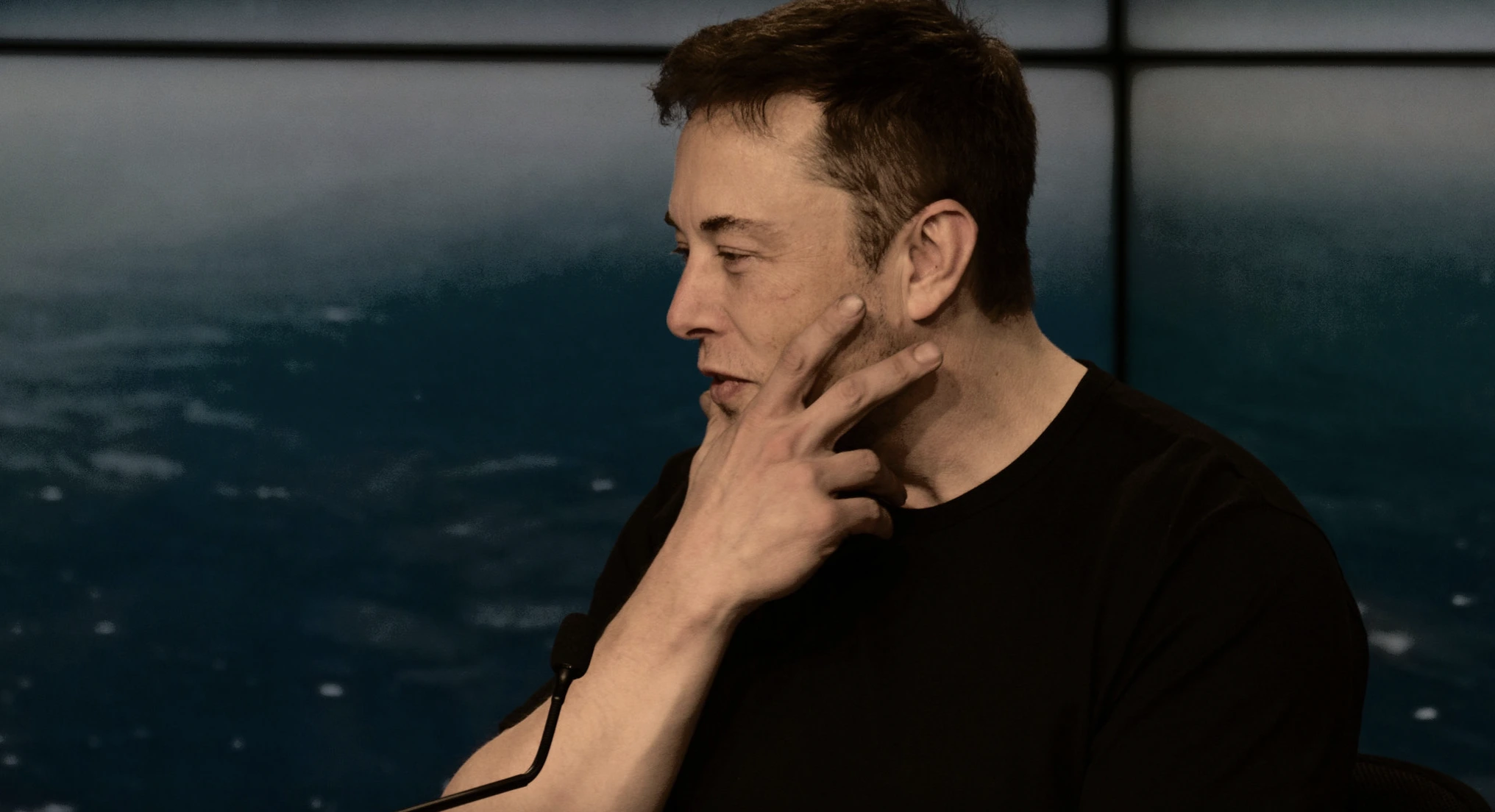
Image by Daniel Oberhaus, from Flickr
Experts Warn Musk’s DOGE Poses Unprecedented Threat to Federal IT Security
- Written by Kiara Fabbri Former Tech News Writer
- Fact-Checked by Justyn Newman Former Lead Cybersecurity Editor
Elon Musk’s efforts to access federal government data and information systems have raised alarm among IT experts, who warn of a crisis of unprecedented scale.
In a Rush? Here are the Quick Facts!
- Elon Musk’s DOGE seeks access to critical U.S. government IT systems.
- Experts warn of the largest U.S. government IT security breach in history.
- DOGE employees lack experience but reportedly accessed multiple federal agencies.
The Athlantic (TA) reports that according to four federal IT professionals, Musk’s newly established Department of Government Efficiency (DOGE) has sought entry into various critical systems, despite its employees lacking experience with such complex infrastructures.
“This is the largest data breach and the largest IT security breach in our country’s history—at least that’s publicly known,” one contractor with experience in classified government IT security stated, as reported by TA.
Experts fear that once DOGE gains access to these systems, its members could extract sensitive data, modify fundamental operations, or inadvertently cause system failures.
TA reports that DOGE representatives have obtained or requested access to systems at the Treasury Department, Department of Health and Human Services, Office of Personnel Management (OPM), and National Oceanic and Atmospheric Administration.
TA says that the Federal Aviation Administration (FAA) has also been targeted. The extent of DOGE’s access remains unclear, but experts caution that even read-only access could allow individuals to gather and transfer sensitive data.
Trump has defended Musk’s involvement, stating, “Elon can’t do and won’t do anything without our approval. And we will give him the approval where appropriate. Where it’s not appropriate, we won’t.” However, the lack of oversight over DOGE’s activities has left government IT professionals deeply concerned, noted TA.
Federal systems are highly intricate, with strict access controls in place to protect sensitive information. For example, the FAA’s En Route Automation Modernization program contains nearly 2 million lines of code, compared to an average iPhone app’s 50,000, noted TA.
Treasury databases process trillions of dollars annually, and OPM’s personnel databases contain sensitive records on government employees.
One contractor emphasized the risks: “They could change or manipulate Treasury data directly in the database with no way for people to audit or capture it. We’d have very little way to know it even happened,” as reported by TA
Adding to concerns, CNN reported that a 23-year-old former SpaceX intern was granted access to the Department of Energy’s IT systems without a background check. “That these guys, who may not even have clearances, are just pulling up and plugging in their own servers is madness,” one source said.
Experts warn that any tampering with FAA systems could jeopardize air travel safety. An FAA employee with nearly a decade of experience stated, “Going into these systems without an in-depth understanding of how they work… is a recipe for disaster that will result in death and economic harm to our nation,” reports TA
Despite Musk’s claims that DOGE will “make rapid safety upgrades to the air traffic control system,” IT professionals remain skeptical, says TA.
Further raising alarm, Bloomberg revealed that 19-year-old DOGE staffer Edward Coristine, previously an intern at the cybersecurity firm Path Network, was fired in 2022 for leaking company secrets to a competitor. Internal messages at the time stated, “Edward has been terminated for leaking internal information to the competitors, […] This is unacceptable.”
Despite his dismissal, Coristine later boasted on Discord that he retained access to Path Network’s systems, though he claimed he never exploited it. His reckless past, coupled with his current involvement in highly classified government IT infrastructure, has heightened concerns about DOGE’s security practices.
Meanwhile, Gizmondo reports that DOGE’s hiring process has come under scrutiny. Musk has signaled his intention to rehire Marko Elez, a former DOGE worker linked to an X account that posted racist content.
Government infrastructure, while sometimes outdated, is designed for reliability. Attempting to modernize such systems without expertise could lead to catastrophic failures.
The full extent of DOGE’s activities remains uncertain, but IT experts agree: the risks are severe, and the consequences could be irreversible.

Image by Hassan Kibwana, from Unsplash
Kenya’s Digital Struggle: AI, Activism, And Crackdowns
- Written by Kiara Fabbri Former Tech News Writer
- Fact-Checked by Justyn Newman Former Lead Cybersecurity Editor
Kenya is at the center of an escalating battle over digital rights as the government tightens regulations on social media and artificial intelligence.
In a Rush? Here are the Quick Facts!
- Kenyan government cracks down on AI-generated content, targeting political dissent.
- 82 critics abducted since June 2024, with 29 still missing.
- Activists warn AI regulations mainly suppress dissent, not protect workers’ rights.
The rise of AI-generated content has sparked political dissent, leading to growing tensions between authorities and tech-savvy activists, as first reported by DW .
In recent months, a wave of abductions has targeted government critics, with many linked to AI-generated images. Among those detained were cartoonist Gideon Kibet and 24-year-old Billy Mwangi, both of whom had shared an AI-generated image depicting President William Ruto in a coffin, as reported by DW.
According to the Kenya National Commission on Human Rights, 82 people have been abducted since June 2024, with at least 29 still missing. While some individuals, including Kibet and Mwangi, were later released, authorities deny any involvement in their disappearances.
With AI fueling digital dissent, the government is seeking ways to control social media. Kenyan authorities have condemned the use of AI-generated images targeting politicians, with Interior Minister Kipchumba Murkomen warning, “We will ensure that those using social media to threaten others face the full force of the law,” as reported by DW
Officials are also considering requiring social media companies to establish local offices for regulatory oversight, although platforms like X (formerly Twitter) remain resistant.
Tech expert Mark Kaigwa sees the government’s response as part of a broader struggle to control online narratives. “Citizens have, in their own way, been exercising what some would call ‘greater than their freedom of expression’ and many might describe as well within their rights,” he said, as reported by DW.
AI tools like Grok, embedded within X, have made it easier for users to generate politically charged content, intensifying tensions. “Some of the ones that have been generated have been of political leaders in coffins,” Kaigwa noted, as reported by DW. .
Kenya’s online activism is well known, with “Kenyans on X” gaining global influence. Kaigwa highlighted a recent example in which digital protests nearly derailed a planned visit by the Dutch king. “Their entire IT systems were overwhelmed with people writing emails saying, ‘Hey, we don’t think you should come,’ ” reported DW.
Beyond digital activism, AI is reshaping Kenya’s labor market, with workers facing severe exploitation . Kenyan workers play a crucial role in training AI systems for major U.S. tech firms, performing tedious and emotionally taxing tasks for as little as $2 per hour.
These workers—known as “humans in the loop”—label images, sort data, and review disturbing content, including graphic violence and child abuse, with little mental health support.
Despite Kenya’s efforts to attract foreign tech investment, labor laws remain weak, leaving workers vulnerable. Activists argue that while AI brings economic opportunities, its benefits are unevenly distributed, disproportionately harming those at the bottom.
The crackdown in Kenya mirrors broader trends across Africa , where governments are increasingly restricting digital spaces. While Kenya positions itself as an AI leader, critics argue that its regulations primarily target dissent.
As government scrutiny intensifies, Kenya faces a crucial choice: embrace digital freedom or risk deeper repression.
