Dyson’s New Augmented Reality Feature Maps Where You’ve Vacuumed
- Written by Deep Shikha Content Writer
- Fact-Checked by
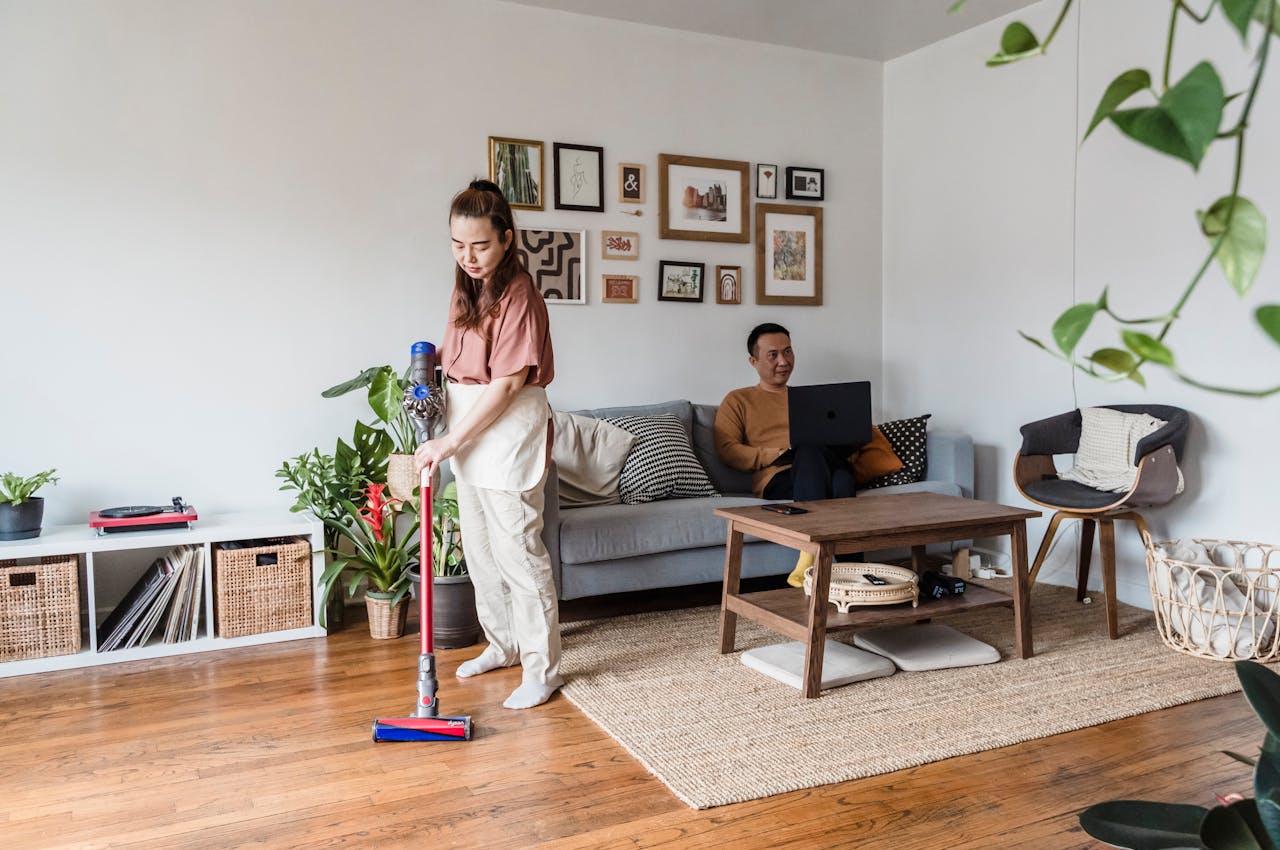
On April 8, Dyson announced a new feature called CleanTrace that uses augmented reality sensors in smartphones to visually highlight areas that have been vacuumed, ensuring no spot is missed. This tool effectively paints over cleaned sections on device screens in real-time, indicating which areas have been vacuumed.
Due for launch this June, CleanTrace uses a lidar scanner on iPhone 12 Pro, Pro Max, and newer models to highlight the vacuumed area. The phones must be attached to the vacuum using a separately sold clamp, compatible only with Dyson’s $1,000 Gen5detect model. The cost of the clamp has not yet been determined. Dyson will integrate this feature into its mobile app as a free update in June.
Dyson’s research shows that about 80% of cleaning sessions last under 10 minutes, though people report vacuuming for an average of 24 minutes. The data also highlights inefficient cleaning habits, with repeated coverage of the same areas and other spots entirely missed.
According to Dyson, this feature aims to make deep cleaning quicker and more precise.
The company explains that the feature was inspired by the mapping technology of its robot vacuums. Dyson’s VP of Engineering, Charlie Park, points out that, unlike most people, Dyson robots have a systematic cleaning approach. They are aware of their location in a room, where they’ve already cleaned and where they still need to clean.
TechCrunch has a different take on this, describing it as somewhat silly and unnecessary. However, the platform acknowledges the entertainment value, suggesting that the quirkiness is part of its appeal. It might not persuade those hesitant about a $700+ vacuum, but TechCrunch remarks that it’s not the most extreme product Dyson has released, referencing the Dyson Zone air purifier you attach to your face.
According to The Verge , the Gen5detect vacuum already includes features like a green headlight highlighting dust and debris. The CleanTrace attachment adds another layer of verification, giving users extra assurance that they’ve cleaned thoroughly. The Verge also raises the valid question of why this feature wouldn’t work with other Dyson models or even vacuums from different brands.
The system displays Dyson’s signature purple in demonstrations, marking the vacuum’s path. While there’s no one opinion on whether this feature is unnecessary, this means there’ll be no more floorboard counting to ensure thorough cleaning.
Thousands of LG TVs Risk Hacker Takeover
- Written by Deep Shikha Content Writer
- Fact-Checked by
On April 9, Bitdefender released a report revealing that 90,000+ LG TVs (as found by Shodan) could be commandeered unless they get a new security update for 4 critical vulnerabilities discovered last year. These vulnerabilities could let an attacker bypass security checks and gain complete control of the device.
Most of these TVs are in South Korea. A significant number was also found in Hong Kong, the US, Sweden, and Finland. To prevent the exploitation, LG made the security update available to all these devices under the Settings menu on April 10.
In November 2023, Bitdefender’s security research identified 4 vulnerabilities in WebOS versions 4 through 7 on LG TVs and reported them to LG. Although vulnerabilities were exploited by LAN access, they still pose serious threats.
The first vulnerability ( CVE-2023-6317 ) allows a hacker to skip the usual security check and add a new user to the TV, bypassing the system’s authorization mechanism. Once added, this user can exploit a second vulnerability ( CVE-2023-6318 ) to gain complete control over the TV, known as root access.
A third bug ( CVE-2023-6319 ) involves a hacker manipulating part of the TV’s software that displays music lyrics to execute unauthorized commands. The fourth one ( CVE-2023-6320 ) enables attackers to send authenticated commands through a specific part of the TV’s network service, allowing them further unauthorized access.
Ars Technica points out that the risks go beyond just a smart TV being hijacked. If a hacker accesses the accounts linked to the device, they could also get to user’s emails and financial details. In addition, the hacked devices could be used in crypto-mining operations or become part of a botnet.
Updating the TV to the latest software version is essential to ensure device safety. LG issued a security patch in its update on March 22. Most LG devices likely received this update automatically.
To update to the latest version of WebOS TV , navigate to Settings > Support > Software Update, and select “Check for Updates.” If available, choose “Download and Install.”
