By freepik
Detroit Police Reforms AI Facial Recognition Use Following Lawsuit
- Written by Kiara Fabbri Former Tech News Writer
- Fact-Checked by Justyn Newman Former Lead Cybersecurity Editor
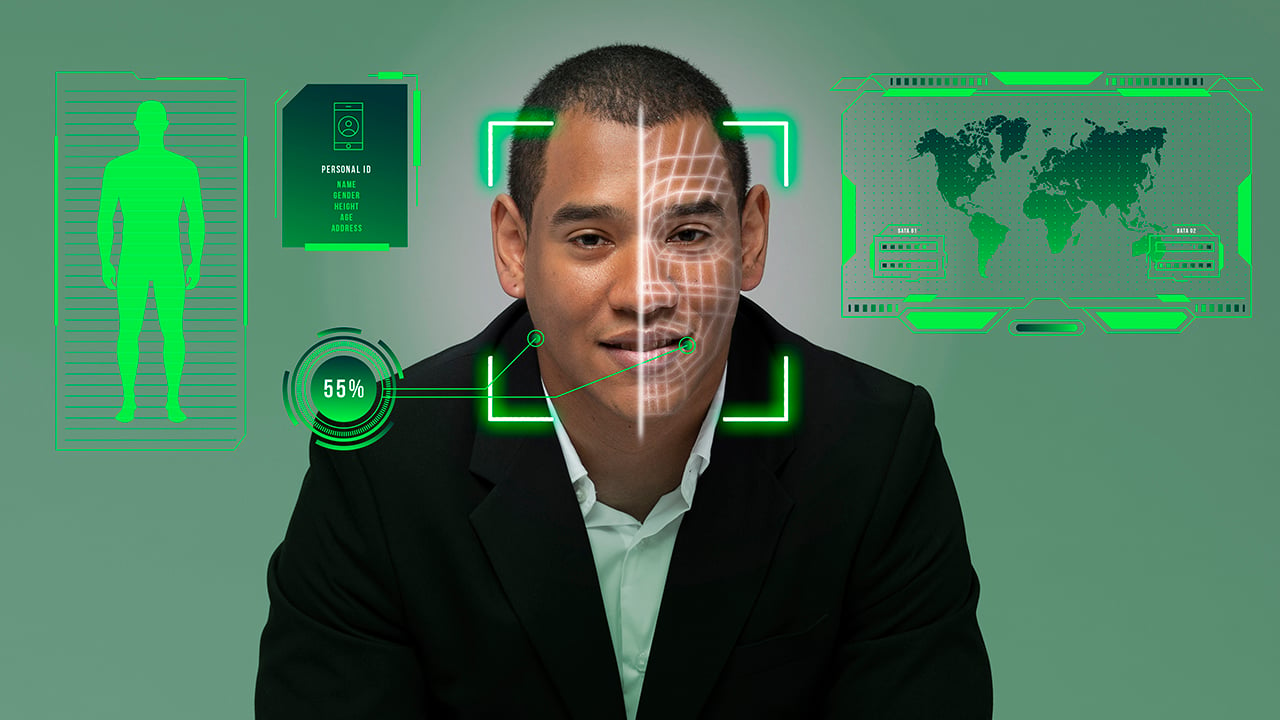
In a landmark settlement this week, Robert Williams, reached an agreement with the City of Detroit. This comes after his wrongful arrest in 2020 based on faulty facial recognition technology. The incident highlighted concerns about the technology’s accuracy and potential for racial bias.
On January 9, 2020, Detroit police officers arrested Williams on his front lawn, in front of his wife and two young daughters. “They refused to tell me why, and I had to spend the night sleeping on a cold concrete bench in an overcrowded, filthy jail cell before finally finding out that I was being falsely accused of stealing designer watches from a Detroit boutique,” Williams told TIME .
During interrogation, it was revealed they relied solely on facial recognition software that incorrectly identified Williams from blurry security footage. Williams spent 30 hours in jail before the charges were dropped.
“The system somehow returned my expired driver’s license photo as an ‘investigative lead’ that might match the thief,” Williams explained. “Rather than investigate the accuracy of this purported match, police accepted the ‘lead.’”
While the settlement doesn’t ban facial recognition entirely, it imposes stricter controls on the Detroit Police Department’s (DPD) use of the technology. Crucially, photo lineups can no longer be based solely on facial recognition matches. Police must now uncover independent evidence before conducting a lineup after using the technology.
The incident highlighted broader issues with facial recognition technology. Past studies have shown that law enforcement agencies using automated facial recognition disproportionately arrest Black people. Factors contributing to this include the lack of Black faces in the algorithms’ training data sets, a belief in the infallibility of these programs, and officers’ own biases magnifying these issues.
Capitol Technology University highlights the systemic biases inherent in historical data used to train algorithms, stating , “If the historical data used to train algorithms and develop technologies reflects systemic biases, they are likely to perpetuate those same historically unequal opportunities and exacerbate inequalities.” Alarmingly, facial recognition systems have been shown to misidentify people of color up to 100 times more frequently than White Americans.
In a statement Williams emphasizes the human cost of misused technology: “I never thought I’d have to explain to my daughters why daddy got arrested,” Williams stated in a Washington Post interview. “How does one explain to two little girls that a computer got it wrong, but the police listened to it anyway?”
The settlement in Williams’ case represents a step towards preventing future wrongful arrests, but the fight against potential racial bias in facial recognition software continues.
Image by Solen Feyissa on Unsplash
TikTok Remains A Powerful Opponent Against U.S. Government
- Written by Andrea Miliani Former Tech News Expert
- Fact-Checked by Justyn Newman Former Lead Cybersecurity Editor
TikTok is less than 8 years old, but has proven to the most popular social media platforms—and the U.S. government—that it is a very strong contender and that it is more than willing to fight.
The short-form video app was first launched in 2016 as Douyin in China by the tech giant ByteDance. At that moment, Instagram—launched in 2010—had reached 500 million active users.
In 2017 ByteDance officially launched Tiktok, the global version of Douyin, and it now has 1.12 billion users worldwide—170 million in the U.S.— and its main rival Instagram is currently at 1.47 billion. TikTok’s boom has been historically impressive.
Part of its “secret” for success is also its controversial algorithm. Besides being highly addictive for users , the algorithm has also been scrutinized for its data processing and treatment—especially for its links with the Chinese government.
For years, the U.S. government has tried to diminish TikTok’s presence in the country—former president Donald Trump tried to remove it from the app stores in 2020 —but the company remains resilient. And now, Biden’s administration is attacking the platform again as it considers it a national threat.
The new bill to ban TikTok was passed on March 13th. The U.S. House has given TikTok two options: transfer ownership to a non-Chinese company or leave the country. But Tiktok is not ready to surrender. Will the U.S. government finally kick the Chinese company out within the next few months or will the platform keep using its influence and powerful algorithm to prevail?
Counterattacks Against The U.S. Government
TikTok fought back just a few weeks after the bill was passed. “Make no mistake, this is a ban, a ban on TikTok, and a ban on you and your voice,” said Shou Zi Chew, CEO of TikTok in a video in April. And proceeded to take out its powerful weapon: the freedom of expression. “It’s actually ironic because the freedom of expression on TikTok reflects the same American values that make the United States a beacon of freedom” he added.
TikTok has also silent strategies to fight back. The company might not be willing to comply with the selling idea so fast, but Reuters reported that they have been secretly working on a duplicate of its core algorithm meaning they have been exploring different outcomes and scenarios to try to win the battle.
Instagram Takes Advantage
Despite the counterattacks, the effects of the White House’s ban attempts have hurt the video platform. TikTok’s growth started stalling a few months ago. Not only app downloads have been decreasing, but Instagram has now outperformed TikTok in this arena.
Instagram launched its short-video feature “Reels” in 2020—what a coincidence, right?—increasing its monthly active users, and overtaking TikTok with more downloads in 2023. What Instagram hasn’t beaten yet is the time users spend on its app. According to last year’s data, users spend on average 93 minutes on TikTok and 62 on Instagram.
The cloning strategies have been crazy these past few years. Remember when all social media platforms had very different purposes? YouTube launched YouTube Shorts soon after Instagram’s Reels, Snapchat its Spotlight feature weeks later, and even Spotify joined this trend with a redesign for its podcasts and music suggestions in 2023.
Now, TikTok launched two new photo-sharing apps, similar to what Instagram used to be, called TikTok Notes and Whee —in April and in June respectively—, a photo-sharing app, similar to what Instagram used to be.
TikTok’s Influence In The U.S. Market
Taking advantage of the popularity of the hashtag #TikTokMadeMeBuyIt, the company announced its new ‘Deals For You Days’ , a day of offers and discounts, including live video streamings and involving top brands like NYX, L’Oréal Paris, and Maybelline New York. This move shows the company’s relentless efforts to find more territories to conquer and remain relevant in the U.S. market.
Will young Americans be as influenceable as the Asia-Pacific audience? We are about to find out. Of course, TikTok’s decision to create a sales day was not randomly decided. A recent report confirms that Generation Z’s purchase decisions are heavily influenced by TikTok. “Executives we spoke with noted that the fast-paced nature of social commerce platforms such as TikTok, where not just regional, but international trends rapidly come and go, is having a downstream effect on Gen Z’s purchasing behavior and forcing brands to reassess their supply chain strategy.”
According to Forbes , Americans already spend around $7 million shopping on TikTok every day and the company aims to increase that number to $17.5 million this year.
The ambition is still there. Strong.
Despite the attacks and the multiple rivals, TikTok remains afloat and puts multiple strategies into play to remain in the United States. The platform has showcased its power this year and many—including me— are curious and eager to see what happens in the following months, as the time frame from the U.S. government’s ultimatum reaches an end.
