Photo by James Yarema on Unsplash
DeepSeek Ranks In First Place On Apple’s App Store, Surpassing ChatGPT
- Written by Andrea Miliani Former Tech News Expert
- Fact-Checked by Justyn Newman Former Lead Cybersecurity Editor
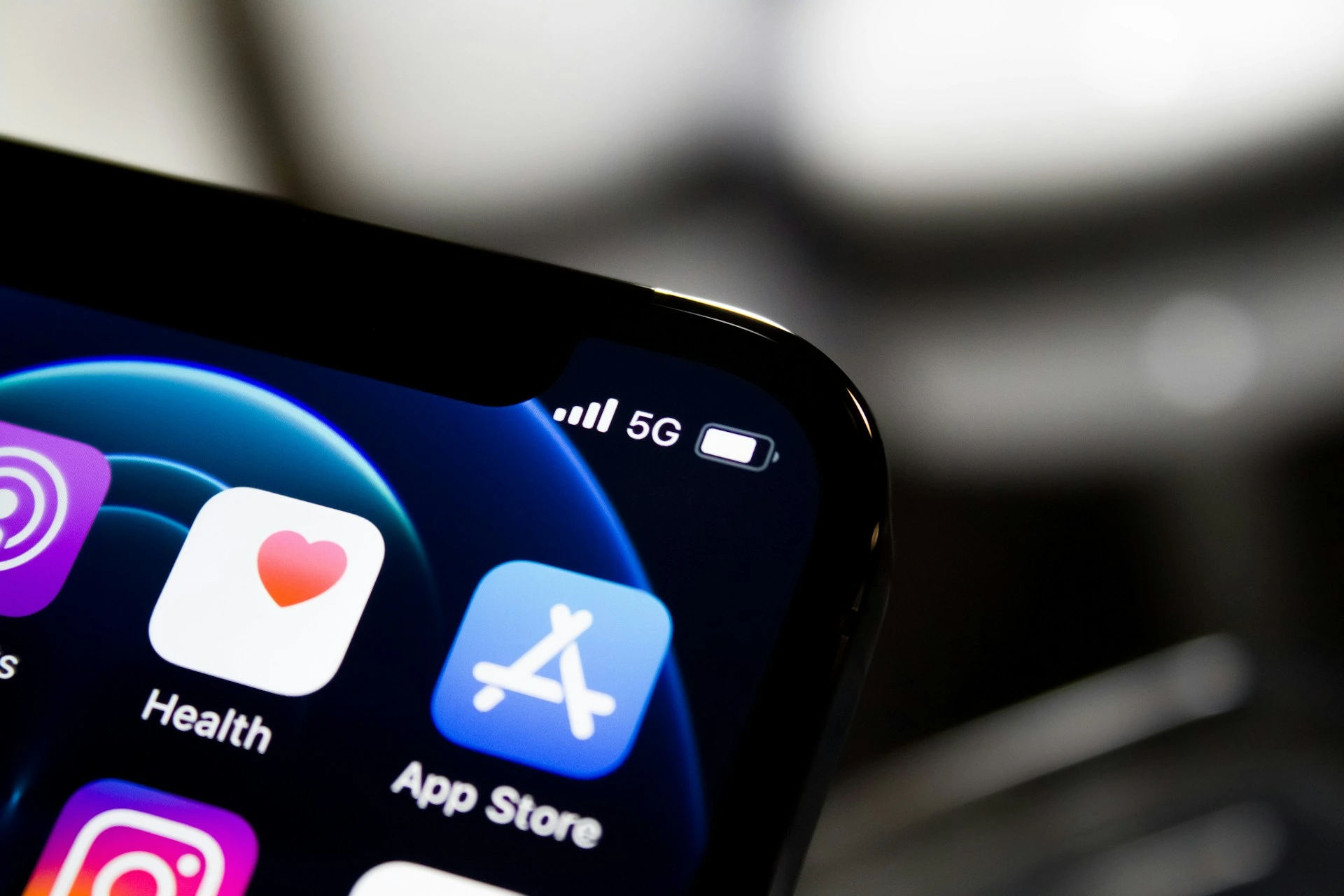
The Chinese AI startup DeepSeek’s free app hit first place in Apple’s App Store in the United States this Monday, surpassing its rival ChatGPT.
In a Rush? Here are the Quick Facts!
- DeepSeek – AI Assistant app surpassed ChatGPT and reached first place in Apple’s App Store in the United States.
- The app has been available since January 10 and is powered by the startup’s latest open-source model DeepSeek-V3.
- The Chinese company has gained popularity in the U.S. and attention in Silicon Valley.
The AI company launched its latest open-source model DeepSeek-V3 at the end of December, claiming that it could perform better than frontier models like Anthropic’s Claude-Sonnet-3.5 and OpenAI’s GPT-4o. The model has been gaining increasing popularity among American users and worldwide.
“Experience seamless interaction with DeepSeek’s official AI assistant for free!” states the app description on the App Store . “Enjoy faster speeds and comprehensive features designed to answer your questions and enhance your life efficiently.”
According to Reuters , DeepSeek – AI Assistant has been available for mobile downloads at no cost since January 10. The company has been garnering attention, even in Silicon Valley, for its ability to develop highly advanced AI models.
Notably, according to a paper published by DeepSeek researchers in December, compared to other AI companies, these models are created at a fraction of the cost and with less advanced AI chips. This achievement comes as the U.S. government continues to regulate AI chip exports—and recently proposed a new framework amid ongoing controversies.
Aravind Srinivas, Perplexity’s CEO and co-founder, acknowledged the Chinese company’s record on the social media platform X. “Congrats to DeepSeek AI for getting to #1 on the App Store,” wrote Srinivas. “For a while, it wasn’t clear who would beat ChatGPT for the first time. The best we could manage was #8, a year ago.”
Congrats to @deepseek_ai for getting to #1 on the App Store. For a while, it wasn’t clear who would beat ChatGPT for the first time. The best we could manage was #8, a year ago. Look forward to using all their models for search, assistant, and agents this year. pic.twitter.com/WpVR3TFA0t — Aravind Srinivas (@AravSrinivas) January 27, 2025
DeepSeek is not the only Chinese app gaining popularity in the U.S. Amid the TikTok controversies and temporary shutdown , millions of Americans downloaded the video-sharing app RedNote .

Image by Kevin Ku, from Unsplash
AI Widens Cybersecurity Gap Between Attackers And Defenders
- Written by Kiara Fabbri Former Tech News Writer
- Fact-Checked by Justyn Newman Former Lead Cybersecurity Editor
Generative AI (GenAI) is reshaping the cybersecurity landscape, driving advancements for defenders while empowering attackers to operate with greater efficiency and creativity, according to the latest Splunk CISO Report .
In a Rush? Here are the Quick Facts!
- 64% of CISOs blame inadequate support for the rise in successful cyberattacks.
- AI-powered attacks top CISOs’ concerns, followed by cyber extortion and data breaches.
- 86% of cybersecurity professionals believe AI can address the cybersecurity skills gap.
The report reveals how artificial intelligence is being harnessed on both sides of the cyber conflict, creating opportunities and challenges in equal measure.
The study highlights a growing disparity in priorities between board members and Chief Information Security Officers (CISOs). While 52% of CISOs are focused on adopting emerging technologies like GenAI, only 33% of board members share their enthusiasm.
This disconnect extends to budget allocation, with just 29% of CISOs believing they have sufficient funding to secure their organizations, compared to 41% of board members who think otherwise.
This lack of alignment is raising red flags, as nearly two-thirds (64%) of CISOs report that insufficient resources have contributed to cyberattacks on their organizations.
For cybercriminals, GenAI is proving to be a game-changer. It enables them to make existing attacks more effective (32%), increase attack volumes (28%), and create entirely new types of threats (23%).
On the defensive side, security teams are leveraging AI for tasks such as identifying risks (39%), analyzing threat intelligence (39%), and prioritizing threat detection (35%).
However, concerns about AI-powered attacks dominate among CISOs, with 36% identifying them as their primary worry, followed by cyber extortion (24%) and data breaches (23%). Greg Clark, Director of Product Management at OpenText Cybersecurity, emphasized the need for comprehensive training alongside AI-powered solutions.
“Phishing scams and insider threats are only getting more sophisticated. Whether a large enterprise or a small business, education and awareness across all departments need to be layered on top of AI-powered technologies that detect threats,” Clark said as reported by Tech Radar .
The cybersecurity skills gap remains a pressing issue, but AI is seen as a potential solution. A significant majority of respondents—86%—believe AI can assist in onboarding entry-level talent, while 65% see it enhancing the productivity of experienced professionals.
To address these challenges, organizations are ramping up security training for compliance and legal teams, with over 90% prioritizing cross-disciplinary education.
The report underscores the importance of maintaining robust cyber-hygiene practices, such as enforcing strong passwords, implementing multi-factor authentication, and assessing third-party vendors for vulnerabilities.
