
CSOP Launches Asia’s First Inverse Bitcoin ETF in Hong Kong
- Written by Shipra Sanganeria Cybersecurity & Tech Writer
- Fact-Checked by Justyn Newman Former Lead Cybersecurity Editor
China Southern Asset Management Co., Ltd (CSOP) launched Asia Pacific region’s first crypto-linked inverse exchange-traded funds (ETFs) in Hong Kong, today.
The ETF — CSOP Bitcoin Futures Daily (-1x) Inverse Product — open for trading on Hong Kong Exchanges and Clearing (HKEX) allows investors to profit from downward price movements of the world’s largest cryptocurrency token.
This launch comes after a summer of volatile trading, during which Bitcoin’s price dropped below $54,000 in early July. However, optimism about pro-crypto Donald Trump’s potential return to office later fueled a recovery. Some traders think Trump-fueled optimism could send Bitcoin to $100,000 “very soon,” said CSOP’s CEO Ding Chen during an interview with Bloomberg Intelligence’s Rebecca Sin and David Ingles
In response to this volatility and anticipating increased demand, CSOP introduced this product, aiming to profit from the fluctuating cryptocurrency market. The company is also preparing to introduce an inverse Ether ETF, she added.
Inverse products are designed as daily reset ETFs, enabling trade-oriented investors to profit from a decline in the value of an underlying asset, another ETF, or a market index.
However, instead of investing directly in Bitcoin, CSOP’s new product will focus on short positions in Bitcoin futures traded on the Chicago Mercantile Exchange, as outlined in the company’s regulatory filings last week and reported by the South China Morning Post (SCMP) .
While CSOP aims to help traders profit from the volatile market prices of such products, it has warned that the product’s high price volatility can cause stock values to drop by more than 20% in a single day, revealed SCMP in the article.
With a positive outlook on crypto exchange-traded products and investment in inverse ETFs, CSOP aims to attract $50-100 million in assets under management (AUM) over the next few years. Globally, inverse crypto exchange-traded products have already attracted approximately $106 million, according to Bloomberg .
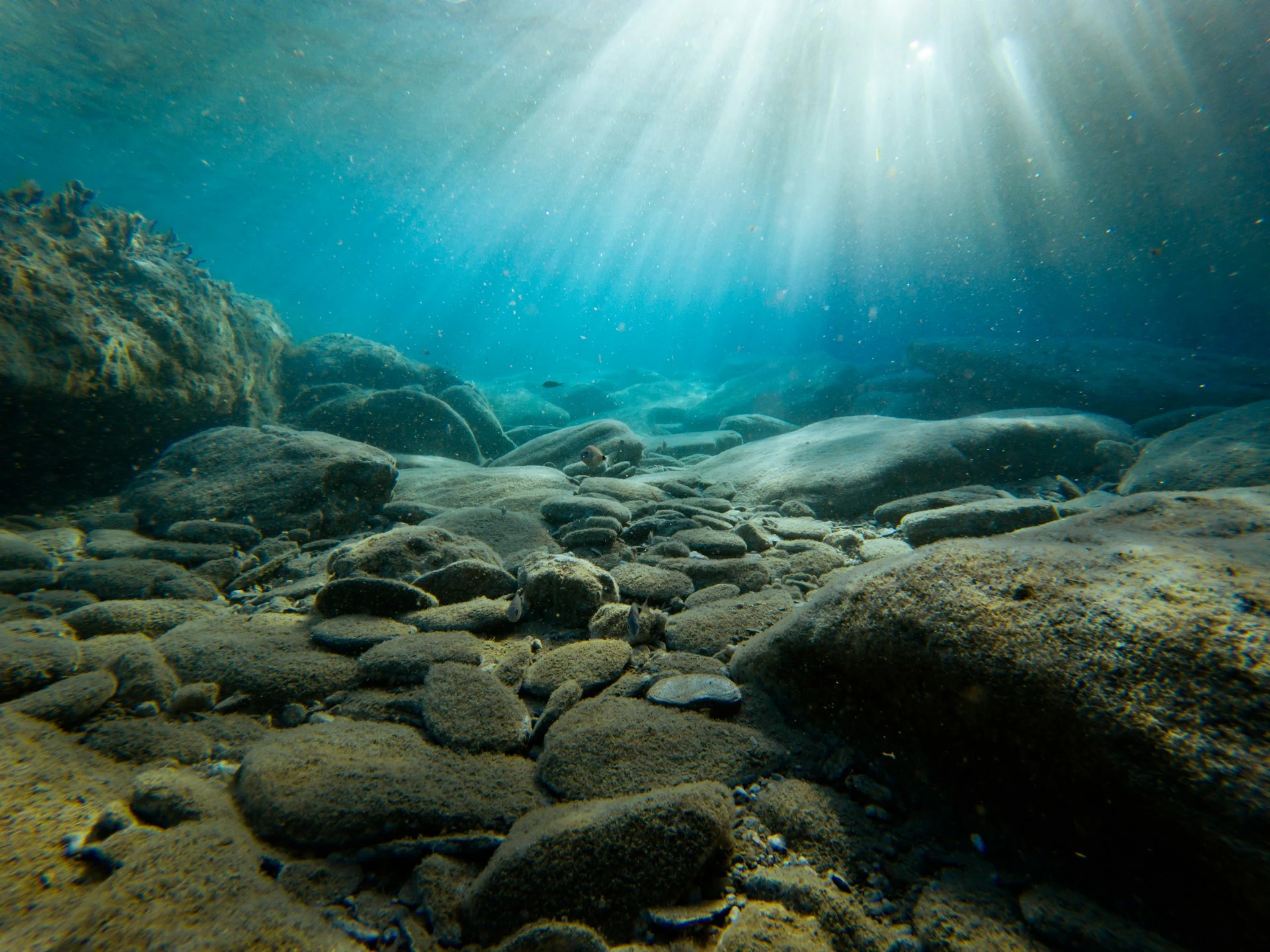
Photo by Yannis Papanastasopoulos on Unsplash
Scientists Discover Mysterious Oxygen Source Produced On Sea Floor
- Written by Andrea Miliani Former Tech News Expert
- Fact-Checked by Justyn Newman Former Lead Cybersecurity Editor
Scientists discover a “dark oxygen” source on the sea floor in the Pacific Ocean, in complete lack of sunlight. The phenomenon was revealed in a study published in Nature called “Evidence of dark oxygen production at the abyssal seafloor.”
However, the new discovery has raised multiple unanswered questions, starting with what exactly is producing this oxygen and how.
According to Nature , the mechanism behind it remains a mystery, but scientists suspect it has to do with elements in the location, such as the polymetallic nodules—plum-sized formations and their possible capabilities of splitting water molecules.
“We have another source of oxygen on the planet, other than photosynthesis,” said Andrew Sweetman, one of the authors of the study at the Scottish Association for Marine Science. Sweetman also explained that this new discovery could lead to further explanation of how life began, as well as the consequences of deep-sea mining practiced in the region.
The research began in 2013, when scientists were analyzing sea-floor ecosystems between Mexico and Hawaii, in the Clarion–Clipperton Zone. For the study, they released a module that sinks, performs experiments, and measures, gathering useful data for the experts. The instrument showed scientists that the water in the area studied got richer in oxygen.
Sweetman explained that, at first, they assumed the sensor was broken, but it kept giving similar results in following expeditions in 2021 and 2022. “I suddenly realized that for eight years I’d been ignoring this potentially amazing new process, 4,000 meters down on the ocean floor,” said Sweetman.
The amount of oxygen found was significantly, higher than in areas rich in algae, suggesting that the polymetallic nodules have an important role.
Biogeochemist at the University of Southern Denmark Donald Canfield found the study “fascinating,” but also frustrating “because it raises a lot of questions and not very many answers.”
