
Photo by Vasilis Chatzopoulos on Unsplash
Crypto Bank Sygnum Achieves Unicorn Status with $1 Billion Valuation
- Written by Andrea Miliani Former Tech News Expert
- Fact-Checked by Justyn Newman Former Lead Cybersecurity Editor
The crypto bank Sygnum recently raised $58 million and reached a valuation above $1 billion, hitting unicorn status.
In a Rush? Here are the Quick Facts!
- In a recent funding round, the crypto bank Sygnum raised $58 million, reaching a $1 billion valuation and earning unicorn status.
- The digital asset bank expects to develop its infrastructure, expand to more regions in Europe, and launch in Hong Kong.
- The recent funding round included the participation of current and new investors, employees, and the bitcoin-focused firm Fulgur Ventures.
According to Reuters , Sygnum, with headquarters in Singapore and Zurich, expects to expand to more regions in Europe, launch in Hong Kong, and develop its infrastructure. The company has been growing and expanding recently, having registered in Liechtenstein in September and raising $40 million last year.
The new funding round involved new and current investors, the company’s employees, and the firm Fulgur Ventures—a bitcoin-focused venture.
Sygnum—established in 2018—offers its customers multiple services such as custody solutions for digital assets, and trading and tokenization services.
According to Fortune , Sygnum holds digital assets like Bitcoin instead of fiat currencies like U.S. dollars for its customers, a strategy that even traditional banks are starting to replicate.
“We’re not a traditional bank coming from the fiat world. We are looking at the market from the digital asset space and then integrating it to traditional banking,” said Mathias Imbach, Sygnum co-founder and CEO, to Fortune.
While the new successful deal is related to recent developments in the United States— Bitcoin surpassed the 100,000 milestone a few weeks after Donald Trump won the presidential elections and hours after he announced Paul Atkins, an advocate for cryptocurrency adoption, as Chairman of the Securities and Exchange Commission—, the crypto bank does not intend to expand to America at the moment.
“Sygnum has focused on its home markets in Europe and Asia and has no current plans to enter the U.S. market with our own entities,” said Imbach to Reuters. “The U.S. developments for positive crypto market reform are, however, highly encouraging … Sygnum is exploring other options to benefit from this trend and will update the market once these are sufficiently developed, for example, partnerships and M&A.”
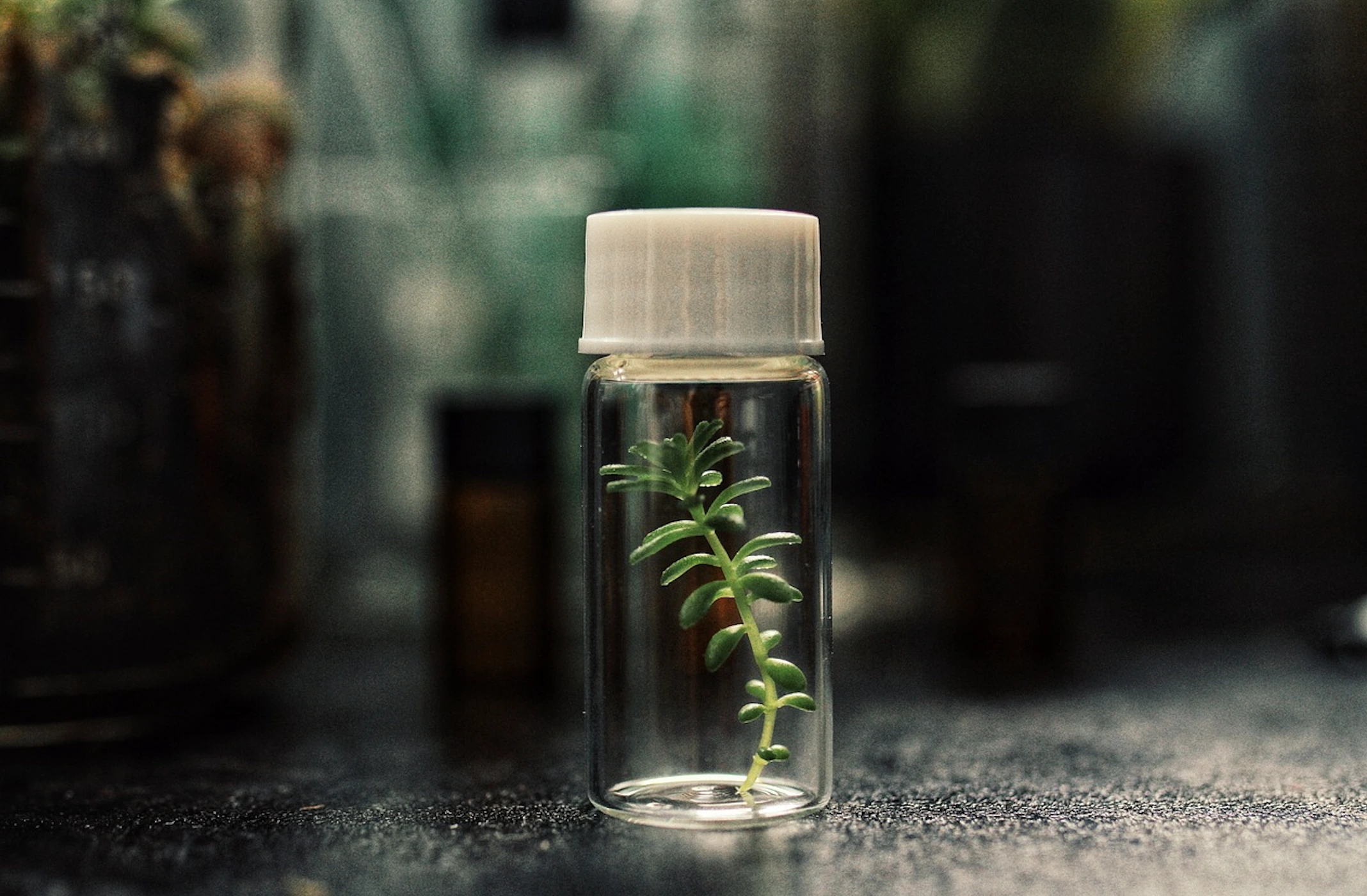
Image by Katetsui, from Pixabay
Growing Greens On Mars: NASA’s Plan For Space Agriculture
- Written by Kiara Fabbri Former Tech News Writer
- Fact-Checked by Justyn Newman Former Lead Cybersecurity Editor
NASA is advancing space agriculture to sustain astronauts on long-duration missions to the Moon and Mars, as reported on Sunday in Astrobiology .
In a Rush? Here are the Quick Facts!
- Space-grown mizuna has higher nutrients but lower yields due to microgravity stress.
- Red-rich light suits single harvests; blue-rich light benefits repeated harvesting in space.
- Space-grown crops showed increased microbial loads compared to Earth-grown samples.
Growing fresh produce, like leafy greens and vegetables, could provide essential nutrients, improve mental well-being, and reduce reliance on sealed food packets, which lose flavor and vitamins over time.
Recent experiments aboard the International Space Station (ISS) have revealed how microgravity influences plant growth, nutrient content, and microbial safety. The VEG-04A and VEG-04B experiments, for instance, studied mizuna mustard greens using the Veggie Vegetable Production System.
Results showed that space-grown mizuna had higher nutrient levels and was rated more palatable by tasters than its Earth-grown counterpart. However, yields were lower due to microgravity-induced stresses, and microbial loads were higher in space-grown samples.
Light quality emerged as a critical factor. Red-rich light was optimal for single harvests, while blue-rich light promoted nutrient accumulation and supported repeated harvesting.
Yet, these benefits came with trade-offs. For instance, the “cut-and-come-again” harvesting approach allowed multiple yields but increased microbial loads, emphasizing the need for optimized safety protocols.
According to a report from Earth.com , other studies, such as Plant Habitat-07 , explored how lettuce adapts to varying moisture levels in microgravity. While water is essential for plant health, imbalances can deprive roots of oxygen or lead to wilting.
Preliminary findings highlighted the critical role of maintaining optimal hydration to ensure healthy, flavorful leaves.
Earth.com also reports that NASA scientists are also exploring genetic and hormonal responses in plants. Research on Arabidopsis thaliana revealed that microgravity alters gene expression, affecting nutrient production, growth patterns, and chemical markers.
These findings pave the way for customizing plant genetics to adapt to the unique challenges of space, such as irregular water movement and limited growing space. Insights from these studies have already informed the cultivation of other crops, like peppers, tomatoes, and radishes.
Adjusting light quality and nutrient formulas has demonstrated significant effects on taste, appearance, and yield. Astronauts’ feedback on freshness and flavor aids in selecting seeds for diverse salads during future missions, according to Earth.com.
As NASA refines its space agriculture techniques, tools like the Mass Measurement Device (MMD) are enabling more precise studies of plant biomass in microgravity. This data is crucial for understanding how crops adapt to spaceflight conditions and how to optimize yields and nutrient profiles.
While challenges remain—such as ensuring consistent microbial safety and developing plants that thrive in low gravity—the progress is promising.
Fresh produce not only provides essential nutrients but also offers psychological support for crews on long missions. With ongoing innovations, NASA is steadily moving closer to creating self-sufficient food systems for Mars and beyond.
These advancements in space farming mark a significant step toward sustainable, long-term human exploration of deep space.
