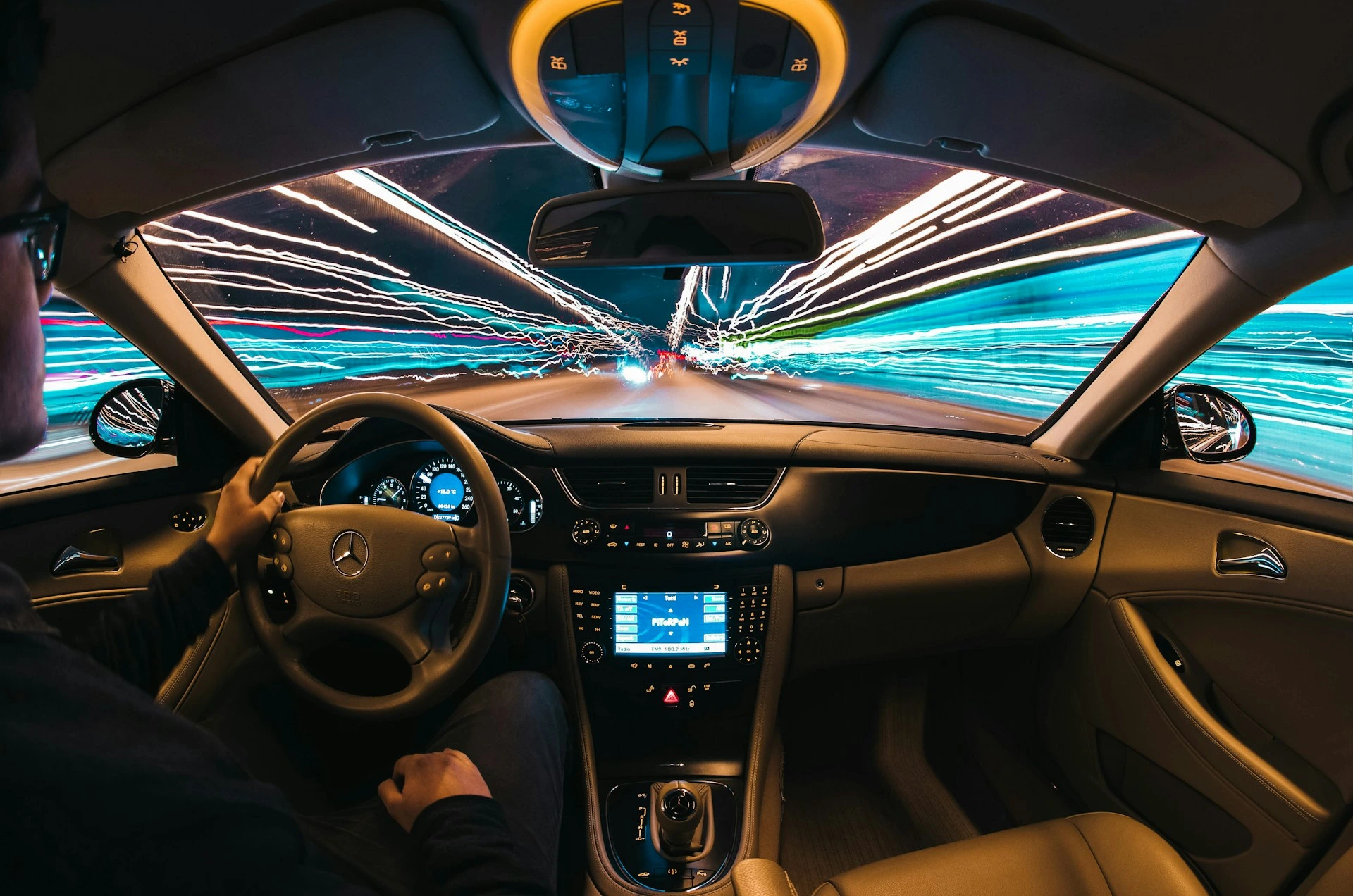
Photo by Samuele Errico Piccarini on Unsplash
Chinese Startup DeepRoute.ai Raises $100 Million To Expand Autonomous Driving Systems
- Written by Andrea Miliani Former Tech News Expert
- Fact-Checked by Sarah Frazier Former Content Manager
In a Rush? Here are the Quick Facts!
- Secret Chinese automaker invests $100 million in the Shenzhen-based company DeepRoute.ai
- DeepRoute.ai has equipped 20,000 vehicles with its technology and expects to reach 200,000 by the end of 2025
- The startup wants to develop 10 different models of is full self-driving system
The Chinese autonomous driving company DeepRoute.ai raised $100 million from an automaker for mass adoption of its autonomous driving system. The name of the Chinese investor has not been revealed yet.
Maxwell Zhou, DeepRoute.ai CEO, told Reuters in an interview shared this Monday that they expect to equip 200,000 cars with their advanced technology by the end of 2025, and they currently have 20,000 vehicles with the system.
The Shenzhen-based start-up launched this August a Full Self-Driving (FSD) program, similar to Tesla’s, in China, where Elon Musk—Tesla’s CEO—also expects to deploy his technology soon.
But Zhou doesn’t seem to be afraid of this competition and he considers his company to have an advantage in the market. “China has more complicated traffic situations with pedestrians walking on motorways and millions of scooters rushing to deliver their goods,” said Zhou in the interview and added that they expect to expand to other regions like the Middle East, Europe, and Southeast Asia by 2027 or 2028 depending on the market opportunities.
The company expects to develop 10 different models to offer options to its clients in 2025. One of the current customers is a new brand co-owned by Mercedes Benz and Geely, they expect to launch the first vehicles with DeepRoute.ai’s technology by the end of the year.
The startup, founded in 2019, is also backed by the tech giant Alibaba. Its current valuation has not been disclosed either.
Other Chinese autonomous vehicle startups have been developing and expanding their technologies. WeRide made its initial public offering in the U.S. market a few days ago, raising a total of $440.5 million.

Image by Freepik
Passwords Are Outdated, AI Offers A Safer Alternative According To Experts
- Written by Kiara Fabbri Former Tech News Writer
- Fact-Checked by Sarah Frazier Former Content Manager
In a Rush? Here are the Quick Facts!
- AI-driven, passwordless systems expected by 2025.
- 61% of companies plan passwordless solutions next year.
- AI can detect unusual login patterns to enhance security.
Passwords are increasingly seen as outdated and insecure in the cybersecurity industry, with professionals calling for AI-driven, passwordless alternatives by 2025.
Forbes reported that according to a recent RSA ID IQ report , which surveyed over 2,000 cybersecurity experts across 62 countries, passwords are a major source of frustration and vulnerability.
More than half of respondents reported entering their passwords six or more times daily, with 20% doing so over 11 times, as reported by Forbes.
These frequent password prompts are not only time-consuming, challenging to remember, but are also vulnerable to hackers, and costly for IT support to maintain. However, these issues barely scratch the surface of the real problem: most data breaches start with compromised credentials, noted Forbes.
The limitations of passwords have been widely recognized for years, with tech leaders advocating for their elimination.
Steve Won, chief product officer at 1Password, emphasizes that moving beyond passwords would reduce vulnerabilities like phishing, as “there would be nothing to steal,” as reported by Forbes.
Instead of passwords, AI could enable authentication based on user behaviors, such as login location and device patterns, which are more difficult for attackers to mimic, noted Forbes.
With 61% of survey participants indicating plans to implement passwordless systems in 2025, AI-based security solutions are gaining traction, reported Forbes.
However, adoption is slowed by challenges: 24% of professionals believe passwordless standards lack maturity, 21% point to limited platform support, and 15% express doubts about trusting the technology, noted Forbes.
Only 13% cite budget as a primary obstacle, reflecting growing openness to investing in passwordless methods, said Forbes.
Forbes reports that AI-driven security systems can automate responses to unusual behavior, according to RSA CEO Rohit Ghai.
For example, if a user attempts to log in from an unexpected device or network, AI can recognize the anomaly, alert the security team, or require additional verification.
Despite concerns about trusting AI’s decision-making processes, Ghai believes confidence in AI-driven security will grow as organizations see its benefits compared to password only systems, reported Forbes.
