
Image Glenn Carstens-Peters, from Unsplash
China’s Manus AI Challenges US Tech With Autonomous Capabilities
- Written by Kiara Fabbri Former Tech News Writer
- Fact-Checked by Sarah Frazier Former Content Manager
China’s Manus AI is making waves in the AI industry, challenging US tech firms with its new general AI agent.
In a Rush? Here are the Quick Facts!
- Manus has gained attention through a viral video and large Discord community.
- Initial reviews are mixed, with praise for quality but concerns over performance.
- Manus integrates multiple AI models, including Claude 3.5 and Alibaba’s Qwen.
Developed by Wuhan-based startup Butterfly Effect, the tool claims to be the world’s first truly autonomous AI agent, capable of performing tasks like resume screening, itinerary planning, and stock analysis with minimal supervision, as reported by Bloomberg .
Manus launched a preview version last week, quickly gaining attention with a viral demonstration video. Co-founder and chief scientist Yichao Ji described it as “truly autonomous,” contrasting it with other AI agents that require more guidance, as reported by Bloomberg.
The tool has drawn comparisons to DeepSeek, another Chinese AI breakthrough that disrupted the market earlier this year by offering high-quality AI models at a fraction of the cost US competitors spend.
MIT notes that the hype surrounding Manus has led to a rush for access, with its Discord community surpassing 186,000 members. However, only a small fraction of users on the waitlist have received invite codes. Despite the excitement, initial reviews have been mixed.
Derya Unutmaz, a professor at the Jackson Laboratory, praised Manus for delivering “great quality outcomes” but noted that “it takes longer than OpenAI’s Deep Research to process the tasks,” reports Bloomberg
Others have pointed out performance issues, including slow response times, occasional crashes, and factual mistakes. “Manus is actually a half-finished product,” said Yiran Chen, an electrical and computing engineering professor at Duke University, as reported by Bloomberg. He suggested that the company is pushing the product early to attract investors.
Manus functions differently from chatbots like ChatGPT and DeepSeek, which are based on single large language models. Instead, it integrates multiple AI models, including Anthropic’s Claude 3.5 Sonnet and Alibaba’s fine-tuned Qwen, and employs independent AI agents that operate autonomously, as reported by MIT.
It also features a “Manus’s Computer” window, allowing users to monitor its progress and intervene when necessary. MIT Technology Review tested Manus on tasks like compiling a list of tech reporters, finding real estate listings, and nominating candidates for an innovation award.
While the AI initially cut corners—admitting it got “lazy” when listing journalists—it improved with more feedback, producing a more comprehensive and accurate output.
Butterfly Effect, the company behind Manus, has raised over $10 million, according to Bloomberg, but it remains unclear how much of its AI is built from scratch versus refined from existing models. Unlike DeepSeek, Manus has not published technical papers or open-sourced its code.
Despite its limitations, some users believe Manus has the potential to redefine AI automation. “I haven’t seen anything like Manus,” said Ashutosh Shrivastava, a Bangalore-based developer who used it to build a website and a game, as reported by Bloomberg. However, its long-term success will depend on improvements in reliability and transparency.
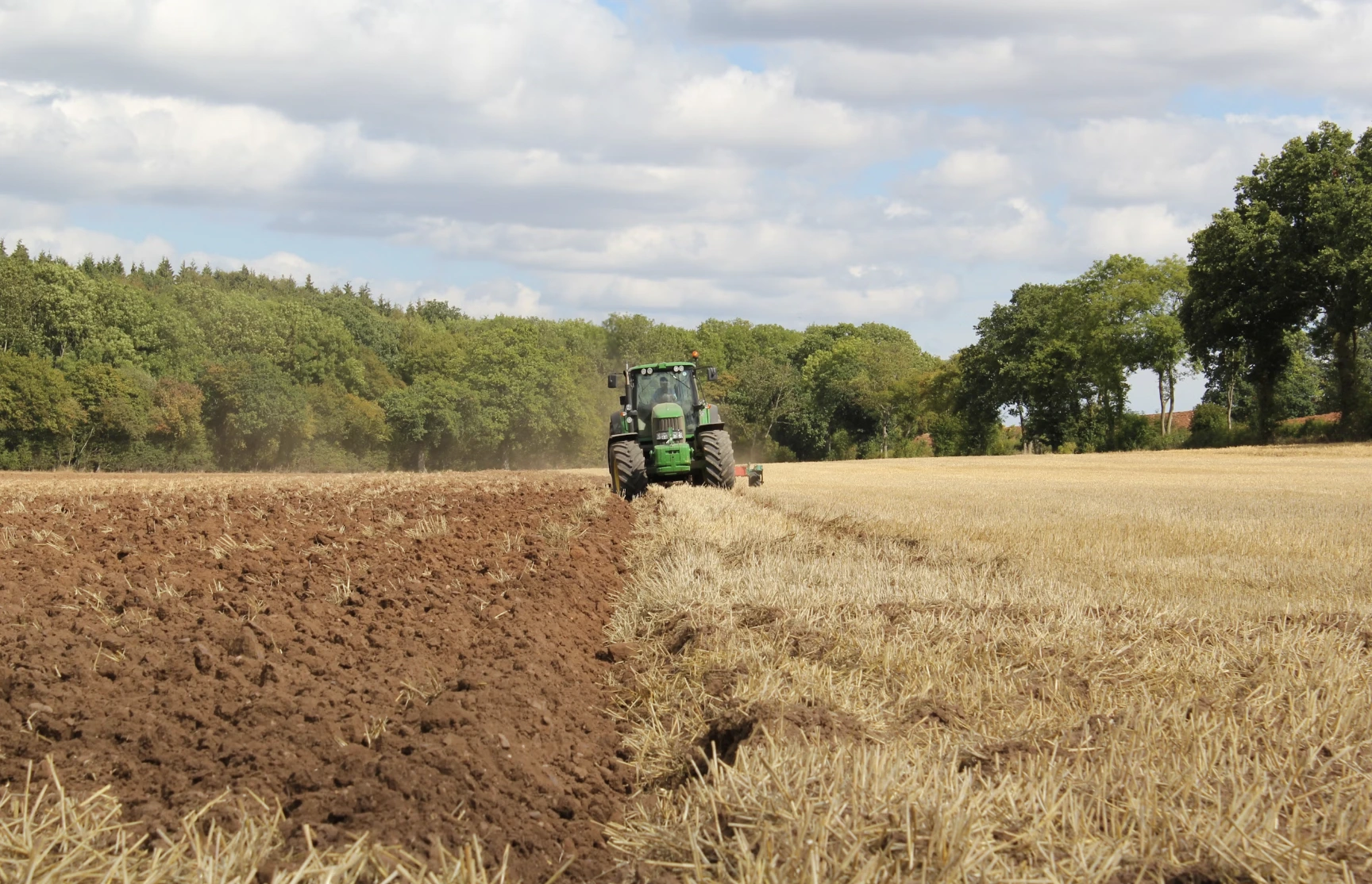
Image by Richard Bell, from Unsplash
Tavant Launches AI Solutions To Optimize Farming And Food Supply Chains
- Written by Kiara Fabbri Former Tech News Writer
- Fact-Checked by Sarah Frazier Former Content Manager
Tavant is bringing artificial intelligence to the agriculture and food industry with a new suite of AI-powered tools designed to streamline farm operations, supply chains, and sales.
In a Rush? Here are the Quick Facts!
- Sales Assistant lets farmers order supplies via email, chat, or messaging.
- Virtual Agronomist provides AI-powered, 24/7 crop management advice.
- AI automation streamlines farm supply chains, reducing manual effort and delays.
The company announced on Tuesday the launch of its AI Agent accelerators, built using Microsoft Copilot Studio, which aim to improve efficiency, reduce manual workloads, and support data-driven decision-making across the agricultural sector.
The initiative introduces two AI-driven solutions: Sales Assistant and Virtual Agronomist. These tools target long-standing inefficiencies in farm management by automating essential processes and providing real-time insights.
Sales Assistant is designed to simplify the way farmers purchase seeds, fertilizers, pesticides, and other essential supplies. Instead of relying on traditional marketplaces or cumbersome order management platforms, growers can now place orders directly via email, chat, or messaging services with their preferred agri-retailers.
On the back end, AI automates order processing, cutting down on manual work for farm co-ops and retailers while enabling faster fulfillment and real-time tracking.
Virtual Agronomist, on the other hand, functions as an always-available AI consultant for farmers, providing expert guidance on crop management. By processing vast amounts of data and generating AI-powered insights, the system helps farmers make informed decisions about their crops, improving efficiency and responsiveness to changing conditions.
Emerging technologies like AI are reshaping modern agriculture, but they are not the only innovation transforming the industry. Scientists at MIT are developing robotic insects designed to assist in artificial pollination, potentially addressing declining bee populations.
These tiny flying robots, weighing less than a paperclip, use advanced wing designs and artificial muscles to perform precise flight maneuvers.
While still in development, their ability to support crop pollination in controlled environments could complement AI-driven farm management tools, offering a glimpse into the future of high-tech, sustainable agriculture.
Meanwhile, researchers at the University of Sydney have introduced SwagBot , an autonomous cattle-herding robot designed to improve pasture management. The bright red robot now incorporates AI and sensors to assess pasture health and monitor livestock.
It autonomously herds cattle to the most suitable grazing areas, preventing overgrazing and improving soil quality. SwagBot is part of a broader trend in agricultural robotics, where AI-powered systems reduce manual labor and enhance sustainability.
Microsoft has also highlighted the potential of AI to reshape agriculture. “AI has the potential to fundamentally transform the agricultural industry, and Tavant is well positioned to bring this transformation to life,” said Pepijn Richter, General Manager of retail, consumer goods, and agriculture at Microsoft, as reported by Business Wire .
With plans to expand its AI Agents Accelerator Library, Tavant expects to roll out additional AI-driven tools aimed at improving productivity, profitability, and long-term sustainability across the agricultural sector.
