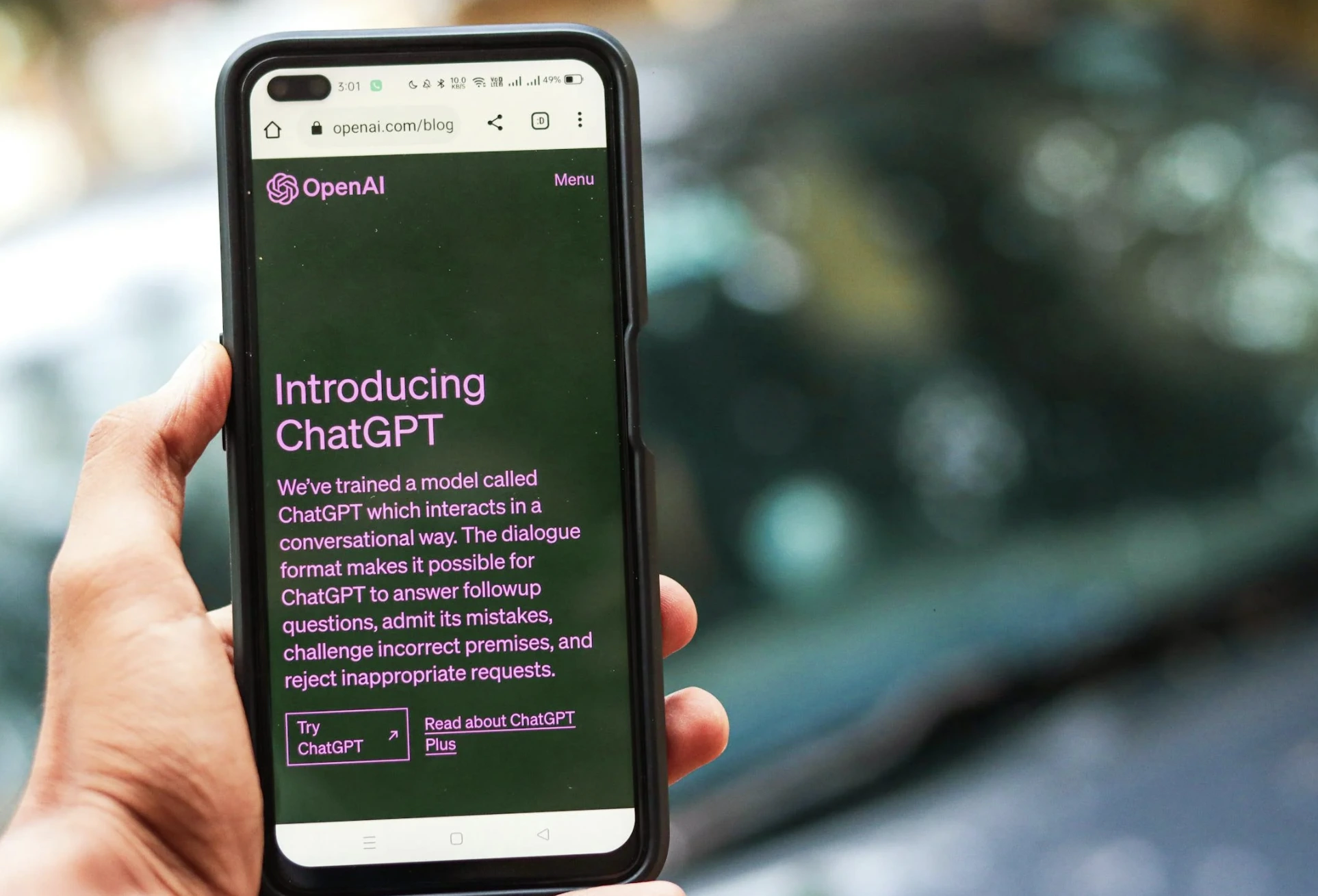
Image by Sanket Mishra, from Pexels
ChatGPT’s Struggles with Accurate Citations, Raising Concerns For Publishers
- Written by Kiara Fabbri Former Tech News Writer
- Fact-Checked by Sarah Frazier Former Content Manager
ChatGPT’s frequent citation errors, even with licensed content, undermine publisher trust and highlight risks of generative AI tools misrepresenting journalism.
In a Rush? Here are the Quick Facts!
- ChatGPT often fabricates or misrepresents citations, raising concerns for publishers.
- Researchers found 153 out of 200 were incorrect citations, undermining trust in ChatGPT.
- ChatGPT sometimes cites plagiarized sources, rewarding unlicensed content over original journalism.
A recent study from Columbia Journalism School’s Tow Center for Digital Journalism has cast a critical spotlight on ChatGPT’s citation practices, revealing significant challenges for publishers relying on OpenAI’s generative AI tool.
The findings suggest that publishers face potential reputational and commercial risks due to ChatGPT’s inconsistent and often inaccurate sourcing, even when licensing deals are in place.
The study tested ChatGPT’s ability to attribute quotes from 200 articles across 20 publishers, including those with licensing deals and those in litigation against OpenAI, as reported this week by Columbia journalism Review (CJR).
Despite OpenAI’s claims of providing accurate citations, the chatbot returned incorrect or partially incorrect responses in 153 instances. Only seven times did it acknowledge its inability to locate the correct source, often opting to fabricate citations instead.
Examples include ChatGPT falsely attributing a quote from the Orlando Sentinel to Time and referencing plagiarized versions of New York Times content from unauthorized sources.
Even when publishers allowed OpenAI’s crawlers access, citations were often misattributed, such as linking syndicated versions rather than original articles.
Mat Honan, editor-in-chief of MIT Tech Review, expressed skepticism over ChatGPT’s transparency, noting that its responses could mislead users unfamiliar with AI’s limitations.
CJR notes that OpenAI defends its efforts, highlighting tools for publishers to manage content visibility and pledging to improve citation accuracy.
However, the Tow Center found that enabling crawlers or licensing content does not ensure accurate representation, with inconsistencies spanning both participating and non-participating publishers.
ChatGPT’s inaccuracies in referencing publisher content can erode trust in journalism and harm publishers’ reputations. When it misattributes or misrepresents articles, audiences may struggle to identify original sources, diluting brand recognition.
Even publishers permitting OpenAI’s crawlers or holding licensing agreements are not immune to these errors, highlighting systemic flaws. ChatGPT’s tendency to provide misleadingly confident answers, rather than admitting gaps in its knowledge, misleads users and undermines transparency.
Such practices could distance audiences from credible news sources, incentivize plagiarism, and weaken the visibility of high-quality journalism. These consequences jeopardize the integrity of information-sharing and trust in digital media platforms.
Image by TED Conference, from Flickr
Elon Musk Seeks To Block OpenAI’s Shift To For-Profit Status
- Written by Kiara Fabbri Former Tech News Writer
- Fact-Checked by Sarah Frazier Former Content Manager
Elon Musk filed an injunction against OpenAI and Microsoft, alleging anticompetitive practices, harming xAI, and abandoning OpenAI’s nonprofit mission. OpenAI denies claims.
In a Rush? Here are the Quick Facts!
- Elon Musk filed an injunction against OpenAI, Microsoft, and others for anticompetitive behavior.
- OpenAI allegedly pressured investors to avoid funding Musk’s xAI and other competitors.
- OpenAI denies the allegations, calling Musk’s lawsuit repetitive and baseless.
Elon Musk is urging the court to halt OpenAI’s transition from a nonprofit to a for-profit entity, accusing the organization of anticompetitive practices and breaches of its original mission, as first reported by TechCrunch .
In a motion filed Friday, Musk’s legal team requested an injunction from Judge Yvonne Gonzalez Rogers of the US District Court for the Northern District of California. The injunction would not only block OpenAI’s structural shift but also suspend its partnerships with Microsoft.
Originally launched in 2015 as a nonprofit, OpenAI transitioned in 2019 to a “capped-profit” model and is reportedly shifting toward a fully for-profit structure.
Musk alleges OpenAI discouraged investors from supporting competitors like his company xAI and gained access to sensitive information through ties with Microsoft.
Central to the filing are claims of improper conduct by Reid Hoffman, LinkedIn cofounder and former board member of both OpenAI and Microsoft. Musk’s lawyers argue these connections facilitated monopolistic practices and violated antitrust laws, says TechCrunch.
The motion contends that OpenAI has veered from its original nonprofit mission and could cause “irreparable harm” without court intervention. “An injunction to preserve what is left of OpenAI’s nonprofit character, free from self-dealing, is the only appropriate remedy,” Musk’s counsel stated, as reported by TechCrunch.
The motion also criticizes OpenAI for abandoning its founding principles. Musk invested $45–$50 million in OpenAI when it was established as a nonprofit in 2015, alongside figures like Hoffman, Sam Altman, and Peter Thiel, says TechCrunch
However, OpenAI announced plans in September to restructure as a for-profit entity, a move Musk describes as betraying its charitable roots. His filing claims OpenAI is leveraging Musk’s foundational contributions to create a for-profit monopoly targeting competitors like xAI.
This legal battle reignites tensions between Musk and OpenAI CEO Sam Altman, who have clashed publicly over the company’s direction and AI development. Altman denies Musk’s claims, while a spokesperson for OpenAI dismissed the lawsuit as “baseless,” as reported by TechCrunch.
The court’s decision on the injunction could have significant implications for the AI sector, particularly regarding the balance between competition and collaboration among leading players.
