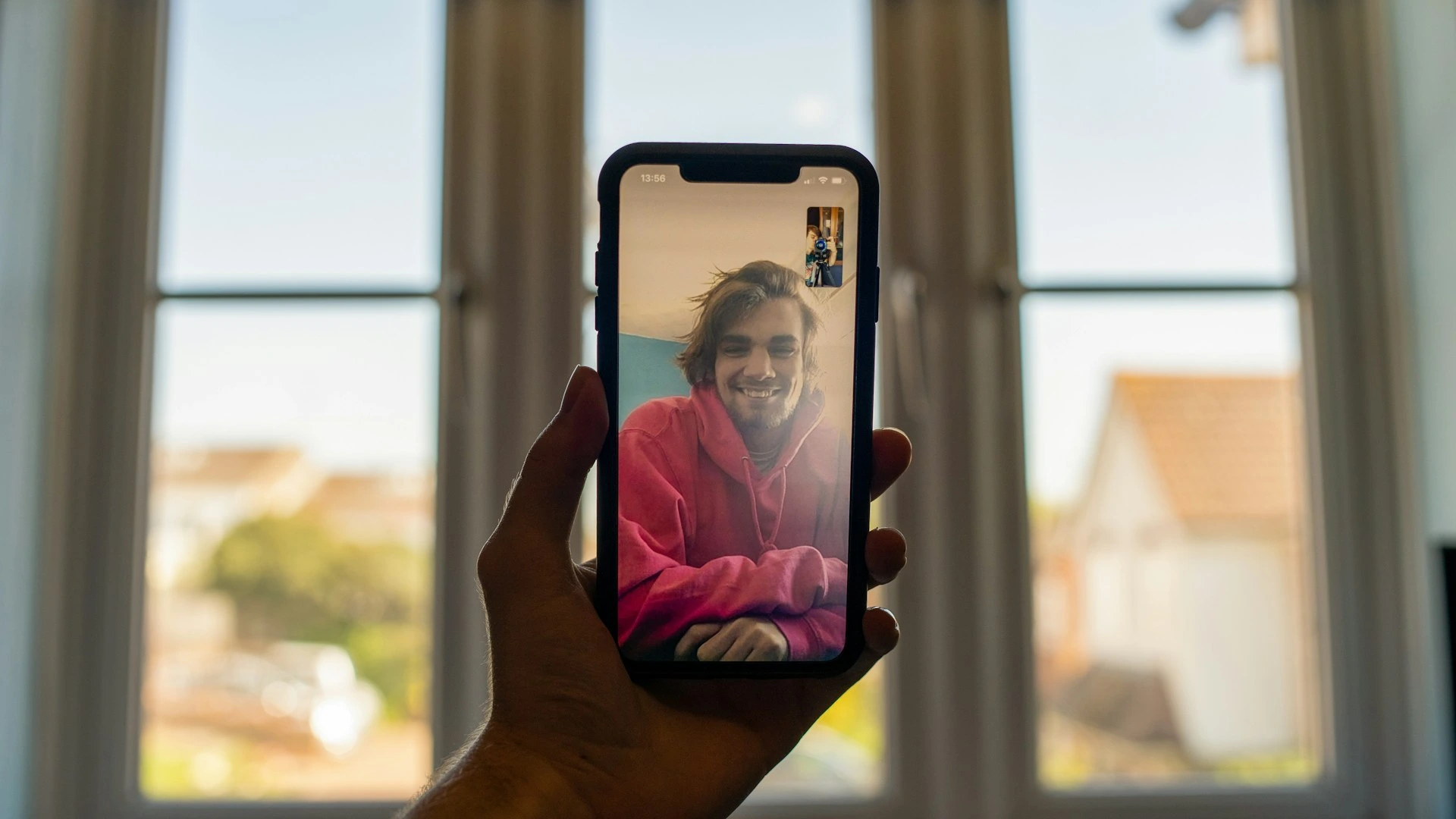
Photo by Ben Collins on Unsplash
ByteDance Introduces OmniHuman-1, One Of The Most Realistic DeepFake Tool In The Market
- Written by Andrea Miliani Former Tech News Expert
- Fact-Checked by Justyn Newman Former Lead Cybersecurity Editor
Researchers from ByteDance, Tiktok’s parent company, introduced this week a new AI tool called OmniHuman to generate human videos based on images and other media.
In a Rush? Here are the Quick Facts!
- ByteDance introduced its latest AI tool, OmniHuman-1, which can generate videos with realistic motion, style, and behavior from a single photo.
- The research team shared a paper with more details of the methodology and strategies applied to reach realistic deepfakes.
- OmniHuman is not available to the public yet.
The first version of the AI tool, OmniHuman-1, is capable of generating videos that support multiple image styles—ranging from realistic photography to animation and cartoons—as well as offering audio and music variations, various aspect ratios, and realistic motion images. In several demos, the Chinese company showcased the AI model’s capabilities.
“OmniHuman significantly outperforms existing methods, generating extremely realistic human videos based on weak signal inputs, especially audio,” states the paper published on Monday by Bytedance’s team. “ It supports image inputs of any aspect ratio, whether they are portraits, half-body, or full-body images, delivering more lifelike and high-quality results across various scenarios.”
The research team explained that they used a “multimodality motion conditioning mixed training strategy” and provided several examples of the tool’s capabilities, including recreating a class with Albert Einstein, simulating speeches using images from royalty-free websites, and generating musical performances from audio or video media.
ByteDance’s research team warned about the risks of fraud—they haven’t released the AI tool to the public yet, and didn’t share a date—and other ethics concerns. The company assured that the images and videos used to demonstrate the model’s performance were taken from public sources.
According to Forbes , the Chinese company used 18,700 hours of human video data to train the new mode. Multiple experts have already shared their thoughts on the new AI tool.
“Creating something from just a picture and making it look like it’s really talking and really moving is fascinating from a technological standpoint, but it could have a lot of potential negative consequences, too,” said Samantha G. Wolfe, an adjunct professor at NYU’s Steinhardt School of Culture, Education and Human Development and founder of PitchFWD in an interview with Forbes. “Pretend versions of business leaders or political leaders saying something that isn’t accurate can have a huge influence on a business, or a huge influence on a country.”
Wolfe’s concerns are shared by multiple experts in the industry. Cybersecurity experts recently warned about a new wave of scams with sophisticated AI-generated deepfakes.

Image by Chris Yang, from Unsplash
U.S. Charges Ex-Google Engineer With Espionage To Aid China’s AI
- Written by Kiara Fabbri Former Tech News Writer
- Fact-Checked by Justyn Newman Former Lead Cybersecurity Editor
A former Google software engineer is facing charges of economic espionage, with U.S. prosecutors alleging he stole trade secrets to support China’s artificial intelligence industry, as first reported by Bloomberg .
In a Rush? Here are the Quick Facts!
- Ding allegedly stole Google’s AI chip technology while working at the company.
- He founded a Chinese startup and applied for a government-backed talent program.
- If convicted, Ding faces up to 15 years per count of economic espionage.
Linwei Ding, a Chinese national who worked at Alphabet Inc.’s Google, was initially indicted in March. On Tuesday, the U.S. Justice Department announced a revised indictment, adding seven counts of economic espionage to the existing seven counts of trade secret theft, as reported by Bloomberg.
Ding, who also goes by Leon Ding, allegedly misappropriated information about Google’s custom-designed chips, which are used to train AI models like Gemini.
According to the indictment , Ding allegedly uploaded over 1,000 confidential Google files to his personal cloud account, prosecutors say. Specifically, the stolen trade secrets included details on Google’s Tensor Processing Unit (TPU) and Graphics Processing Unit (GPU) architectures, crucial for AI supercomputing.
The indictment states that he took these sensitive data while working at the company and later founded a startup in China in 2023. Prosecutors also claim he applied to a Shanghai-based talent program that incentivizes individuals to bring foreign technical knowledge back to China.
In his application, Ding reportedly described his product as one that “will help China to have computing power infrastructure capabilities that are on par with the international level,” as reported by Bloomberg.
U.S. authorities allege that an internal memo from his startup detailed plans to provide products and services to Chinese state agencies and universities.
The case comes amid broader tensions over economic espionage between the U.S. and China. Just last week, a former senior adviser to the Federal Reserve Board of Governors was arrested for allegedly conspiring to steal government trade secrets for China, noted Bloomberg.
If convicted, Ding faces up to 15 years in prison per count of economic espionage and 10 years per trade secret theft charge. His legal team has not yet commented, said Bloomberg.
