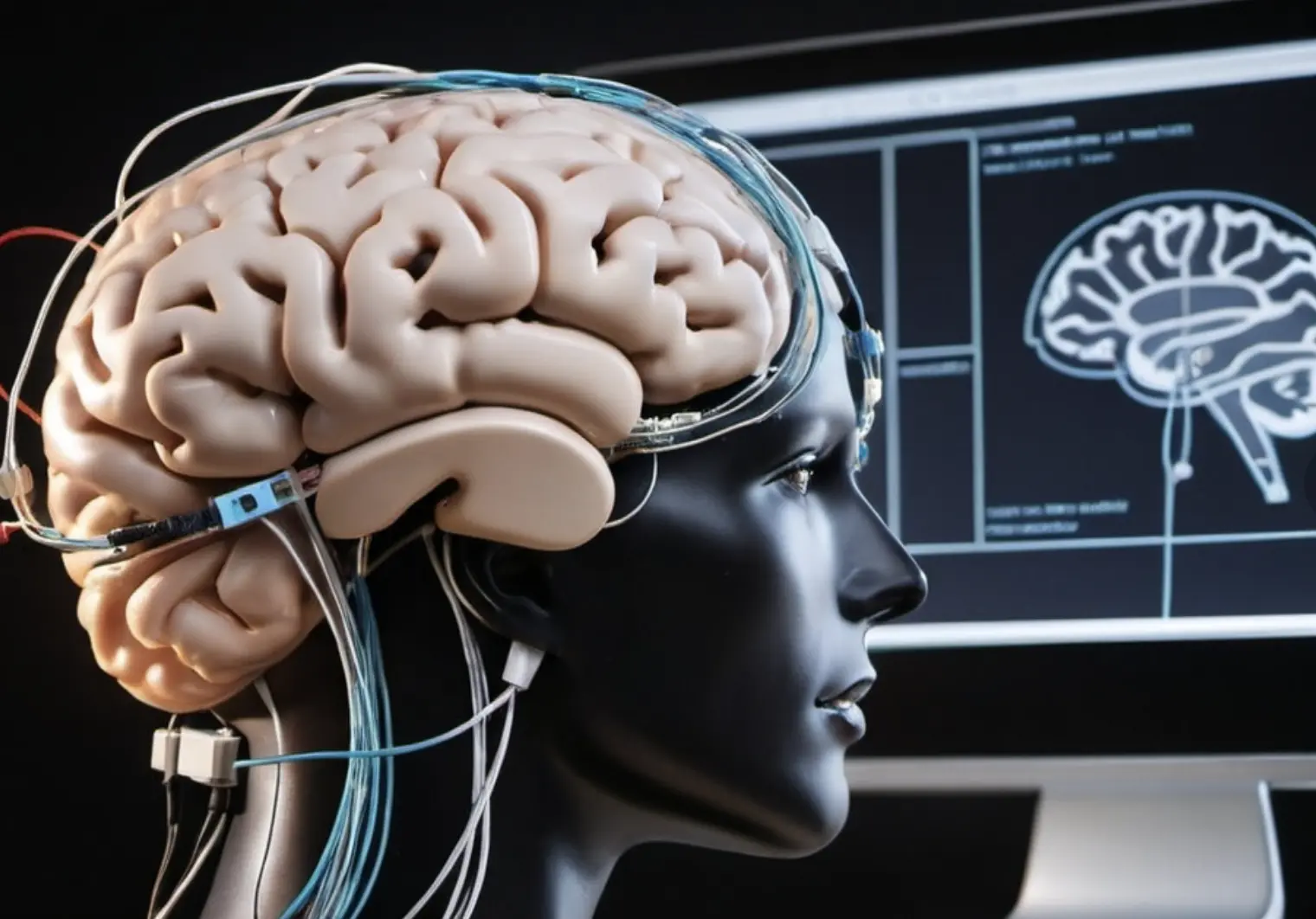
Image created with Openart.ai
Brain Implant Restores Speech In ALS Patient
- Written by Kiara Fabbri Former Tech News Writer
- Fact-Checked by
A new brain-computer interface (BCI) has allowed a man with advanced ALS to regain his ability to communicate through a brain implant. The findings of this case were published yesterday in the New England Journal of Medicine.
This new technology converts brain signals into text on a computer screen, which can then be converted using text-to-speech technology with up to 97% accuracy. According to UC Davis Health —the developers of the interface—these results make it the most accurate system of its kind to date.
This BCI was implanted into the brain of Casey Harrell, a 45-year-old ALS patient who had lost most of his ability to speak due to the disease’s progression. ALS progressively impairs nerve cells responsible for movement, leading to a loss of muscle control and, ultimately, speech.
According to UC Davis Health, the BCI interprets brain activity when users try to speak and converts these signals into text, which is then vocalized by a computer. Neuroscientist Sergey Stavisky, a co-principal investigator of the study, explained, “We’re really detecting their attempt to move their muscles and talk.”
The technology quickly reached high accuracy during training sessions. It initially achieved 99.6% word accuracy with a limited vocabulary of 50 words. As the vocabulary grew to 125,000 words, the system maintained a 90.2% accuracy rate. After 8 months of data collection and training, it consistently performs at 97.5% accuracy.
Reuters reported a second study published yesterday. The patient in this study was a woman with ALS who received an earlier version of a neuroprosthesis at age 58. The device worked effectively for six years, allowing her to communicate through clicks. Eventually, the device became unreliable due to progressive atrophy of the brain.
According to the research team, future efforts may need to target different brain regions that are less affected by disease progression.
Nevertheless, the success of these BCI technologies not only highlights significant achievements in neurological research but also offers hope for enhancing communication for individuals affected by severe speech impairments. Similar neural chips have also been created to help paraplegic patients use their brains to effectively use a mouse and keyboard.

Photo by Solen Feyissa on Unsplash
- Written by Andrea Miliani Former Tech News Expert
- Fact-Checked by
“We will review the CCDH report and take action on any content that violates our policies,” Cindy Southworth, head of women’s safety at Meta, told Reuters.
“The resulting normalization of abuse, violent threats, and hate speech directed against women in public life has serious consequences to destabilize our democracies,” states the article shared by the CCDH.
