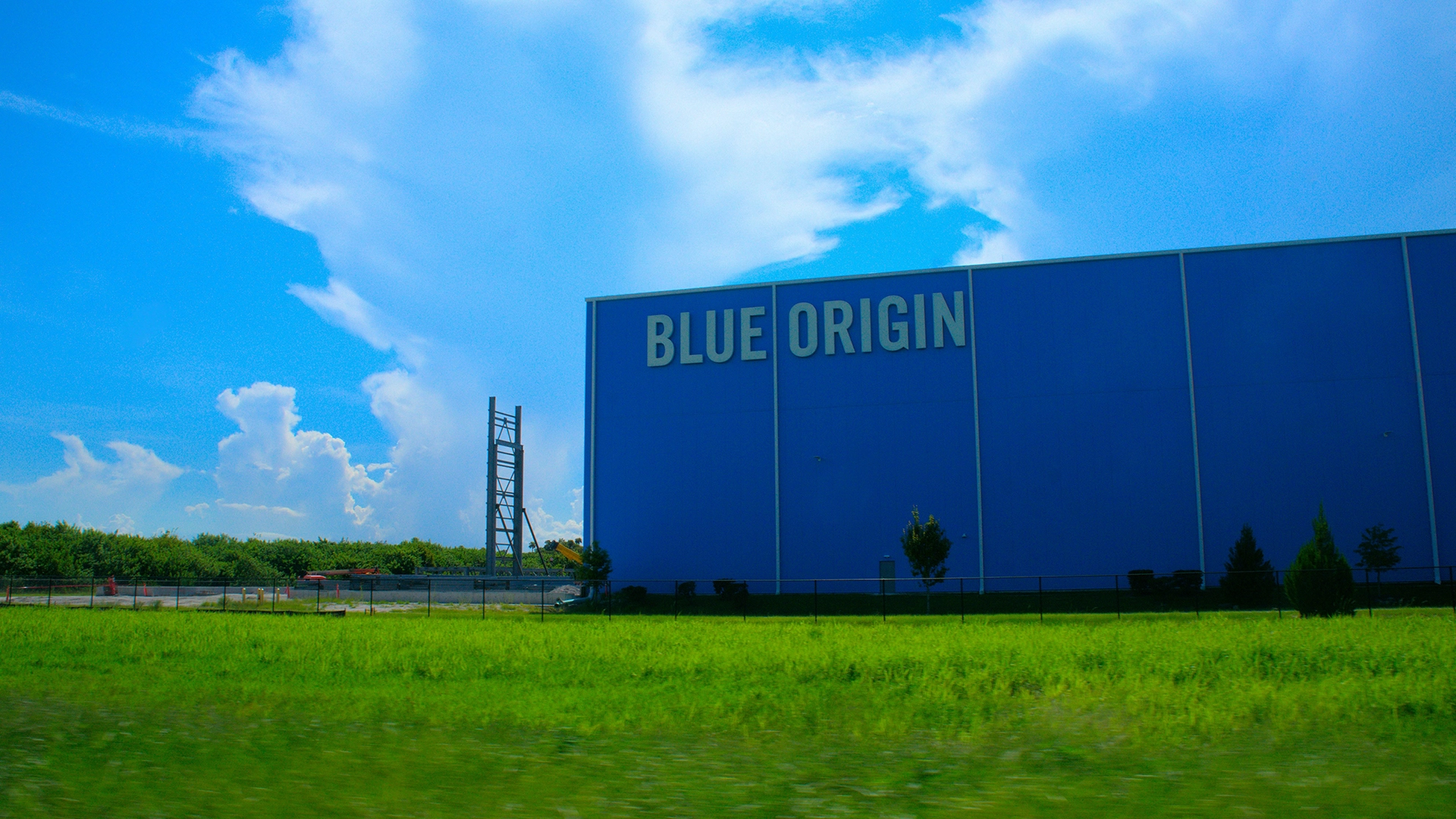
Photo by Ellienore Bradley on Unsplash
Blue Origin To Launch First All-Female Crew Into Space, Including Katy Perry And Lauren Sánchez
- Written by Andrea Miliani Former Tech News Expert
- Fact-Checked by Sarah Frazier Former Content Manager
Jeff Bezos’ rocket company Blue Origin will launch its 11th human flight, the NS-31 mission, today from its West Texas base at 08:30 am local time. The singer Katy Perry and the journalist Lauren Sánchez—Bezo’s fiancée—are part of the company’s first all-female mission.
In a rush? Here are the quick facts:
- Blue Origin will launch its first female-only crew this Monday from its West Texas base at 8:30 am.
- Crew members include pop star Katy Perry, journalist and Jeff Bezos’ fiancée Lauren Sánchez, and rocket scientist Aisha Bowe.
- The mission will last 11 minutes, and passengers will get to experience weightlessness.
A few weeks ago, Blue Origin announced its upcoming mission NS-31, in which six women will fly aboard the New Shepard rocket for 11 minutes. The flight will reach over 100 kilometers above Earth, crossing the Kármán line and allowing the crew to experience weightlessness before returning to Earth and landing with parachute assistance.
The crew members are former NASA rocket scientist Aisha Bowe, scientist and civil rights activist Amanda Nguyễn, journalist and CBS host Gayle King, pop star Kary Perry, filmmaker Kerianne Flynn, and journalist and aviator Lauren Sánchez. Blue Origin has invited the public to watch the launch live via webcast on the social media platform X.
The NS-31 crew is certified ‘ready to fly to space’ by CrewMember 7 Sarah Knights. The launch window opens tomorrow at 8:30 a.m. CDT / 13:30 UTC. You can watch the live webcast here tomorrow at 7 a.m. CDT, hosted by Charissa Thompson, Kristin Fisher, and Ariane Cornell. pic.twitter.com/auKPJvtSl3 — Blue Origin (@blueorigin) April 14, 2025
In February, Blue Origin successfully launched its New Shepard rocket for an experiment to mimic the moon’s gravity in flight with positive results. This mission would be the company’s 31st mission to space, and 11th crewed flight.
According to the BBC , the spacecraft is autonomous, and the crew will not need to operate the rocket manually. Passengers are usually trained by Blue Origin for over two days to guarantee safety and follow emergency protocols for this space tourism program. The commercial flight with Bezos’ company requires a $150,000 deposit for a seat, but the details of the cost of this mission have not been disclosed.
The all-female crew will achieve a new record for the century, as the last all-female flight was performed by Russian cosmonaut Valentina Tereshkova aboard Vostok 6 over 60 years ago. They will also carry out a few scientific experiments, as reported by the New York Post .
SpaceX also recently launched a commercial flight on April 1st, taking 4 civilians on an Earth orbit mission that lasted three days. The amateur astronauts returned to Earth safely a few days ago.
Image by Lance Grandahl, from Unsplash
Wearable AI Device Helps Stroke Survivors Avoid Falls In Rehab
- Written by Kiara Fabbri Former Tech News Writer
- Fact-Checked by Sarah Frazier Former Content Manager
Simon Fraser University researchers are developing a smart wearable device powered by artificial intelligence to help prevent falls in people recovering from strokes and spinal cord injuries.
In a rush? Here are the quick facts:
- The device uses sensors and machine learning to detect risky patient movements.
- Over 50 stroke survivors participated in the movement safety study.
- The system warns patients of potentially dangerous movements during rehabilitation.
The new technology could change the way rehab is done by making it safer and more personalized.
The team, led by assistant professor Gustavo Balbinot from SFU’s Movement Neurorehabilitation and Neurorepair lab, designed wearable sensors that monitor how patients move during everyday tasks like getting out of a chair or walking around obstacles.
These small devices collect detailed data on movement and use machine learning to spot patterns that might lead to dangerous falls.
“Rehab is all about movement, so we want to make patients move. And by moving, patients can regain the movement they lost,” says Balbinot, in a press release by SFU. “But we want them to move safely, so the importance of this research is that now we can really understand movement in terms of safety during rehabilitation.”
More than 50 chronic stroke survivors took part in the study, published in Clinical Rehabilitation . Their movements were recorded using the wearable sensors, which sent data to software developed by the SFU team. This software analyzed the data and learned to detect moments just before a fall.
“This sensor can quantify characteristics of the movements of the person, and with machine learning we can identify patterns of movement for those patients,” Balbinot explains.
“The software can learn about the patterns of movement when the person was just about to fall and for a subsequent event the technology can warn the patient, ‘this is a very challenging movement you are doing right now, take care, mind your step, and move safely’.”
SFU is currently ranked B.C.’s top university for artificial intelligence, with over 100 researchers across eight faculties working on AI projects. Balbinot’s work brings together medical science, engineering, and AI to support patient safety in a real-world setting.
“Wearables are important in this,” he adds. “They can really bring the lab to people’s daily life.”
In the future, the team hopes these sensors can be built directly into everyday clothing, providing round-the-clock support for those recovering from serious injuries.
