
Photo by Traxer on Unsplash
Bitcoin Hits Record High Over $82,000 After U.S. Elections
- Written by Andrea Miliani Former Tech News Expert
In a Rush? Here are the Quick Facts!
- Bitcoin hit a record high of $82,527 today, just a few days after Donald Trump was elected
- Trump has been supportive of Bitcoin and the crypto market during his campaign this year
- Crypto supporters expect Trump to change regulations and support pro-crypto congressmen
The world’s biggest cryptocurrency Bitcoin hit a record high of $82,527 today, just a few days after Donald Trump was announced as the next president of the United States.
According to Reuters , the value was expected to rise as Trump had previously embraced Bitcoin during his campaign. Compared to last year, the cryptocurrency has more than doubled its value after surpassing the 82,000 milestone today, considering its $38,505 low in 2023.
“Bitcoin’s Trump-pump is alive and well… with Republicans on the cusp of taking the house to confirm a red wave in Congress, it seems the crypto crowd is betting on digital-currency deregulation,” said Matt Simpson, senior market analyst at City Index to Reuters.
Crypto investors expect Trump to support pro-crypto congressional candidates and eliminate or reduce regulations taken under U.S. Securities and Exchange Commission (SEC) Chair Gary Gensler.
“The incoming Trump administration may lead to expedited regulatory clarity, enhanced institutional participation, improved market infrastructure, and broader mainstream adoption,” said analyst Marion Laboure from the Deutsche Bank research
In September, Trump and his sons announced a crypto business, World Liberty Financial , as a decentralized movement to strengthen the US dollar in the decentralized finance (DeFi) market.
According to The Guardian , Trump has called cryptocurrency a “scam against the dollar” in the past but seemed to change his mind radically during the campaign this year. However, Trump hasn’t mentioned any specific policies yet.
Elon Musk, a Trump and crypto supporter, has been a major ally during this presidential campaign, and Tesla’s shares rose 7% as well.
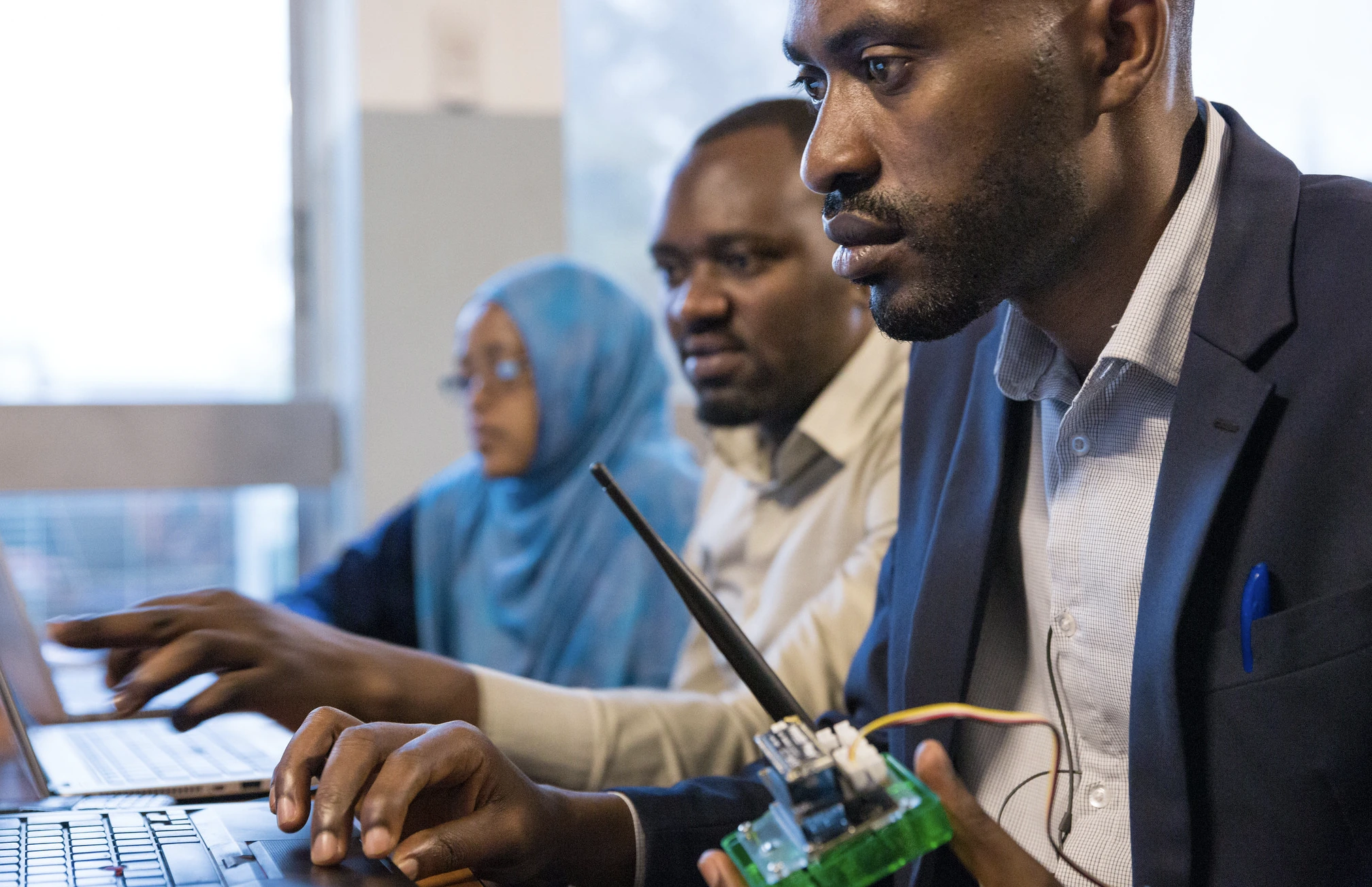
Image by World Bank Of Poto Collection, from Flickr
AI Innovation in Africa: Potential High, But Key Challenges Remain
- Written by Kiara Fabbri Former Tech News Writer
- Fact-Checked by Sarah Frazier Former Content Manager
In a Rush? Here are the Quick Facts!
- Africa’s AI sector struggles due to inadequate funding, infrastructure, and regulatory conflicts.
- African startups are building AI solutions for agriculture, healthcare, and language preservation.
- International funding influences African AI, raising concerns over foreign influence in AI agendas.
Africa’s potential as a major AI player is advancing but faces significant challenges, according to experts gathered at the 2024 Deep Learning Indaba, an annual AI conference, as reported by MIT Technology Review .
Held in Dakar, Senegal, the conference drew over 700 attendees, discussing issues from funding to local-language processing. Researchers believe AI could transform sectors like agriculture, health care, and education, but acknowledge that the path is complex, as reported by the MIT.
Kessel Okinga-Koumu, a computer science student from South Africa, demonstrated a VR-enabled app she developed to simulate lab equipment for students at under-resourced universities.
“Students could have detailed VR of lab equipment, making their hands-on experience more effective,” she explained, highlighting AI’s potential to address educational disparities across Africa, as reported by the MIT.
Since its inception in 2017, the Deep Learning Indaba has expanded its influence to 47 African nations, aiming to foster an AI ecosystem that addresses local challenges, as reported by the MIT.
Shakir Mohamed, cofounder of the conference and a senior researcher at Google DeepMind, emphasized the importance of building Africa-specific AI tools. “The building and ownership of AI solutions tailored to local contexts is crucial for equitable development,” he stated, according to MIT.
Yet, inadequate funding and infrastructure limitations remain serious obstacles. AI projects often lack support from African governments, as many public universities lack resources to advance research in areas like natural language processing for African languages, notes the MIT.
Kathleen Siminyu, a Kenyan computer scientist, said that without local-language literacy and robust data, Africa’s AI sector will struggle. “It’s like a wave that cannot be stopped,” she said, expressing optimism despite the challenges, reported the MIT.
The lack of unified policies is another barrier. Of the 55 African countries, only a few have formal AI strategies. Two conflicting strategies proposed by different African Union agencies have stirred debate, noted the MIT.
One strategy, alleged to have foreign influences, calls for immediate AI prioritization, while a grassroots-driven alternative advocates for regulations sensitive to African needs. Vukosi Marivate, a South African computer scientist, voiced frustration with foreign influence, declaring, “These are things we shouldn’t accept,” as reported by the MIT.
The need for funding and strategy coordination is compounded by concerns over foreign involvement. The Indaba’s reliance on funding from international tech giants like Google and Meta has prompted worries about potential influence on its agenda, noted MIT.
Timnit Gebru, founder of the Distributed AI Research Institute, warned that Africa must avoid becoming overly reliant on foreign AI solutions, asserting, “Africans [need] to do something different and not replicate the same issues we’re fighting against,” as reported by the MIT.
As Africa’s AI ecosystem grows, researchers remain committed to developing tools that address unique local challenges, hoping for increased support from within the continent.
