
Image by StockSnap, from Pixabay
Battery Breakthrough: Combining Sodium, Solid-State, and Anode-Free Technologies in One Battery
- Written by Kiara Fabbri Former Tech News Writer
- Fact-Checked by Justyn Newman Former Lead Cybersecurity Editor
Researchers from the University of Chicago and the University of California, San Diego, published this week the world’s first anode-free sodium solid-state battery. This marks a significant advancement in energy storage technology. This innovation aims at producing more affordable, fast-charging, and high-capacity batteries for electric vehicles and grid storage.
While scientists have explored sodium, solid-state, and anode-free batteries before, this research marks the first time all three elements have been successfully combined. By removing the anode and utilizing sodium instead of lithium, the team has created a cost-effective alternative to current lithium-ion batteries.
Regular batteries have two parts: an anode (like a storage tank), and a cathode (like an outlet). Ions (charged particles) move between them during charging and use. The new design skips the anode and puts the ions directly onto the cathode. This is cheaper and stores more energy, but it’s tricky to make the solid parts touch well. The researchers made a special current collector (part of the cathode) out of aluminum powder that can flow like a liquid during assembly. Then, they press it to become solid, keeping good contact with the other parts. This allows the battery to work well.
Additionally, traditional lithium-ion batteries, while powerful, are facing limitations. Lithium is a relatively scarce resource . Additionally, lithium mining can have negative environmental impacts . Sodium, on the other hand, is significantly more abundant and environmentally friendly as a battery material. However, achieving high energy density with sodium has proven challenging.
There are several advantages of using a sodium-based electrochemical deposition directly on the current collector. First, sodium is much cheaper than lithium, making the battery more affordable. Second, the anode-free design allows for more energy storage, increasing the battery’s capacity. Additionally, the solid-state construction eliminates the risk of leaks from liquid electrolytes found in traditional batteries, improving safety.
The research team envisions an energy future with diverse, clean, and affordable battery options to store renewable energy, tailored to society’s needs.
The breakthrough has significant implications for the future of energy storage. “Sodium solid-state batteries are usually seen as a far-off-in-the-future technology, but we hope that this paper can invigorate more push into the sodium area by demonstrating that it can indeed work well, even better than the lithium version in some cases,” said UC San Diego PhD candidate Grayson Deysher, first author of a new paper outlining the team’s work.
DOI: 10.1038/s41565-024-01676-4
Cancer Killing Nanobots
- Written by Kiara Fabbri Former Tech News Writer
- Fact-Checked by Justyn Newman Former Lead Cybersecurity Editor
This July, researchers at Karolinska Institutet in Sweden published a study detailing their development of nanorobots that can selectively kill cancer cells in mice, resulting in a 70% reduction in tumor size. These nanorobots activate their lethal mechanism only in the tumor-specific environment, greatly improving the precision of cancer treatments.
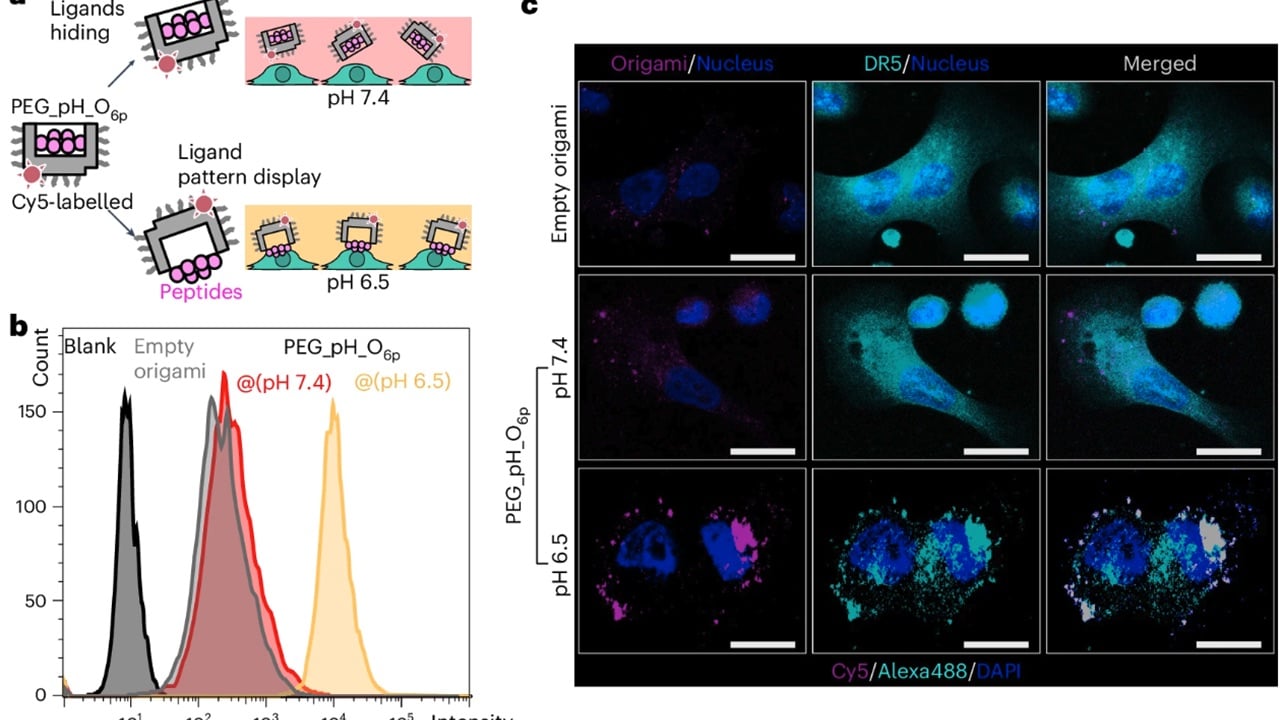
Building on their previous work with cell death triggers, researchers at Karolinska Institutet have developed a new weapon: a hexagonal structure made of six peptides (amino acid chains). Professor Björn Högberg, who led the study, explains , “If you were to administer it as a drug, it would indiscriminately start killing cells in the body, which would not be good. To get around this problem, we have hidden the weapon inside a nanostructure built from DNA.”
For years, Professor Björn Högberg’s team has been pioneering a technique called DNA origami, where DNA strands are folded into specific shapes. Now, they’ve harnessed this technique to create a microscopic “kill switch” that only activates in the right environment.
Tumors have a lower pH, meaning they’re more acidic than healthy tissue. The researchers cleverly hid the peptide weapon within the DNA origami structure. This ensures it stays inactive at a normal pH of 7.4. But when injected near a tumor, the acidic environment (around pH 6.5) triggers the DNA origami to release the weapon, specifically targeting and killing cancer cells.
The researchers tested this by Injecting the nanorobots into mice with breast cancer tumors. The results were very promising. Tumor growth was reduced by a significant 70% compared to mice receiving an inactive version.
However, the researchers at Karolinska Institutet acknowledge the need for further investigation. Lead researcher Yang Wang highlights two key areas: testing the nanorobots in more complex cancer models that better mimic human disease and evaluating potential side effects before human trials can begin.
This study brings promising news, especially for breast cancer, the second leading cause of cancer death in women . Nevertheless, further research is needed on safety and effectiveness before human trials. This targeted approach has the potential to revolutionize cancer treatment.
