
Image by Elf-Moondance, from Pixabay
Audible Introduces AI-Powered Voice Replica Technology For Narrators
- Written by Kiara Fabbri Former Tech News Writer
- Fact-Checked by Justyn Newman Former Lead Cybersecurity Editor
The voice replica technology will allow narrators to take on more projects simultaneously, ensuring a steady stream of income. Narrators will still have full control over the projects they choose to audition for and can use either their live voice or the AI-generated replica.
To create a voice replica, narrators will submit a sample recording, which ACX, Audible’s content distribution platform, will transform into a high-quality digital representation. This replica can then be used to narrate audiobooks, with narrators maintaining the ability to edit pronunciation and pacing for optimal results.
Audible emphasizes that the voice replica technology is designed to benefit both narrators and authors. The company will closely monitor the impact of the beta on its catalog and community and has implemented a labeling system to indicate titles narrated using AI-generated voices.
This development mirrors recent advances in other areas of the entertainment industry, such as the Hollywood union SAG-AFTRA’s recent agreement with Narrativ , which allows actors to license their digital voice replicas to advertisers.
This agreement ensures actors maintain control over the use of their voices, addressing concerns about AI’s impact on their livelihoods.
Both SAG-AFTRA’s deal and Audible’s beta prioritize creators’ rights to approve projects using their voice replicas, highlighting the growing need for consent and fair compensation in AI-driven content creation.
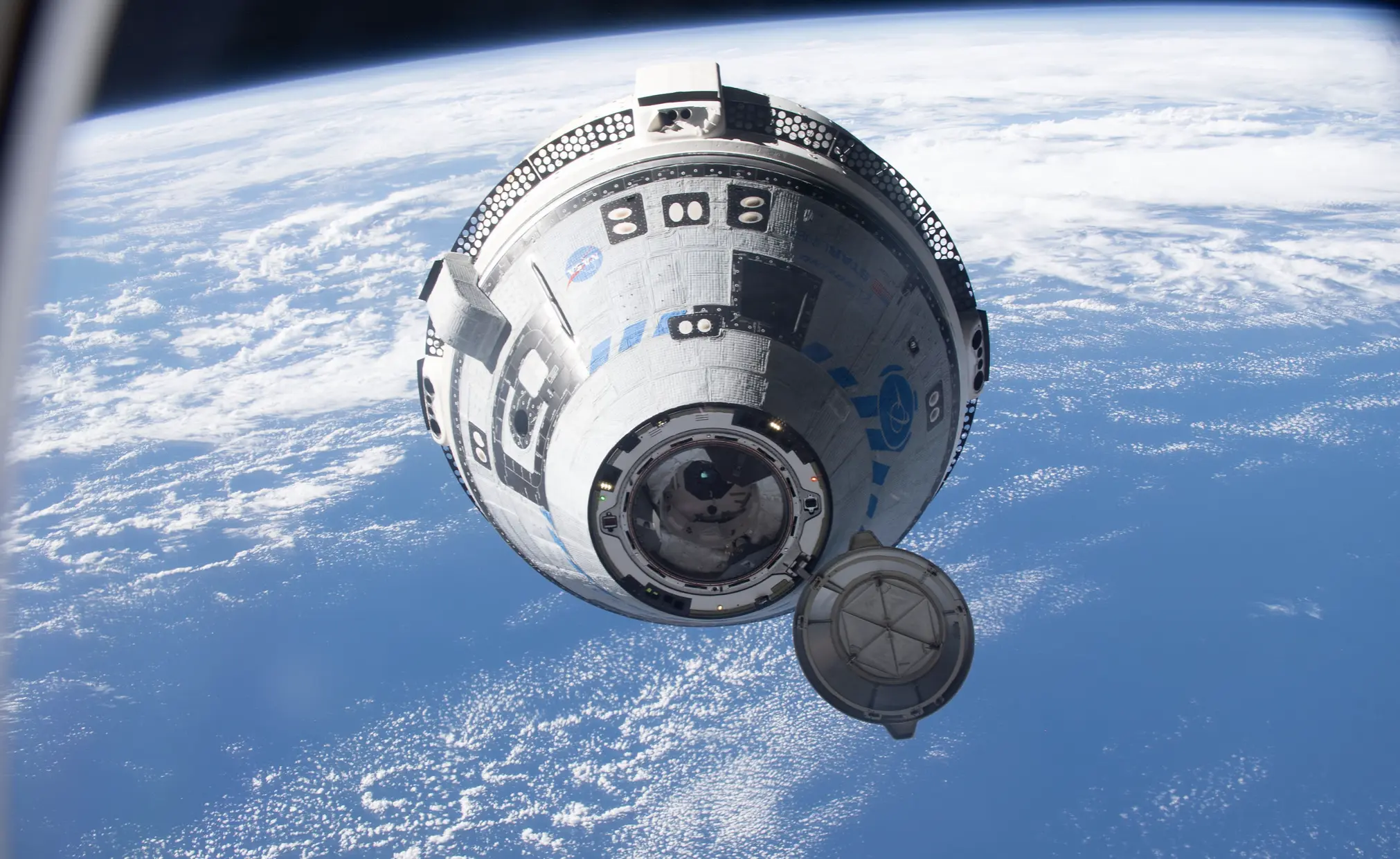
Image by NASA Jhonson, from Flickr
NASA Returns Spacecraft Without Crew Due to Technical Issues
- Written by Kiara Fabbri Former Tech News Writer
- Fact-Checked by Justyn Newman Former Lead Cybersecurity Editor
The Boeing Starliner capsule returned to Earth without any astronauts aboard on Saturday, as announced by NASA . This marked the end of the Crew Flight Test (CFT), Starliner’s first-ever astronaut mission.
NASA astronauts Butch Wilmore and Suni Williams launched on June 5 aboard Starliner for the agency’s Boeing Crewed Flight Test from Cape Canaveral Space Force Station in Florida.
However, on June 6, as Starliner approached the space station, NASA and Boeing identified helium leaks and issues with the spacecraft’s reaction control thrusters. After careful consideration, NASA decided to prioritize safety and return Starliner without its crew.
Despite the issues, NASA’s Space Operations Mission Directorate expressed optimism about the knowledge gained from the mission. A spokesperson from NASA headquarters stated, “Even though it was necessary to return the spacecraft uncrewed, NASA and Boeing learned an incredible amount about Starliner in the most extreme environment possible.”
The journey to this point has not been without its challenges, as reported by The Guardian . There were two previous launch attempts that were aborted due to technical issues. On the first attempt, a problem was found with a valve on the second stage of the rocket. On the second attempt, a computer tripped an automatic hold just minutes from liftoff.
Even after successfully launching, helium leaks continued to trouble the spacecraft. While NASA determined that the spacecraft remained stable, the leaks were a significant concern, noted The Guardian.
Boeing’s struggles with Starliner are seen as a setback not only for the company but also for the U.S. space program, which aims to have multiple private companies support its missions.
According to The New York Times (TNYT), Boeing’s performance issues, including past challenges with its commercial airplane division, have raised concerns about its commitment to quality and safety.
The commercial space sector has been rapidly expanding, driven by companies like SpaceX, led by Elon Musk, and Blue Origin, founded by Jeff Bezos. TNYT further notes that Boeing, alongside SpaceX, remains one of the few companies with the technical and financial capacity to support NASA’s most demanding projects.
Despite the challenges faced by Starliner, NASA remains committed to working with Boeing to ensure the success of future missions. The agency recognizes the importance of having multiple private companies capable of supporting its efforts in space exploration.
