
Photo by Antoni Shkraba, from Pexels
Artists Leave Instagram For New App Called Cara After AI Training Updates
- Written by Andrea Miliani Former Tech News Expert
- Fact-Checked by
Around 800,000 artists migrated from Instagram and Facebook to a new social media app called Cara due to Meta’s recent policy updates regarding the use of content to feed artificial intelligence products.
The tech giant explained in its recent privacy updates on generative AI that content uploaded by users will be used to train Meta’s AI, reportedly to begin June 26. The document states that they will use public data and also “information shared on Meta’s Products and services.” Meta explains that the “information could be things such as posts or photos and their captions.”
The recent updates and the difficulties in opting out reignited debate among artists in multiple forums, social media channels, and Reddit , where artists started to consider the new social media app called Cara, created in 2022 by photographer Jingna Zhang, as a solution.
According to a TechCrunch article published just a few days ago, at the end of May, Cara had 40,000 users. About a week later, on Sunday, Zhang announced on X that the app just reached almost 800,000 users—that’s a staggering 1,900% increase, signifying that artists worldwide are joining the new community hoping for better treatment of their artwork and data.
What Is Cara? Why Artists Prefer This Social Media App
Cara’s interface looks like a mix between Instagram, and X, and it also reminds users of the platform Tumblr. On its About page, Cara includes a statement assuring its commitment to prioritizing human-created content over AI content. “With the widespread use of generative AI, we decided to build a place that filters out generative AI images so that people who want to find authentic creatives and artwork can do so easily.”
Its creator, Zhang, also gained popularity a few weeks ago as she won a copyright infringement case against artist Jeff Dieschburg after two years of legal battle for using her photograph to create a painting without her consent. Dieschburg won a prize and showcased his artwork at an international exhibition, claiming that his work was different and that the image was easily found on the Internet.
“This win means a lot—not just for me but also for artists & photographers everywhere,” said Zhang on Instagram after winning the case, “I want to thank Luxembourg & its judicial system for upholding copyright protection for an individual, especially in time of AI where our rights seem to be quickly eroding.”
Artists who believe in Zhang’s efforts to build better apps for creative humans started building their portfolios on Cara, despite the app facing technical issues due to the massive user growth in recent days. Users have also started a donation campaign promoting the app’s account on BuyMeACoffee and sending money with encouraging messages for the team to help them develop the app sustainably.
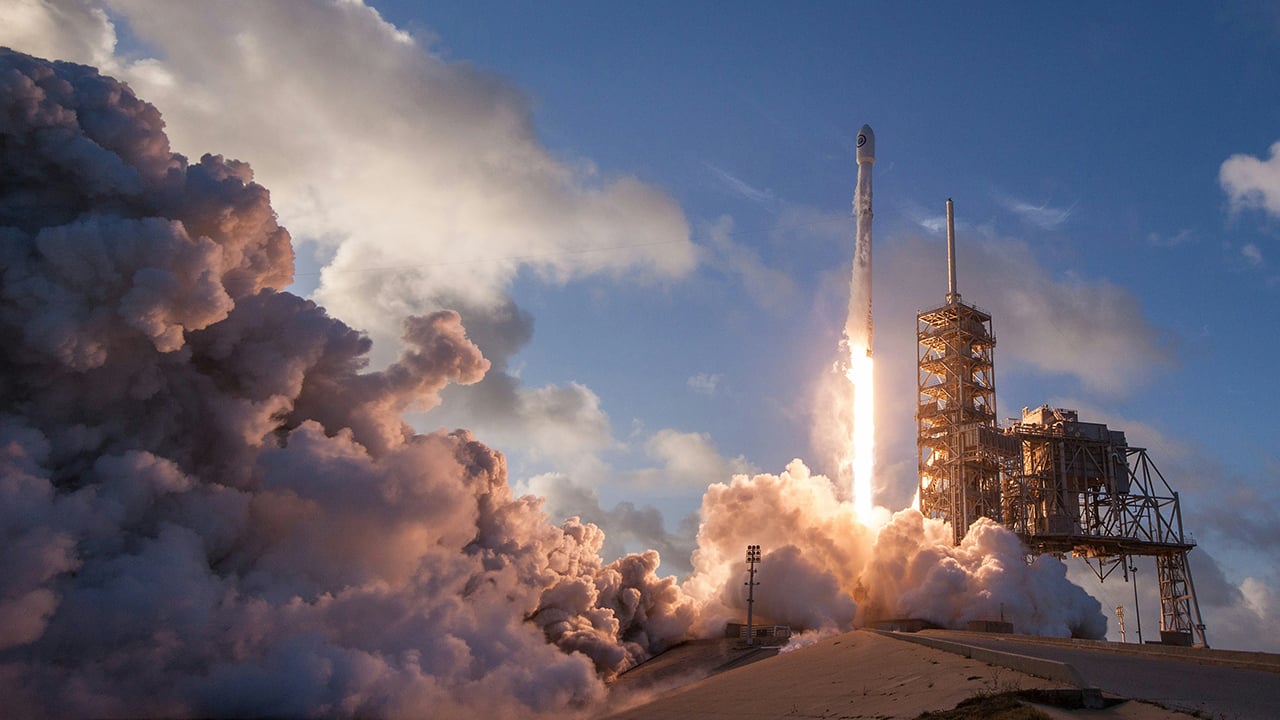
Image by SpaceX, from Unsplash
SpaceX’s Starship Aced Test Flight: Return to Earth Successful
- Written by Amar Cemanovic Cybersecurity Expert
- Fact-Checked by
SpaceX’s reusable Starship rocket successfully completed its fourth test flight on June 6, safely landing in the Indian Ocean. This success comes after three previous test missions resulted in the destruction of the rocket.
The two-stage rocket system is 400 feet (120 m) tall and consists of the Starship vessel and the Super Heavy rocket booster. During the test flight at the private Starbase facility in Texas, the booster detached from the rocket at an altitude of 46 miles (74 km) and performed a soft landing in the Gulf of Mexico. Meanwhile, the Starship rocket continued ascending to space powered by its own engines.
The rocket successfully reached Earth’s atmosphere and began a controlled reentry around 50 minutes after launch. The re-entry was live-streamed on the company’s X account with a camera mounted on the rocket, using a connection provided by Starlink satellites. The footage can now be viewed on SpaceX’s website.
“Despite loss of many tiles and a damaged flap, Starship made it all the way to a soft landing in the ocean! Congratulations @SpaceX team on an epic achievement!!” Elon Musk, SpaceX’s chief executive, wrote on X .
The Starship program, run by Musk’s SpaceX company, aims to revolutionize space exploration by developing reusable rockets. The development of Starship’s human landing system (HLS) is part of a collaboration with NASA and its Artemis missions, which aim to land humans on the South Pole of the Moon no earlier than September 2026.
Both the Starship vessel and boosters are meant to be refueled and launched again in a short timeframe, similar to airplanes. Together with its capacity to carry more than a hundred tons of payload into orbit in one flight, Starship’s success on Thursday brings us closer to a cheaper and more efficient mode of space travel.
