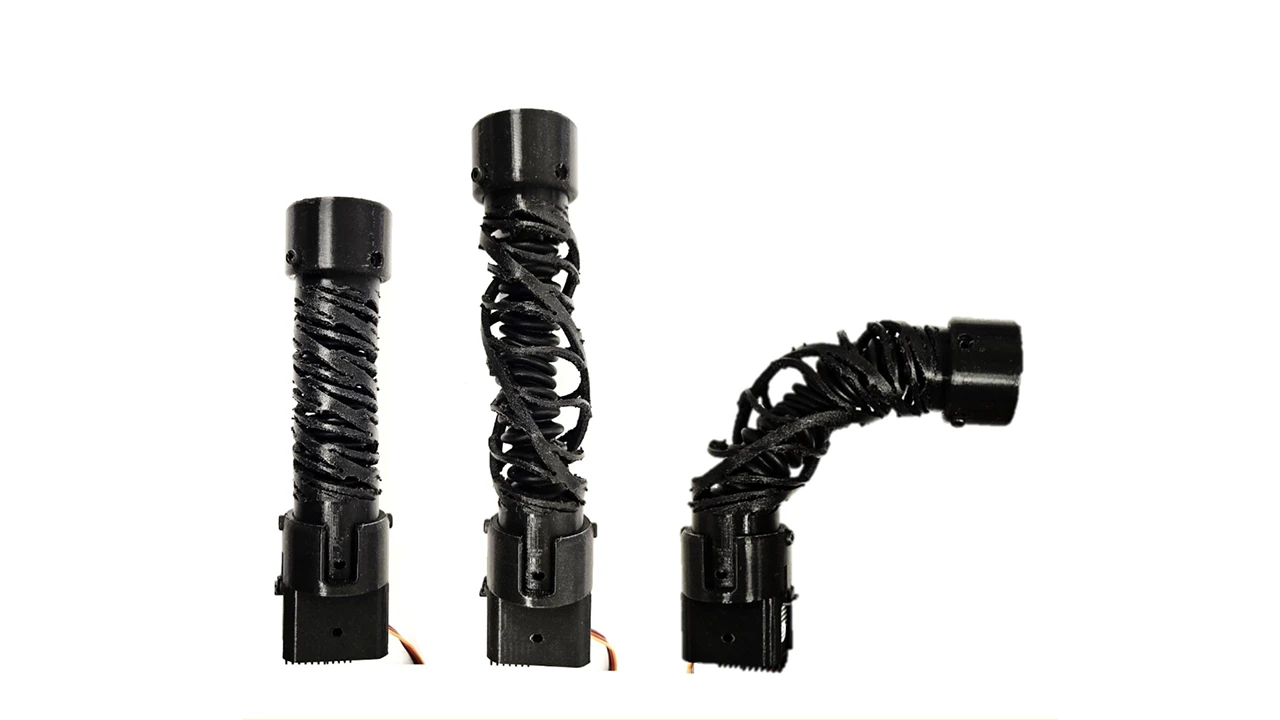
Ryan Truby/Taekyoung Kim from Northwestern University
Artificial Muscles that Mimic Human Anatomy
- Written by Kiara Fabbri Former Tech News Writer
- Fact-Checked by Justyn Newman Former Lead Cybersecurity Editor
Researchers at Northwestern University have created a soft and flexible device that enables robots to mimic human muscle movement. This new technology, called a soft actuator, represents a significant advancement in the field of robotics.
In their recently published study , the research team explains how conventional robotic actuators are typically stiff and expensive. These characteristics can limit their safety, especially in environments where humans and robots interact. The newly developed soft actuator, on the other hand, is 3D-printed from a common rubber, making it inexpensive (approximately $3).
Ryan Truby, the lead researcher, stated “If a soft robot were to collide with a person, the impact would be significantly less painful compared to a hard, rigid robot. Our actuator makes robots more suitable for environments focused on human interaction. Additionally, their low cost allows for broader applications that were previously too expensive to consider.”
The design of the new actuator draws inspiration from human muscles, which contract and stiffen simultaneously to facilitate movement and exert force.
Truby added, “When you twist the lid off a jar, your muscles tighten and stiffen to apply the necessary force. This aspect of muscle function has been overlooked in soft robotics. Most soft actuators become more pliable when in use, but our design actually stiffens during operation.”
The new actuator achieves this by utilizing 3D-printed “handed shearing auxetics” (HSAs) made from rubber. These HSAs expand and extend when twisted, providing the actuator with the ability to transmit force effectively. This feature was lacking in previous soft robots.
To showcase the actuator’s capabilities, the researchers created a worm-like crawling robot and an artificial bicep. The crawling robot, measuring just 26 centimeters, adeptly navigated confined spaces, while the artificial bicep successfully lifted a 500-gram weight 5,000 times in succession.
Researchers are optimistic about future enhancements. While the current prototype demonstrates the feasibility of the concept, future research will focus on improving the actuator’s performance. Researchers aim to enhance its speed and strength to broaden its range of potential applications
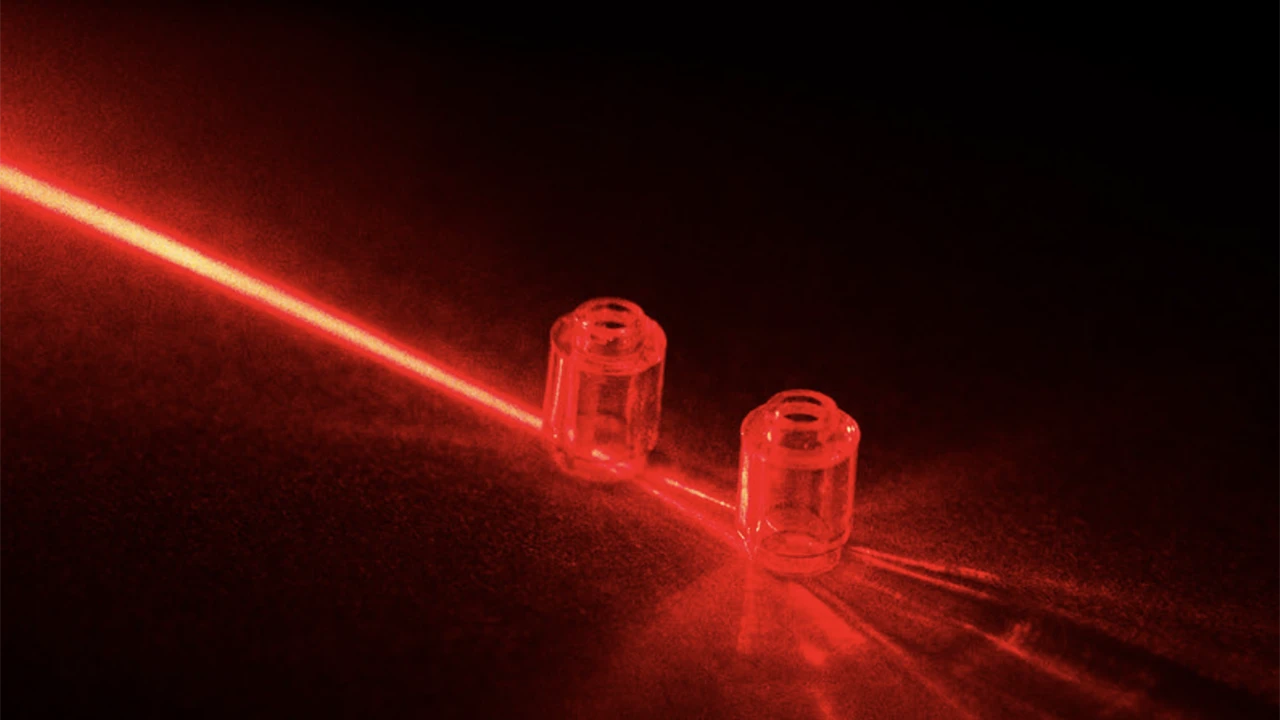
Image by Martin Kenny, from Flickr
World’s First Laser Weapon System Against Drones
- Written by Kiara Fabbri Former Tech News Writer
- Fact-Checked by Justyn Newman Former Lead Cybersecurity Editor
Dubbed the “ Star Wars Project “, South Korea plans to deploy laser weapons to counter drones from North Korea. Authorities highlight that laser weapons are quiet, invisible, effective, and cost-efficient. While some experts question the effectiveness against large-scale drone attacks, this technology marks a significant step forward for laser weapons and defense strategies.
South Korea is poised to become the world’s first country to deploy laser weapons in the military as early as this year ( Reuters ). Their program involves mass production of a low-cost laser weapon called Block-I (costing around $1.50 per shot), effective against small drones at close range. According to the procurement organization, the laser weapon will be invisible and silent, operating solely on electricity without the need for additional ammunition. The laser is expected to melt the drone’s body and fry its internal electronics ( Aljazeera ).
Block-I will see its deployment by the end of 2024 with plans for more systems in the future. Additionally, South Korea’s Defense Acquisition Program Administration (DAPA) is developing a more powerful Block-II system with improved range and output, although its deployment date remains undisclosed ( CNN ).
AP reports that some experts have questioned the technology. Lee Illwoo, an expert with the Korea Defense Network in South Korea, expressed doubts about the effectiveness of South Korea’s laser weapons, citing the inadequacy of the country’s anti-air radar systems to detect North Korean drones accurately. He also noted that the range of laser weapons is relatively short and suggested that high-power microwave weapons might be more effective when dealing with large numbers of enemy drones simultaneously.
The Block-I system itself has yet to be used in real-world scenarios. However, its development comes amidst the growing prevalence of cheap drones on active battlefields around the world, from the war in Ukraine to Israel’s conflicts in Gaza and Lebanon ( Aljazeera ).
