
Photo by Sumudu Mohottige on Unsplash
Apple Could Release Foldable iPhone Model In 2026
- Written by Andrea Miliani Former Tech News Expert
- Fact-Checked by Justyn Newman Former Lead Cybersecurity Editor
Apple could make the biggest iPhone design change by launching a new foldable model in 2026, according to a recent report shared by The Information.
The tech giant has been considering creating its own version of modern foldable smartphones like other tech companies have been doing.
According to Reuters , Samsung was the pioneer in foldable smartphones after launching the first model in 2019. Interest in this type of device has been increasing, a recent report by Counterpoint Research states that during this first quarter of the year, the foldable smartphone market grew by 49%.
As explained by anonymous sources quoted in the report, Apple has moved from the ideation process and reached out to Asian suppliers. There is also a special code name for the new foldable iPhone within the company: V68.
As reported by The Verge, other websites have also confirmed Apple’s intentions of launching a new foldable iPhone and there are also rumors about Apple working on a foldable MacBook.
This new type of iPhone, powered with AI technology, could be a strategy from Apple to boost sales and deal with powerful competitors like Huawei and Samsung. However, there is no guarantee that this will happen, and Apple hasn’t shared an official announcement yet.
Users Share Thoughts On Social Media
“These foldable iPhones have been rumored for years. Honestly, I don’t believe this will ever happen, there just isn’t enough of a foldable market,” commented a user on X . “Good for Apple on showing up to the party. When Samsung is on Fold and Flip 8,” added another.
While many users shared their excitement about the new foldable iPhone on X, others expressed their concerns on Reddit. “I think it’s inevitable that they will, but the question is when. Apple definitely doesn’t seem in a rush to do so, which is consistent with their general approach,” wrote a Redditor. “The technology is awesome, but I don’t think it’s quite there yet and doesn’t seem to be at the level that Apple wants.”
Google will officially launch its Pixel 9 device in August and many users expect a foldable version as well. Apple customers will have to wait a little longer for the official event in September or until the company discloses an official statement.
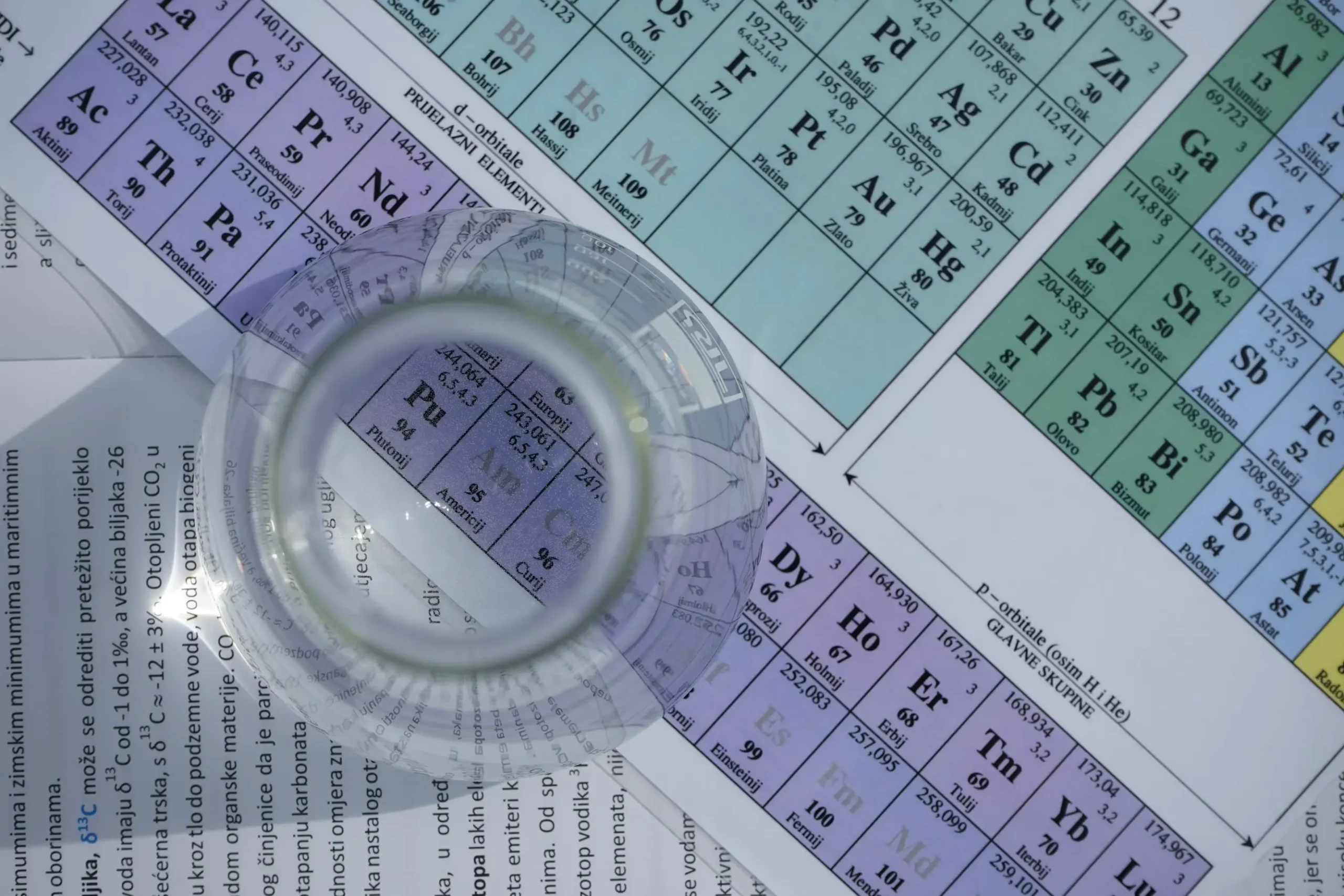
Image by Vedrana Filipović, from Unsplash
Landmark Experiment Creates Livermorium, Sets Stage for Element 120
- Written by Kiara Fabbri Former Tech News Writer
- Fact-Checked by Justyn Newman Former Lead Cybersecurity Editor
Scientists have created livermorium (element 116) using a new technique. This offers a potential route to synthesising the elusive element 120, which would be the heaviest element on the periodic table.
Researchers at Lawrence Berkeley National Laboratory have successfully created two atoms of livermorium, a rare super-heavy element. They have done so by using a method that could enable the synthesis of the element 120. This breakthrough was presented on July 23 at the Nuclear Structure 2024 conference.
Reiner Kruecken , who leads Berkeley Lab’s Nuclear Science Division, stated “We think it will take about 10 times longer to make 120 than 116. It’s not easy, but it seems feasible now.”
The team began with rare isotopes of titanium, which were vaporised in a special oven at 1650°C (around 3000°F). The titanium vapor was then transformed into a charged beam using microwaves and fed into a particle accelerator. When the beam collided with a plutonium target at roughly 10% of the speed of light, the resulting debris revealed the presence of two livermorium atoms. Despite their rapid decay, the measurement was highly precise, with only a one in a trillion chance of being a statistical fluke.
This new technique, involving titanium, is significant because titanium has never been used in such experiments due to its difficulty in forming a well-controlled beam. Nevertheless, physicists believe that titanium beams will be crucial for creating element 120, also known as unbinilium, which would contain 120 protons in its nucleus.
“If you want to push above what we currently know on the periodic table, you need to find a new way of making heavy elements,” explains Jacklyn Gates , who leads the project at Berkeley Lab.
Previously, scientists relied on beams of calcium-48 to create superheavy elements. However, this method has limitations – the target elements become increasingly radioactive and short-lived, making them impractical for further exploration. Titanium ions offer a solution, allowing scientists to use more stable target elements.
Jacklyn said “Creation of a new element is an extremely rare feat. It’s exciting to be a part of the process and to have a promising path forward.”
This new method not only demonstrates the potential for creating element 120 but also opens up possibilities for discovering other super-heavy elements, further expanding our understanding of the periodic table.
