
Photo by Shawn on Unsplash
Alibaba Nears $4 Billion Deal With South Korea’s E-Mart
- Written by Andrea Miliani Former Tech News Expert
- Fact-Checked by Justyn Newman Former Lead Cybersecurity Editor
The Chinese tech giant Alibaba is negotiating a $4 billion deal with South Korea’s largest retailer, E-Mart. Both companies plan a joint venture to better compete in the region’s online retail sector.
In a Rush? Here are the Quick Facts!
- Anonymous sources said Alibaba and E-Mart are at the final stage of a negotiation to create a new entity worth $4 billion.
- E-Mart and Alibaba would face strong competitors in South Korea such as Coupang Inc. and Naver Corp and a challenging market.
- The companies could make an official announcement soon, after they close the deal.
According to Bloomberg’s exclusive , anonymous sources familiar with the matter have explained that both companies could combine online shopping assets to create a new entity.
The sources have confirmed that the negotiation is at its final stage, and they might make an official announcement by the end of the week.
If the deal closes, Alibaba and E-Mart will face well-established competitors in South Korea like Coupang Inc. and Naver Corp.
They will also have to deal with a challenging market as consumers’ confidence has decreased since the end of the pandemic, and the country has faced political turmoil after the president declared martial law a few days ago.
The new venture aligns with Alibaba’s expansion goals this year. The Chinese giant raised $5 in a multicurrency bond sales deal , one of the biggest in the Asia Pacific. The company has also been developing AI technology, in September it l aunched 100 open-source AI models and a text-to-video AI tool.
E-Mart has been expanding for the past few years through new acquisitions and organically, but its shares have dropped this year—about 7%—, the company is valued at $1.4 billion at the moment. Alibaba’s shares in Hong Kong, on the other hand, rose around 11% and the company is currently valued at above $200 billion.
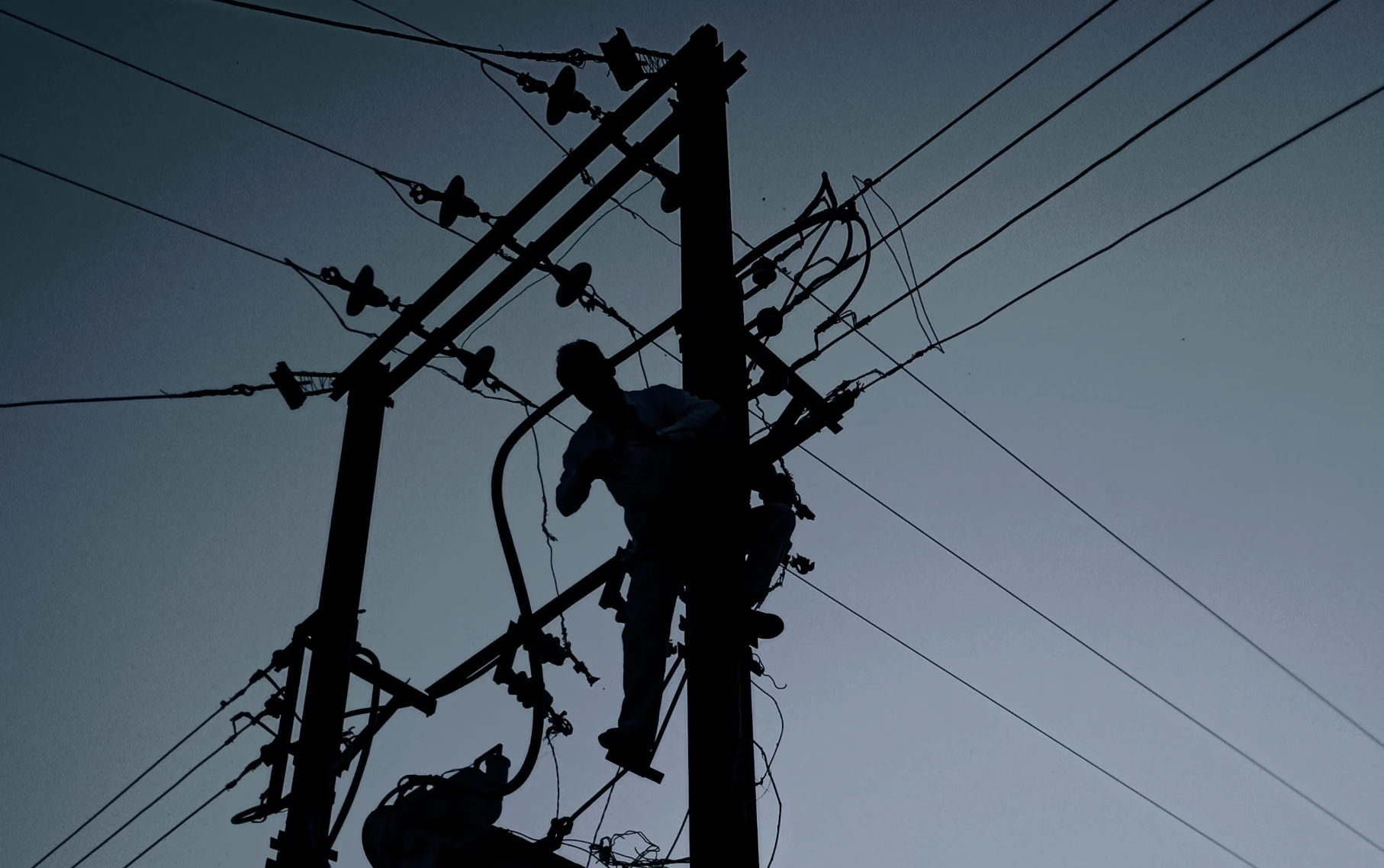
Image by Prasad Bhalerao, from Unsplash
A.I. Boom Spurs Electrician Migration To Central Washington
- Written by Kiara Fabbri Former Tech News Writer
- Fact-Checked by Justyn Newman Former Lead Cybersecurity Editor
Central Washington’s rolling sagebrush plains are undergoing a high-tech transformation, driven by the surging demand for AI, according to a report by The New York Times .
In a Rush? Here are the Quick Facts!
- Central Washington’s hydropower attracts electricians to build data centers for the A.I. boom.
- Electricians earn up to $2,800 weekly after taxes by working 60-hour weeks.
- Over 50 data centers operate in three counties, straining the region’s power grid.
The region, powered by hydropower dams along the Columbia River, has become a magnet for electricians chasing lucrative work in the booming data center industry.
With substations sprouting on farmland and orchards, hundreds of traveling electricians are working 60-hour weeks, earning up to $2,800 weekly after taxes. The workforce is diverse, including former morticians, single mothers, and even a local legend dubbed “Big Job Bob,” as reported by The Times.
They are reshaping the landscape while capitalizing on overtime and bonuses tied to the massive infrastructure needed to power A.I.
The Times reports that Microsoft alone anticipates requiring 2,300 electricians in coming years, pushing the International Brotherhood of Electrical Workers (IBEW) to expand its apprenticeship programs. Moreover, the union’s East Wenatchee branch, established in 2022, trains workers to meet the skyrocketing demand.
However, balancing long-term commitments with fluctuating workloads presents challenges, as union leader Rob Bartel notes to The Times, “We’re making a commitment — and I don’t have a crystal ball — to somebody for 8,000 hours, four or five years of their life.”
Quincy, a once-sleepy agricultural town, exemplifies the changes. Property taxes, bolstered by data centers, funded a $108 million high school featuring glass walls and light-wood interiors, as reported by The Times.
However, The Times notes that economic disparities persist, with 80% of students still eligible for free lunch. The influx of wealth has benefited some, including a farmer who reportedly sold his land for a data center and bought three Porsches, but left others behind as living costs rise.
Yet, growth is constrained by limited electricity. “The grid’s maxed out […] They can’t build with no power,” electrician Jesse Zafra warned to The Times, fueling speculation about solutions like new transmission lines or Helion, a nuclear fusion startup partnering with Microsoft.
The Times notes that while construction generates thousands of jobs, operational centers employ only a few dozen, raising concerns about the region’s long-term economic stability. For now, electricians flock to central Washington and other hot spots nationwide, riding a wave of opportunities powered by the A.I. boom.
Still, the future hinges on securing more electricity and maintaining the delicate balance between opportunity and rising inequality. As Bob Allen, a union representative, said to The Times, “That would give us another 10 years of work.” Beyond that, the region’s fate remains uncertain.
