Image from Pickpik
AI Tool Speeds Up Medical Image Analysis
- Written by Kiara Fabbri Former Tech News Writer
- Fact-Checked by Justyn Newman Former Lead Cybersecurity Editor
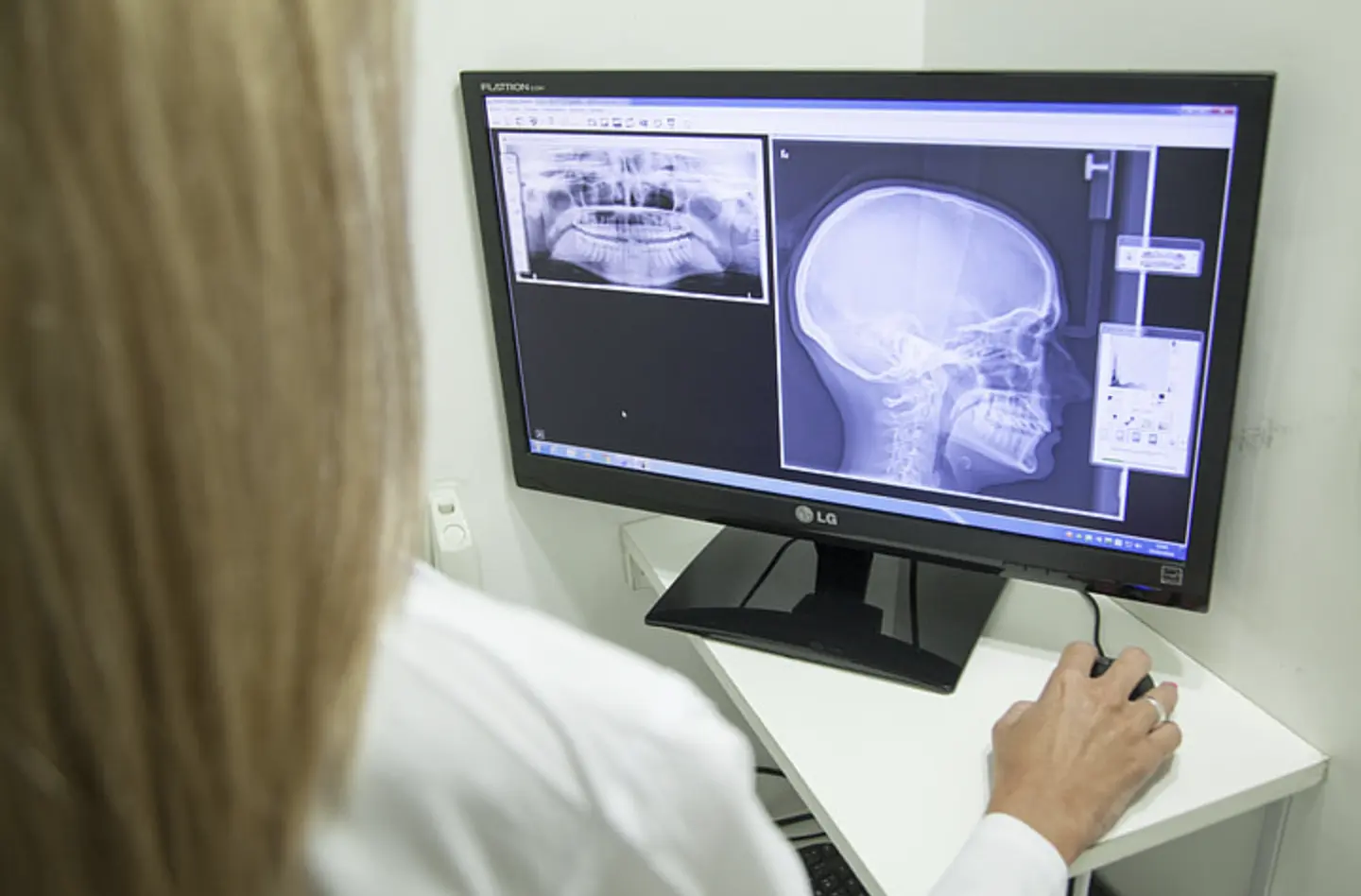
Researchers at MIT have announced on Monday a new AI tool called ScribblePrompt that can speed up the process of analyzing medical images. The tool helps doctors and researchers delineate regions of interest and abnormalities in scans like MRIs and X-rays.
The researchers reported that when tested ScribblePrompt cut down annotation time by 28% compared to competing models.
Traditional methods of analyzing medical images often involve manually tracing anatomical structures, which can be time-consuming. ScribblePrompt is set to automate this process by using AI to segment regions of interest based on user input.
To train ScribblePrompt, the researchers created simulated data by mimicking how users might annotate over 50,000 medical images including MRIs, ultrasounds, and X-rays. This included various body parts like the eyes, brain, and bones.
By using this simulated data, the AI learned how to handle different types of images and tasks. It was then tested on new images it hadn’t seen before, showing that it can generalize well and perform better than other existing methods.
“Many existing methods don’t respond well when users scribble across images because it’s hard to simulate such interactions in training. For ScribblePrompt, we were able to force our model to pay attention to different inputs using our synthetic segmentation tasks,” said Hallee Wong, lead author of the ScribblePrompt research paper.
Additionally, a notable feature of ScribblePrompt is its ability to adjust based on user feedback. For example, if a doctor initially marks a kidney with a box but needs to make changes, they can add more scribbles or use “negative scribbles” to remove parts of the annotation. This flexibility helps ensure that the final marked areas are accurate.
ScribblePrompt represents a significant step forward in using AI to assist doctors and researchers with medical imaging. By making the annotation process faster and more accurate, this tool helps improve both clinical work and research, making it easier for healthcare professionals to analyze and interpret medical scans.
Overall, AI has shown promising potential in medical imaging diagnosis. Recent examples include its application in diagnosing diseases through tongue image analysis , and tracking the progression of Parkinson’s disease .
However, it’s crucial to acknowledge the limitations of these tools . AI systems can be prone to errors or misinterpretations, and there are ethical concerns surrounding patient privacy and the potential for AI to replace human medical professionals.
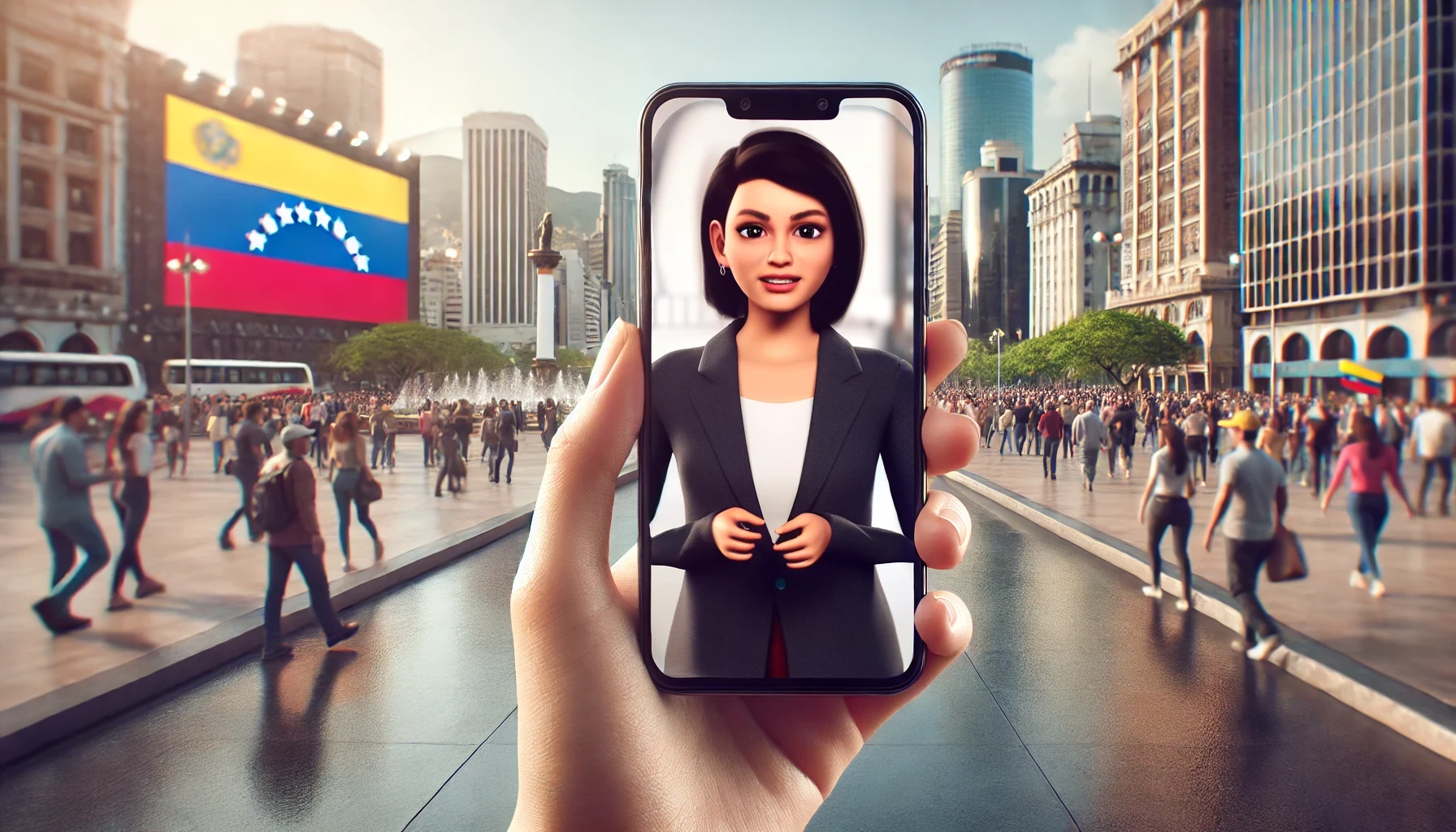
Image generated with DALL·E through ChatGPT
AI Avatars Can Spread Misinformation, But Also Truth in Censorship-Heavy Countries Like Venezuela
- Written by Andrea Miliani Former Tech News Expert
- Fact-Checked by Justyn Newman Former Lead Cybersecurity Editor
- Reader’s Comments 1
I returned to my home country, Venezuela, last year for a couple of months after a few years abroad. One of the things that caught my attention during my stay was this viral video of “American TV anchors” explaining the economic situation in the country and how it had improved, in English with Spanish subtitles. It didn’t look real , and I immediately got suspicious—unfortunately, not the people living there.
“We wanted to find out if Venezuela is really as destroyed as the media has claimed for years,” said Noah, the blond “journalist” from this unknown news channel called House of Media , in one of the videos that went viral on social media, that the government shared on local TV, and that was even promoted online by Nicolás Maduro, Venezuela’s autocrat.
“It’s happening,” I thought after talking to a few Venezuelans who thought the AI avatars were real journalists, “Maduro’s regime is using AI to spread misinformation and it’s working.” Even though it was not confirmed that Maduro’s administration orchestrated it, it was later revealed that the videos were AI Avatars created by the AI company Synthesia—which recently developed avatars capable of expressing human emotions . According to VICE , at that moment, Synthesia charged $30 a month, and similar videos were created for propaganda in Africa and Asia.
However, right when I started feeling despair about deepfakes being used for malicious purposes and misinformation across multiple countries, an interesting twist brought back my attention and hope: Venezuelan journalists are using AI to inform and spread the truth.
AI Avatars: Anonymity as an Advantage
One of the problems of deepfakes is anonymity. Unless someone confesses—like that magician from New Orleans told journalists about his role in the robocalls imitating President Joe Biden during the primary elections—it can be difficult to find the authors of certain AI-generated content as the AI avatars do not provide information about the real person. But what if this is actually a solution in certain scenarios?
In countries like Venezuela, sharing information that goes against the government is dangerous, even if you are not a journalist, even for just a post on social media—there are multiple cases of people and students like Villca Fernández being sent to jail over a tweet. People still do it, but it’s very risky.
This is when AI avatars come in handy. According to Reuters , Connectas, a Colombian-based organization, launched a new project called “Operation Retweet”, along with initiatives #LaHoraDeVenezuela and Venezuela Vota, after the presidential elections on July 28. The goal is to share real information prepared by independent media outlets using two AI characters, La Chama (the girl) and El Pana (“friend” in Venezuelan slang)
The videos are shared on social media through the remaining independent news channels and other communication channels like WhatsApp. Unlike the AI avatars from House of Media I saw last year, these new characters look a little more artificial and disclose it from the beginning. “Before we begin, in case you haven’t noticed, we want to tell you we are not real,” says La Chama in the first video published. “We were generated by Artificial Intelligence, but the content is real, verified, high-quality, and created by journalists,” adds El Pana.
Multiple videos have been shared on social media, in English and Spanish, and through multiple websites and other communication channels. The project has been praised internationally and admired as a strategy to fight censorship.
📢 Third episode of Operacion Retuit! #InvaluableJournalism 🎥 This episode focuses on the recent passing of a law that regulates NGOs in 🇻🇪. Is the civic space shutting down for good?🚨 🔗 👉🏽 https://t.co/SkFE5KKQBu Read and share.📲🔄 #VenezuelaVota #LaHoraDeVenezuela pic.twitter.com/HAdlqBXwnh — CONNECTAS (@ConnectasOrg) September 6, 2024
Technology Becomes Key to Survival
Digital platforms have become essential for Venezuelans for years. I remember helping my family find my grandmother’s medicine through Twitter (now X) back in 2016 and 2017 when the medicine shortage was reaching 85% in the country.
Many Venezuelans become tech-savvy out of need and make the most of every digital platform. I was impressed last year with how businesses and clients managed so many transactions via WhatsApp. I got food delivery and booked my transportation rides through this platform as popular apps like Uber Eats, Uber, Lyft, or traditional international online payment methods don’t exist. People learn to trust strangers through chats.
From using VPNs to bypass censorship —similar to how Brazilians are now doing to access X , which was recently banned in the country—to Bitcoin mining to turning to online gig work to make ends meet, Venezuelans have been constantly adapting to new technologies as tools to navigate the turbulent political, social, and economic crises. “After the U.S., Venezuela hosts the largest number of data workers in the world,” states a report shared by Rest of World earlier this year.
Artificial intelligence has had a strong presence in Venezuela for years. Multiple AI companies have taken advantage of the crisis by hiring cheap labor. In 2022, the MIT Technology Review shared a report on how AI data-labeling companies found opportunities to exploit talented citizens: “Venezuela’s crisis has been a boon for these companies, which suddenly gained some of the cheapest labor ever available.”
Now, Venezuelans are using their talent and knowledge in technology as a powerful tool not only to counteract the crisis but also to challenge the government. Maybe—and hopefully—the new AI avatars are just the beginning of a new wave of citizen empowerment.
