
Image by TechCrunch, from Flickr
AI That Thinks Before It Speaks? Claude 3.7 Sonnet Debuts Hybrid Reasoning
- Written by Kiara Fabbri Former Tech News Writer
- Fact-Checked by Sarah Frazier Former Content Manager
Anthropic has rolled out Claude 3.7 Sonnet, a new version of its AI model that introduces an optional “extended thinking” mode, giving users more control over how the model processes complex tasks.
In a Rush? Here are the Quick Facts!
- The model improves reasoning and problem-solving by allowing self-reflection before answering.
- Extended thinking mode is only available on paid plans.
- Claude Code, a coding assistant, is in limited preview for developers
Anthropic has released Claude 3.7 Sonnet, an updated AI model that introduces hybrid reasoning, allowing users to choose between rapid responses and extended thinking.
This new approach aims to improve problem-solving by enabling the model to take additional time to evaluate and refine its responses when needed.
In standard mode, Claude 3.7 Sonnet functions as an iterative improvement over its predecessor, Claude 3.5 Sonnet. In extended thinking mode, however, the model engages in self-reflection before producing an answer.
Michael Gerstenhaber, Anthropic’s product lead for AI, described the feature as a way for users to balance response time and reasoning depth. “The [user] has a lot of control over the behavior—how long it thinks, and can trade reasoning and intelligence with time and budget” he said, as reported by WIRED .
This process is intended to enhance accuracy in areas requiring multi-step reasoning, such as mathematics, physics, coding, and instruction-following. Users interacting with the model via API can specify a limit on how many tokens it uses to “think,” allowing control over response speed and cost.
WIRED notes that the update also includes a “scratchpad” feature, which makes the model’s reasoning steps visible as it processes a request. This approach is similar to techniques used in other AI models, such as DeepSeek’s.
Anthropic states that Claude 3.7 Sonnet has been optimized for real-world applications rather than competition-style benchmarks. Early testing suggests that the extended reasoning mode improves performance on tasks involving complex codebases, advanced tool use, and full-stack software development.
The model has been evaluated on SWE-bench Verified and TAU-bench, where it reportedly outperforms previous versions, as reported by Anthropic.
CNN Notes that Anthropic has kept the pricing for Claude 3.7 the same as previous models, positioning it below OpenAI’s latest offerings. It costs $3 per million input tokens and $15 per million output tokens, compared to OpenAI’s $15 and $60 for similar tiers.
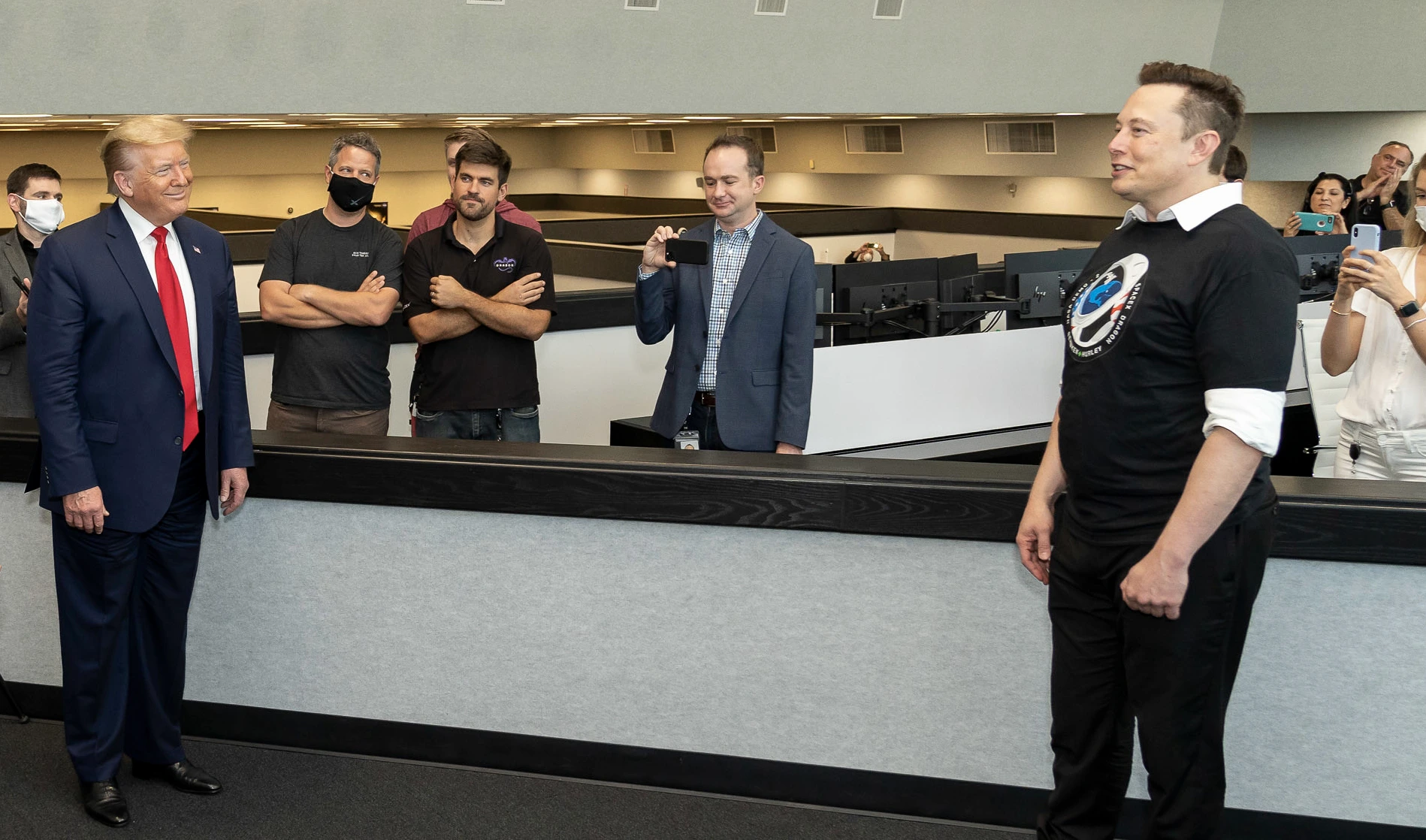
Image by Trump White House Archived, from Flickr
AI Video of Trump Kissing Musk’s Feet Broadcast In Federal Agency Offices
- Written by Kiara Fabbri Former Tech News Writer
- Fact-Checked by Sarah Frazier Former Content Manager
An AI-generated video depicting President Donald Trump sucking Elon Musk’s toes aired on a loop across the Department of Housing and Urban Development (HUD) headquarters in Washington, D.C., on Monday morning, as first reported by 404Media .
In a Rush? Here are the Quick Facts!
- Hackers targeted HUD’s systems on the first day of mandatory office return.
- HUD staff returned to office after remote work ban lifted by executive order.
- The incident raises concerns about cybersecurity protocols at federal agencies.
The video, captioned “LONG LIVE THE REAL KING,” reportedly played for five minutes before building staff struggled to shut it off, sending employees across multiple floors to manually unplug the televisions.
Journalist Marisa Kabas shared footage of the event on Bluesky, describing how HUD staff were left scrambling to turn off the video after it continued to loop uncontrollably.
The 19-second clip showed Trump sucking Musk’s feet, a scene that seemed to satirize their increasingly close relationship. The prank video coincided with the mandatory return-to-office order for federal employees, following an executive decision to end remote work, as noted by 404 Media.
An unnamed HUD employee provided additional details to WIRED , confirming that workers had to physically intervene by shutting off each screen manually.
“Another waste of taxpayer dollars and resources,” said HUD spokesperson Kasey Lovett, adding that “appropriate action will be taken for all involved.”
The video was a bizarre moment of viral political satire at a time when tensions are rising over the government’s approach to workforce reductions.
Musk, who has become a prominent figure in Trump’s administration, is leading the newly formed Department of Government Efficiency (DOGE), which is tasked with cutting federal spending and restructuring agencies, as noted by Forbes .
These efforts have been controversial, with significant layoffs anticipated across government departments, including HUD.
In a leaked memo, seen by The Washington Post , the Trump administration outlined plans to eliminate over 4,000 HUD positions, including workers involved in disaster recovery, rental subsidies, and housing for first-time buyers.
The move has sparked outrage, especially as it directly targets employees who handle critical services for low-income communities. “We want the bureaucrats to be traumatically affected,” said Russell Vought, Trump’s Director of the Office of Management and Budget, in a 2023 speech , as reported by 404 Media.
Musk’s influence over the federal government continues to grow. Last week, he made headlines with an ultimatum to federal employees, demanding that they report their weekly accomplishments or resign, as reported by 404 Media.
The video prank is just the latest in a series of incidents that highlight the unusual nature of the Trump-Musk relationship, which has come under increasing scrutiny as the pair continue to shape the future of the U.S. government.
