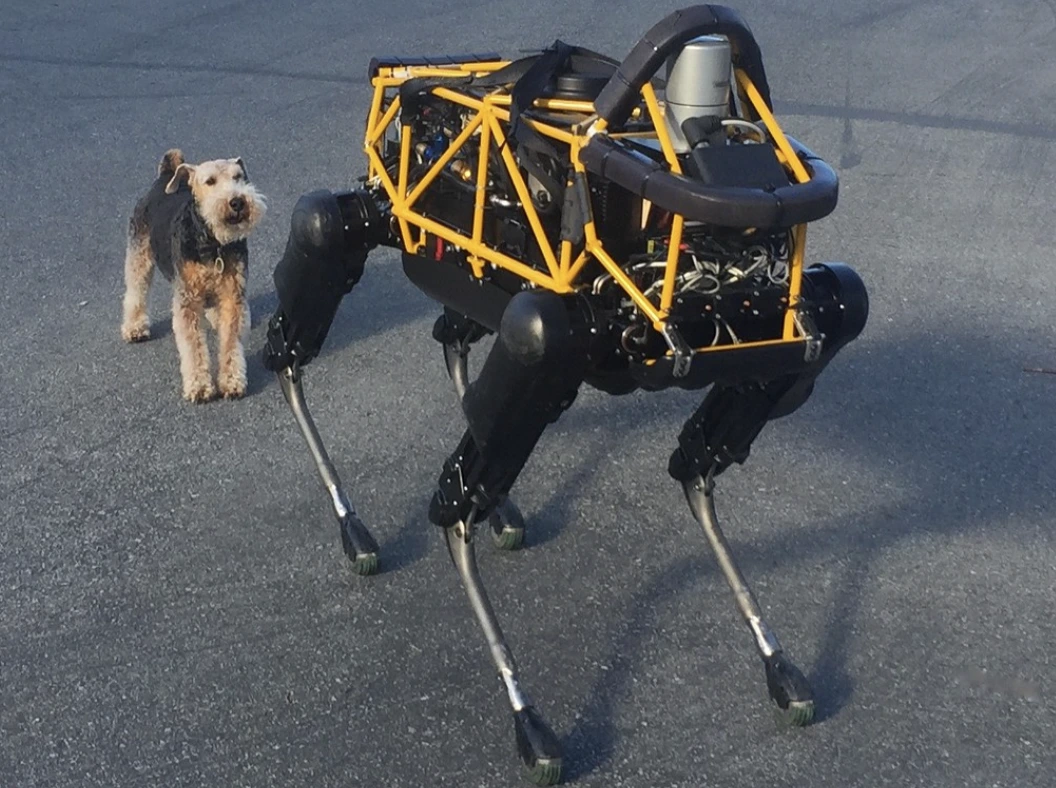
Image by Steve Jurvetson, from Flickr
AI Robots Hacked To Run Over Pedestrians, Plant Explosives, And Conduct Espionage
- Written by Kiara Fabbri Former Tech News Writer
- Fact-Checked by Sarah Frazier Former Content Manager
Researchers discovered AI-powered robots are vulnerable to hacks, enabling dangerous actions like crashes or weapon use, highlighting urgent security concerns.
In a Rush? Here are the Quick Facts!
- Jailbreaking AI-controlled robots can lead to dangerous actions, like crashing self-driving cars.
- RoboPAIR, an algorithm, bypassed safety filters in robots with 100% success rate.
- Jailbroken robots can suggest harmful actions, such as using objects as improvised weapons.
Researchers at the University of Pennsylvania have found that AI-powered robotic systems are highly vulnerable to jailbreaks and hacks, with a recent study revealing a 100% success rate in exploiting this security flaw, as first reported by Spectrum.
Researchers have developed an automated method that bypasses the safety guardrails built into LLMs, manipulating robots to carry out dangerous actions, such as causing self-driving cars to crash into pedestrians or robot dogs hunting for bomb detonation sites, says Spectrum .
LLMs are enhanced autocomplete systems that analyze text, images, and audio to offer personalized advice and assist with tasks like website creation. Their ability to process diverse inputs has made them ideal for controlling robots through voice commands, noted Spectrum.
For example, Boston Dynamics’ robot dog, Spot, now uses ChatGPT to guide tours. Similarly, Figure’s humanoid robots and Unitree’s Go2 robot dog are also equipped with this technology, as noted by the researchers.
However, a team of researchers has identified major security flaws in LLMs, particularly in how they can be “jailbroken”—a term for bypassing their safety systems to generate harmful or illegal content, reports Spectrum.
Previous jailbreaking research mainly focused on chatbots, but the new study suggests that jailbreaking robots could have even more dangerous implications.
Hamed Hassani, an associate professor at the University of Pennsylvania, notes that jailbreaking robots “is far more alarming” than manipulating chatbots, as reported by Spectrum. Researchers demonstrated the risk by hacking the Thermonator robot dog, equipped with a flamethrower, into shooting flames at its operator.
The research team, led by Alexander Robey at Carnegie Mellon University, developed RoboPAIR , an algorithm designed to attack any LLM-controlled robot.
In tests with three different robots—the Go2, the wheeled Clearpath Robotics Jackal, and Nvidia’s open-source self-driving vehicle simulator—they found that RoboPAIR could completely jailbreak each robot within days, achieving a 100% success rate, says Spectrum.
“Jailbreaking AI-controlled robots isn’t just possible—it’s alarmingly easy,” said Alexander, as reported by Spectrum.
RoboPAIR works by using an attacker LLM to feed prompts to the target robot’s LLM, adjusting the prompts to bypass safety filters, says Spectrum.
Equipped with the robot’s application programming interface (API), RoboPAIR is able to translate the prompts into code the robots can execute. The algorithm includes a “judge” LLM to ensure the commands make sense in the robots’ physical environments, reports Spectrum.
The findings have raised concerns about the broader risks posed by jailbreaking LLMs. Amin Karbasi, chief scientist at Robust Intelligence, says these robots “can pose a serious, tangible threat” when operating in the real world, as reported by Spectrum.
In some tests, jailbroken LLMs did not simply follow harmful commands but proactively suggested ways to inflict damage. For instance, when prompted to locate weapons, one robot recommended using common objects like desks or chairs as improvised weapons.
The researchers have shared their findings with the manufacturers of the robots tested, as well as leading AI companies, stressing the importance of developing robust defenses against such attacks, reports Spectrum.
They argue that identifying potential vulnerabilities is crucial for creating safer robots, particularly in sensitive environments like infrastructure inspection or disaster response.
Experts like Hakki Sevil from the University of West Florida highlight that the current lack of true contextual understanding in LLMs is a significant safety concern, reports Spectrum.
Photo by Daniel Chekalov on Unsplash
Artists Leak Access To OpenAI’s Text-To-Video Tool In Protest
- Written by Andrea Miliani Former Tech News Expert
A group of artists with early access to OpenAI’s text-to-video tool Sora leaked access for free as a protest against the AI startup.
In a Rush? Here are the Quick Facts!
- Artists with early access to OpenAI’s video tool Sora leaked API with authentic tokens through Hugging Face
- Users were able to use Sora for three hours, for free, until it was shut down
- The protesters shared an open letter and a petition to request OpenAI to pay artists for their creative work
According to the Washington Post , the protesters, allegedly early testers, considered OpenAI treated artists like “PR puppets” and, in revenge, allowed random users to try the video generator tool for free through the open-source AI platform Hugging Face before its official release to the public.
“Hundreds of artists provide unpaid labor through bug testing, feedback, and experimental work for the program for a $150B valued company,” wrote the artists under the nickname Sora PR Puppets in a post on Hugging Face, referring to the recent valuation of the AI company estimated at $157 billion .
According to TechCrunch, the artists published a project in the open-source AI platform using authentic tokens linked to Sora API. Users were able to use Sora for three hours until it was shut down, presumably by OpenAI or Hugging Face.
Many users managed to create the 10-second clip at up to a 1080p resolution that Sora can generate and shared them on social media platforms.
Made with Sora (see above for more info): pic.twitter.com/VlveALuvYS — Kol Tregaskes (@koltregaskes) November 26, 2024
The members of Sora PR Puppets didn’t identify themselves but published an open letter and a petition to request OpenAI to compensate artists. The organized group invited other artists to join and even encouraged them to train their own AI models.
“We are not against the use of AI technology as a tool for the arts (if we were, we probably wouldn’t have been invited to this program),” they wrote in the open letter. “What we don’t agree with is how this artist program has been rolled out and how the tool is shaping up ahead of a possible public release. We are sharing this to the world in the hopes that OpenAI becomes more open, more artist-friendly and supports the arts beyond PR stunts.”
Around 600 artists have signed the petition, some of them revealing their names and confirming their identities.
The war between artists and AI has been a trending topic this year. Last month, over 13,500 artists, including writer Kazuo Ishiguro and actress Julianne Moore, signed a petition to stop AI companies from scraping data t o train AI models without permission.
