
Image by Edward Howell, from Unsplash
AI Predicts Whisky Origins And Aromas Better Than Humans
- Written by Kiara Fabbri Former Tech News Writer
- Fact-Checked by Justyn Newman Former Lead Cybersecurity Editor
Scientists at the Fraunhofer Institute for Process Engineering and Packaging IVV in Germany, have developed an AI tool called OWSum that outperforms human experts in identifying the origin and key aromas of whisky samples.
In a Rush? Here are the Quick Facts!
- AI tool OWSum distinguishes Scotch from American whiskey using molecular data
- AI surpasses human experts in predicting whisky aroma profiles based on detected molecules.
- Study highlights AI’s potential in quality control, fraud detection, and whisky innovation.
Using molecular data and machine learning, the tool demonstrated exceptional accuracy in distinguishing Scotch whisky from American whiskey and predicting their aroma profiles, as outlined in the research paper published on Thursday.
The study analyzed 16 whisky samples using chemical data and human sensory evaluations. Researchers found that OWSum, a linear classifier, could predict whisky origins based on detected molecules with high precision.
For example, certain chemicals, like menthol and citronellol, were linked to American whiskey, while Scotch whisky had unique markers such as methyl decanoate.
To go further, the team used both OWSum and a Convolutional Neural Network (CNN) to predict each whisky’s top five aroma attributes. These included descriptors like fruity, woody, or smoky. The AI models performed better than human experts, achieving scores that showed strong consistency and accuracy.
Unlike humans, who often vary in their evaluations, AI tools provided consistent predictions. However, the study noted that neither model considered the concentration of molecules, which could improve results in the future.
Researchers believe such AI applications could be valuable in the whisky industry for quality control, fraud detection, and developing new blends. The tools might also extend to other industries, such as food and fragrance production, as reported by New Scientist .
Although AI outperformed humans in this study, scientists emphasize that human expertise is still essential for training these models and interpreting results. Future advancements may include refining aroma profiles and expanding analysis to other whisky-producing regions.
The study demonstrates how technology can complement traditional sensory methods, offering new insights into complex aroma compositions.
“[The results] underline the fact that it’s a complicated task for humans, but it’s also a complicated task for machines – but machines are more consistent than humans,”says Satnam Singh, a team member at the Fraunhofer Institute, as reported by New Scientist.
“But that’s not to say that humans are not needed: we do need them to train our machines, at least, right now,” he added.
The study focused on a small selection of whiskies, and it’s uncertain how the AI would perform with a larger variety, or how it would handle the flavor notes that evolve as the whisky ages in the cask.
The Guardian reports Dr. William Peveler, a senior lecturer in chemistry at the University of Glasgow, saying,
“The other thing with whisky is that perception of flavour is hugely influenced by the environment it’s consumed in and other external factors, so there could be some work to do on other factors that influence flavour perception and prediction in such an emotive product.”
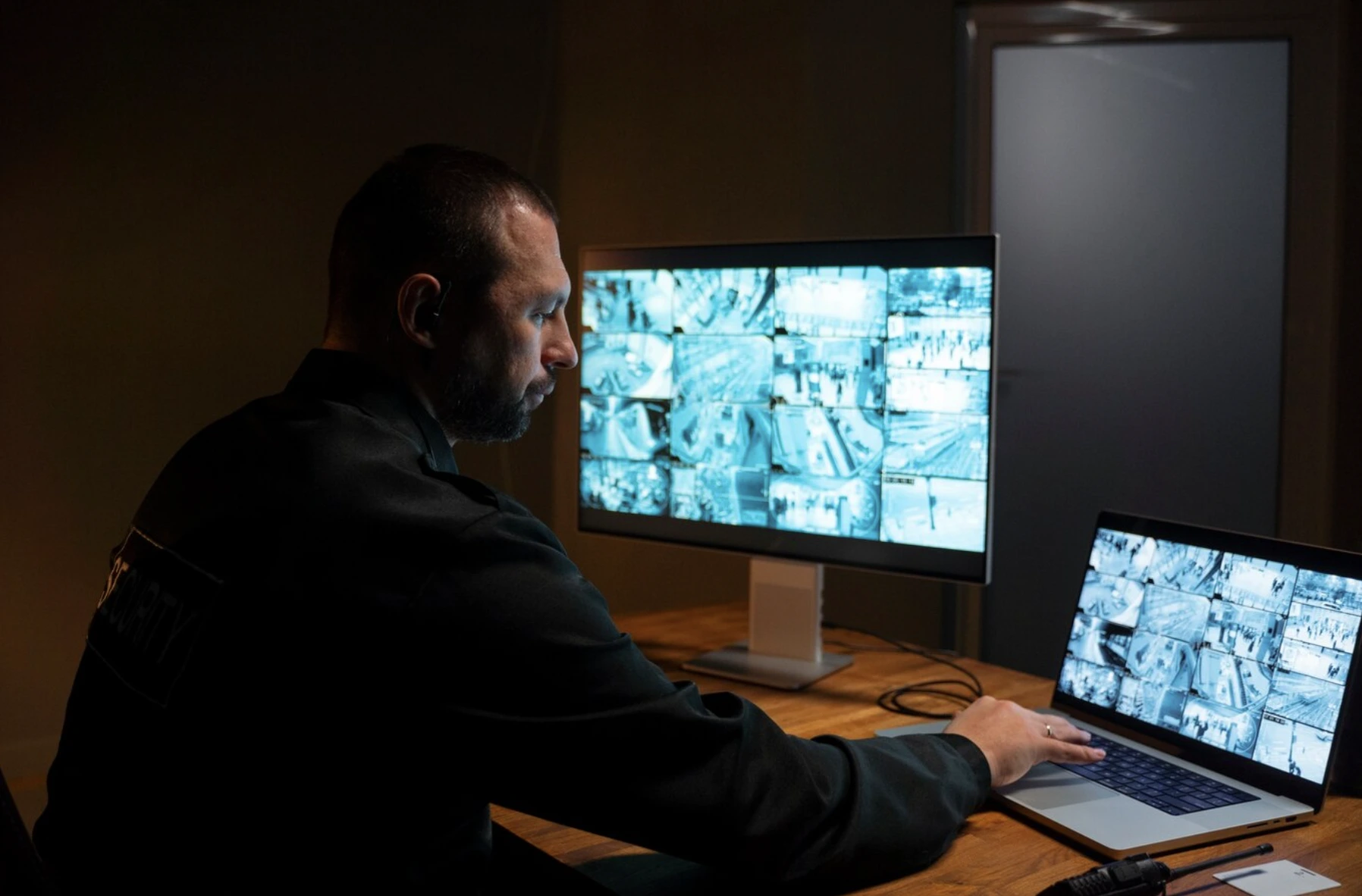
Image by pikisuperstar, from Freepik
FBI Warns Of HiatusRAT Targeting Cameras And DVRs
- Written by Kiara Fabbri Former Tech News Writer
- Fact-Checked by Justyn Newman Former Lead Cybersecurity Editor
The Federal Bureau of Investigation (FBI) has issued a Private Industry Notification (PIN) to warn against an ongoing malware campaign targeting Chinese-branded web cameras and digital video recorders (DVRs).
In a Rush? Here are the Quick Facts!
- HiatusRAT has been active since July 2022, evolving to target IoT devices.
- Vulnerabilities include widely used Hikvision devices.
- Vendors have not mitigated some vulnerabilities, leaving devices exposed to attacks.
The malware, known as HiatusRAT, grants attackers remote access to compromised devices, raising significant cybersecurity concerns.
HiatusRAT, a remote access trojan, has been active since July 2022. It was initially employed to exploit outdated edge network devices, enabling malicious actors to collect traffic and establish covert command-and-control networks.
More recently, the malware has been observed targeting Internet of Things (IoT) devices, including web cameras and DVRs.
The FBI notes that these attacks focus on exploiting vulnerabilities in devices produced by Chinese manufacturers such as Xiongmai and Hikvision. Attackers have been scanning for weaknesses like improper authentication, outdated firmware, and weak or default passwords.
Specific vulnerabilities, including CVE-2017-7921 and CVE-2018-9995, have been targeted, allowing attackers to bypass authentication or escalate privileges. The malware campaign has affected devices in the United States, Australia, Canada, New Zealand, and the United Kingdom.
Using tools like Ingram and Medusa, the attackers exploit TCP ports commonly associated with these devices. Despite the critical risks, many of the vulnerabilities remain unpatched by manufacturers, leaving numerous devices exposed to further exploitation.
The FBI has outlined several mitigation strategies to reduce the likelihood and impact of these attacks. Key recommendations include updating device firmware, replacing unsupported models, enforcing strong password policies, and implementing multi-factor authentication.
Organizations are also urged to segment their networks, monitor traffic for abnormal activities, and disable unused remote access ports.
The agency emphasized the importance of timely action, particularly for organizations relying on IoT devices for surveillance or operational purposes. These devices, often critical to infrastructure, are highly susceptible to exploitation if not adequately secured.
The FBI’s warning highlights the broader risks associated with the growing number of connected devices in modern networks. As the threat landscape evolves, the agency calls on the private sector to prioritize cybersecurity best practices to defend against malicious actors leveraging tools like HiatusRAT.
