
Image by Mike Benna, from Unsplash
AI Powers Urban Forest Models
- Written by Kiara Fabbri Former Tech News Writer
- Fact-Checked by Sarah Frazier Former Content Manager
Tree-D Fusion, an AI system, creates 3D models of urban trees, predicting growth, environmental impacts, and improving urban forestry management.
In a Rush? Here are the Quick Facts!
- Tree-D Fusion creates 3D models of urban trees from single images.
- The system uses AI and procedural modeling to simulate tree growth accurately.
- Models help predict tree growth, environmental impacts, and urban forestry challenges.
Researchers from MIT, Google, and Purdue University have introduced “ Tree-D Fusion ,” an AI-driven system that creates detailed 3D models of urban trees using single images. The results were delineated in a recent paper .
By combining artificial intelligence with decades of forestry science, the system models trees’ structures and growth patterns to provide insights into urban forestry planning.
The project includes a large-scale database of 600,000 simulation-ready tree models across North America, intended for applications such as predicting tree growth and its impact on urban environments, as reported in an MIT press release .
The paper explains that the system relies on a hybrid approach to model trees. Deep learning algorithms first create a structural envelope representing a tree’s overall shape. Then, traditional procedural models refine this envelope by simulating realistic branch and leaf patterns based on the tree’s genus.
This combination enables Tree-D Fusion to predict how trees may grow under different environmental conditions, including variations in temperature and groundwater availability.
Unlike previous models, it captures typically hidden features, such as the backside of trees not visible in street-view images, and accounts for the dynamic nature of trees as they interact with their environment, says the MIT press release.
“We’re bridging decades of forestry science with modern AI capabilities,” explained Sara Beery, assistant professor at MIT and principal investigator at MIT CSAIL, as reported by MIT.
“This allows us to not just identify trees in cities but to predict how they’ll grow and impact their surroundings over time. We’re using AI to make existing forestry knowledge applicable across broader urban settings.”
MIT explains that Tree-D Fusion represents an advancement over earlier urban forest monitoring efforts, which often relied on neighborhood-level observations or struggled with scaling.
The system uses image data from tools like Google Street View and integrates it into predictive models capable of estimating future growth and identifying potential risks, such as branches interfering with power lines.
Despite its advancements, the system faces challenges, particularly with overlapping or “entangled” trees where branches from neighboring trees grow into each other.
“What makes this work exciting is how it pushes us to rethink fundamental assumptions in computer vision,” said Beery as reported by MIT. Trees’ dynamic and constantly changing forms require new approaches, unlike static objects like buildings.
The researchers are already exploring how Tree-D Fusion can be scaled globally, with potential applications for urban forestry and biodiversity monitoring.
“Our goal is to use AI-driven insights to support natural ecosystems, promote sustainability, and improve urban planning,” said Jae Joong Lee, a Purdue University PhD student who developed the Tree-D Fusion algorithm, as reported by MIT.
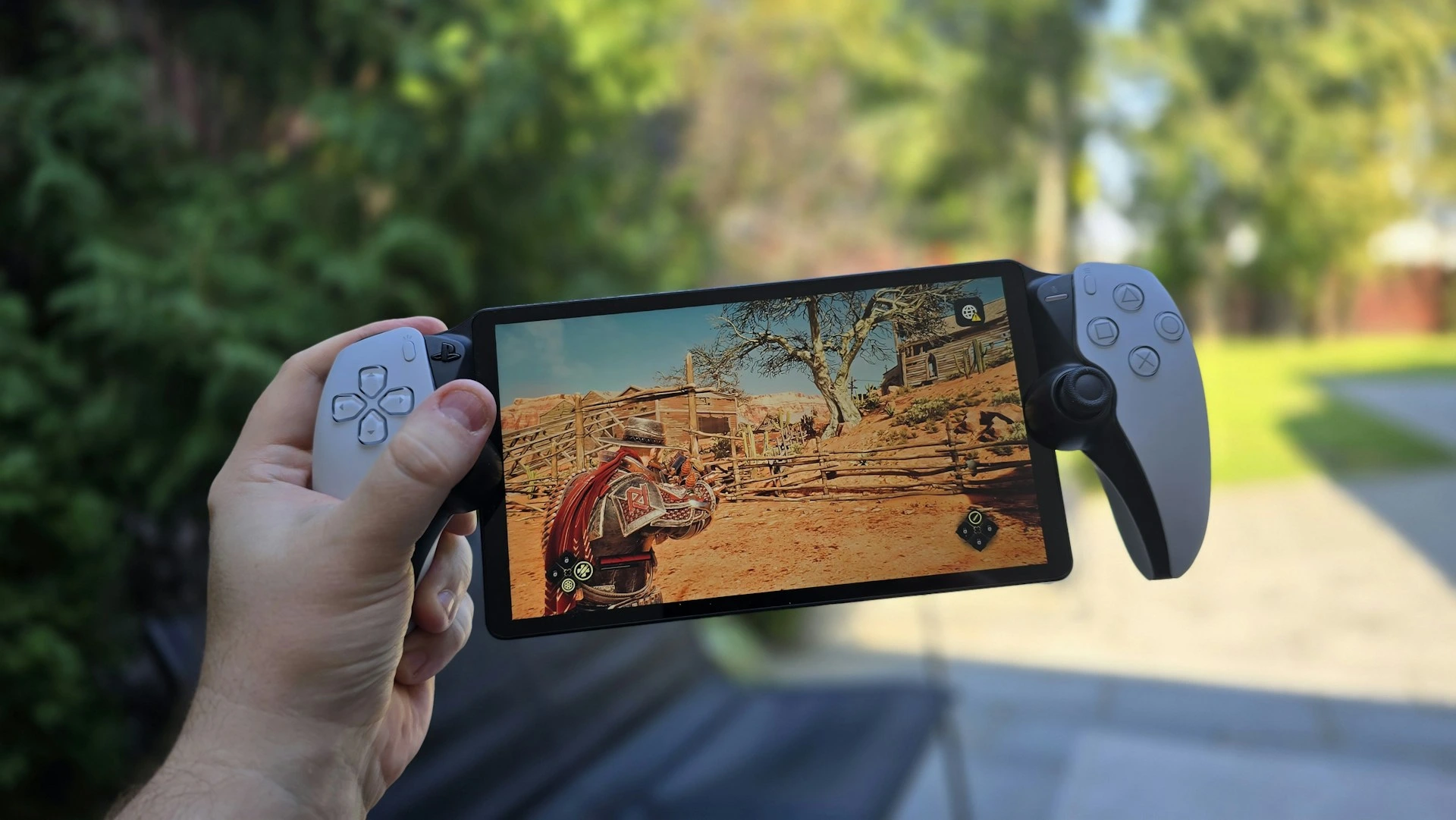
Photo by Evgeny Opanasenko on Unsplash
Sony Developing Portable PS5 To Compete With Nintendo Switch
- Written by Andrea Miliani Former Tech News Expert
Sony is working on a new handheld device to allow players to access PlayStation 5 (PS5) games independently and compete with Nintendo Switch.
In a Rush? Here are the Quick Facts!
- Sony is allegedly working on a new handheld to compete with Nintendo Switch and Xbox.
- The prototype is based on the PlayStation Portal launched in 2023
- It’s still at an early stage and years away from its release
According to Bloomberg , people familiar with the matter have confirmed Sony is developing a new device to also compete with a possible new hardware being built by Microsoft’s Xbox. Phil Spencer, Microsoft’s Xbox Chief, said in June that a future Xbox handheld hardwar e could be revealed soon.
Sony’s new handheld device will be inspired by a previous model, the PlayStation Portal—released in 2023—, an 8-inch device that allows users connected to a Wi-Fi to stream PS5 video games but was initially conceived as a standalone device.
The new independent hardware, however, is years away from its release as it is still at a very early stage according to Bloomberg’s sources. The details of the release and more features haven’t been revealed yet and a spokesperson from Sony declined to comment.
In the past few days, Sony has only officially announced 20 new upcoming games for PS5 and PS VR 2 during the online event State of Play in September.
According to The Verge , Sony has previous experience with this type of product with PlayStation Portable and the PS Vita, but both devices have been discontinued.
Nintendo is leading the handheld market, and it recently announced that a new console will be compatible with the Nintendo Switch Online games , suggesting that it will release a Nintendo Switch 2 or a very similar product in an iPhone-like approach of gradually improving a good product instead of a completely new device.
