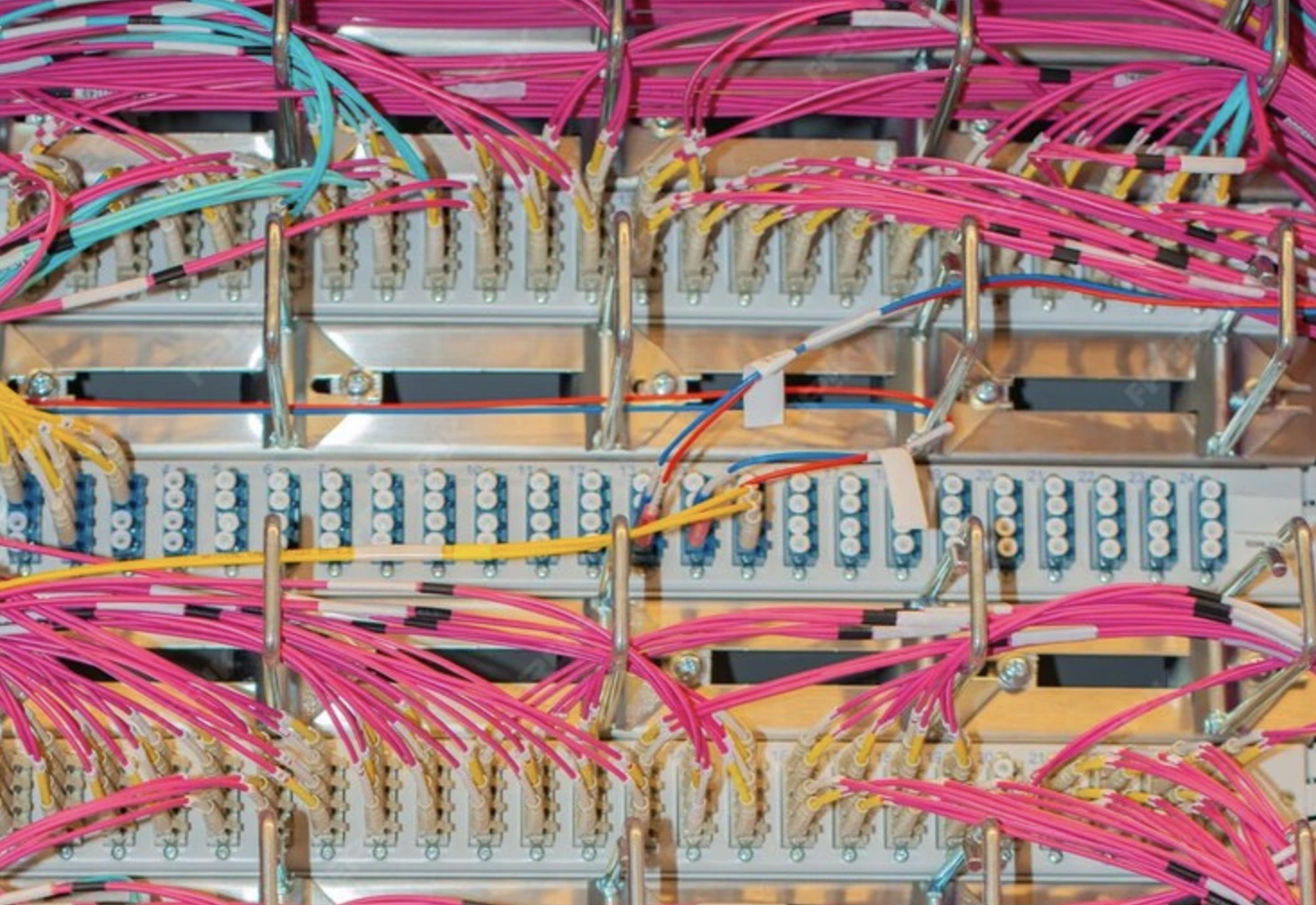
image by EyeEm, from Freepik
AI Frenzy Turns Fujikura Into Japan’s Latest Stock Market Star
- Written by Kiara Fabbri Former Tech News Writer
- Fact-Checked by Sarah Frazier Former Content Manager
Fujikura’s stock soars 400%, driven by AI-fueled data center demand, global expansion, MSCI inclusion, and future nuclear fusion ambitions.
In a Rush? Here are the Quick Facts!
- Fujikura’s stock has risen over 400%, making it Nikkei 225’s top performer.
- Fujikura’s fiber optic cables support booming data center demand driven by AI growth.
- The company forecasts ¥104 billion ($674M) in operating income for this fiscal year.
The global surge in AI has propelled Fujikura Ltd., a 139-year-old Japanese wire cabling company, to unprecedented stock market success. Fujikura’s shares have skyrocketed over 400% this year, making it the top performer on the Nikkei 225 Stock Average, says Bloomberg .
On November 25, it will join the MSCI global standard indexes as Japan’s sole addition, while eight other Japanese companies are being removed, as reported by Bloomberg.
Fujikura exemplifies a “picks and shovels” investment strategy, as its products support the infrastructure crucial for AI. Building data centers, power supplies, and communication networks for AI is estimated to require at least $1 trillion in global spending, according to Bloomberg.
The demand surge caught even Fujikura off guard. “The demand for data centers has skyrocketed since around 2022,” said Kazuhito Iijima, the company’s CFO. “We didn’t quite understand it that well at that time, but it became clear this year that it was all about AI,” as reported by Bloomberg.
Specializing in fiber optic cables, Fujikura supplies some of the industry’s smallest-diameter cables, allowing installation in tight spaces without extensive tunneling.
The company, which counts Apple Inc. among its major clients, has raised its operating income forecast by 17% to ¥104 billion ($674 million) for this fiscal year. Around 70% of its revenue comes from overseas markets, with 38% from the U.S, says Bloomberg.
Global data center capacity is projected to grow at an average annual rate of 33% through 2030, according to McKinsey & Company, according to Bloomberg.
“The area is still in the early stages of development,” noted Kazuhiro Sasaki, head of research at Phillip Securities Japan. “This field itself should continue to grow,” reports Bloomberg.
Fujikura’s history stretches back to 1885, evolving alongside Japan’s industrialization. Yet, its fortunes haven’t always been rosy. In 2020, it posted its first loss in over a decade due to the COVID-19 pandemic and U.S.-China trade tensions, notes Bloomberg.
With Donald Trump set to return as U.S. president, Fujikura has established a U.S.-based production facility compliant with the Build America, Buy America Act to mitigate tariff risks, reportes Bloomberg.
Looking ahead, the company sees nuclear fusion as the next big opportunity. “We hope that this will become a pillar of the industry from 2030 onwards,” said Iijima as reported by Bloomberg.

Image by Annie Spratt, from Unsplash
Australia Drops Misinformation Bill Amid Senate Opposition
- Written by Kiara Fabbri Former Tech News Writer
- Fact-Checked by Sarah Frazier Former Content Manager
Australia’s Misinformation Bill was abandoned after Senate opposition and criticism over free speech. Michelle Rowland accused the Coalition of prioritizing partisanship above any attempt to navigate the public interest.
In a Rush? Here are the Quick Facts!
- The Bill aimed to tackle harmful online misinformation and ensure digital platform accountability.
- Critics claimed the Bill failed to adequately protect freedom of expression.
- The government plans alternative measures, including AI regulation and deep fake legislation.
The Australian government has abandoned its proposed Communications Legislation Amendment (Combatting Misinformation and Disinformation) Bill 2024, citing insufficient support in the Senate, as reported on a statement by communications minister Michelle Rowland.
The legislation aimed to address the dangers posed by harmful online misinformation and disinformation.
The Bill sought to hold digital platforms accountable by introducing enforceable measures to minimize harmful content, enhance transparency, and empower users. It included mechanisms to tackle the spread of false information through algorithms, bots, fake accounts, and deep fakes, while protecting freedom of speech.
In her statement, Rowland says that despite support from crossbench MPs and constructive collaboration on refining the Bill, the government could not secure Senate approval.
An initial version of the legislation was revised to gain broader support, but the second draft also failed to secure parliamentary approval or address critics’ concerns, as reported by The Guardian .
The Coalition maintained its commitment to opposing the bill, while members of the Senate crossbench recently indicated they would either vote against it or were not persuaded enough to support it, said The Guardian.
In October, the Australian Human Rights Commission stated that “although there have been improvements to the bill, freedom of expression is not sufficiently protected,” as reported by The Guardian.
In her statement, Rowland accuses critics of the bill to have prioritized political partisanship over public interest, despite the Coalition’s earlier commitment to legislate similar safeguards while in government.
In response to the setback, the government has proposed alternative measures. These include legislation against non-consensual deep fakes, a truth-in-political-advertising framework for elections, and reforms to regulate artificial intelligence.
The opposition spokesperson, David Coleman, criticized the bill, stating it “betrayed our democracy” and represented “censorship laws in Australia,” as reported on ABC News .
“This bill would have had the effect of suppressing the free speech of everyday Australians, as platforms would have censored online content to avoid the threat of big fines,” Coleman said in a statement, as reported by ABC News.
