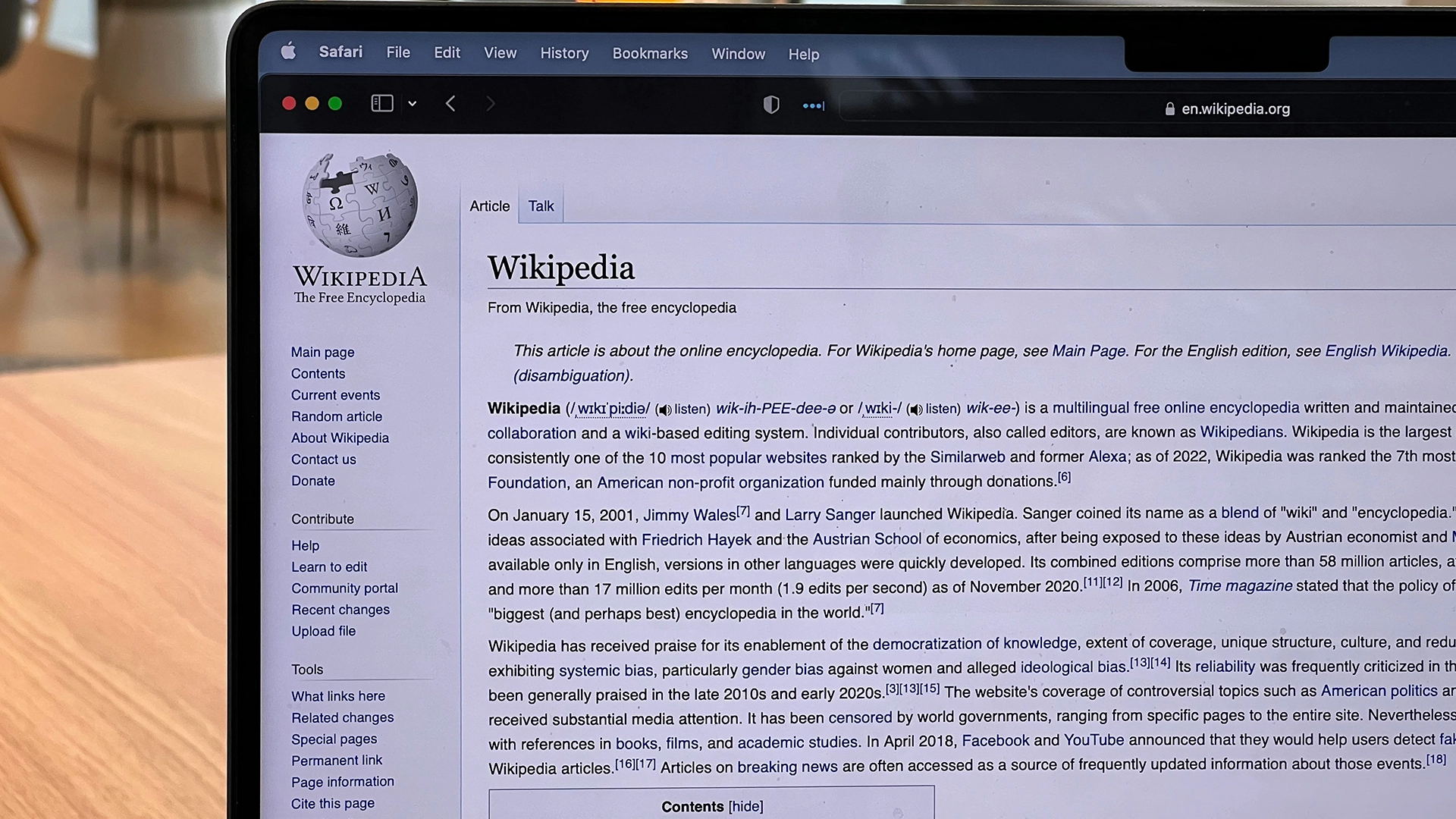
Image by Oberon Copeland, from Unsplash
AI Bots Are Overloading Wikipedia’s Servers
- Written by Kiara Fabbri Former Tech News Writer
- Fact-Checked by Sarah Frazier Former Content Manager
The Wikimedia Foundation has raised alarms over the growing pressure on its servers due to automated bots scraping data to train artificial intelligence models.
In a rush? Here are the quick facts:
- AI bots are scraping Wikimedia content at record levels.
- Bots caused a 50% rise in multimedia bandwidth use.
- 65% of high-cost traffic now comes from crawlers.
The Foundation reported in a recent post that machine-generated traffic continues to grow at an unprecedented rate while people make up only a small portion of this traffic.
“Since January 2024, we have seen the bandwidth used for downloading multimedia content grow by 50%,” the post states.
“This increase is not coming from human readers, but largely from automated programs that scrape the Wikimedia Commons image catalog of openly licensed images to feed images to AI models,” the post added.
The bots known as crawlers steal large amounts of data from Wikimedia’s projects including Wikipedia and Wikimedia Commons without proper credit or official access tools. The process makes it difficult for new users to discover Wikimedia and puts excessive strain on their technical systems.
For example, the post notes that Jimmy Carter’s Wikipedia page received more than 2.8 million views during the day he passed away in December 2024. The 1980 debate video caused a significant increase in website traffic. A video of his 1980 debate also spiked traffic. Wikimedia handled it — but just barely. The real problem according to engineers is the continuous stream of bot traffic.
“65% of our most expensive traffic comes from bots,” the Foundation wrote. Bots “bulk read” content, especially less popular pages, which triggers expensive requests to Wikimedia’s core datacenters.
While Wikimedia’s content is free to use, its servers are not. “Our content is free, our infrastructure is not,” the Foundation said. The team continues to develop methods for promoting “responsible use of infrastructure” by urging developers to use the API instead of scraping the entire site.
The problem affects Wikimedia as well as numerous other websites and publishers . But for the world’s largest open knowledge platform, it’s threatening the stability of services millions rely on.

Photo by Jonas Leupe on Unsplash
American Fintech Plaid Raises $575 Million, Reaching A $6.1 Billion Valuation
- Written by Andrea Miliani Former Tech News Expert
- Fact-Checked by Sarah Frazier Former Content Manager
The American fintech company Plaid announced on Thursday that it has raised approximately $575 million in a recent funding round, bringing its valuation to $6.1 billion—a significant drop from its previous $13.4 billion valuation in 2021. The new investment will be used to cover tax obligations and provide liquidity for employees.
In a rush? Here are the quick facts:
- Plaid announced it has raised $575 million in a funding round led by Franklin Templeton.
- The company is now valued at $6.1 billion, a significant drop since its previous $13.4 billion valuation in 2021.
- The investment will be used for tax obligations and liquidity for employees.
According to the announcement shared by Zach Perret, co-founder and CEO of Plaid, on the website, the funding round was led by Franklin Templeton among other investors such as Fidelity Management, NEA, and Ribbit Capital.
“We are excited for the years ahead,” wrote Perret. “Plaid has evolved from a business solely focused on bank linking, into a suite of data analytics products that are essential to financial services and adjacent markets.”
The CEO assured that they’ve experienced a “substantial growth” in 2024 and that now 1 in 2 people in the United States have used Plaid.
In an interview with CNBC , Perret explained that the price drop in its valuation has to do with the current market conditions. He added that in 2021, when the company surpassed the $13 billion valuation, the market was extremely favorable for the industry, but now, four years laters, the environment has significantly changed.
“The profitability of business has gotten quite a lot better, and yet we are impacted by market multiples, as many companies are,” said Perret.
In the future, Perret confirmed that they expect to go public—and this might be the company’s last private fundraiser—but that they are not ready yet for an initial public offering (IPO) yet.
“An IPO is absolutely on our path for the coming years. We haven’t assigned a specific timeline to it,” explained Perret. “We still have a lot of internal work to do. We’re not ready, which is why we didn’t consider it right now.”
The new fundings will allow employees to cash out so that they can have liquidity.
“The proceeds of this round will be used to address employee tax withholding obligations related to the conversion of expiring RSUs to shares, and to offer some liquidity to our current team,” wrote Perret on the website.
Other fintech companies have raised funding rounds in recent months. The French investment firm Karmen secured €9 million in January to expand its services, while the health fintech PayZen raised $232 million a couple of months ago.
