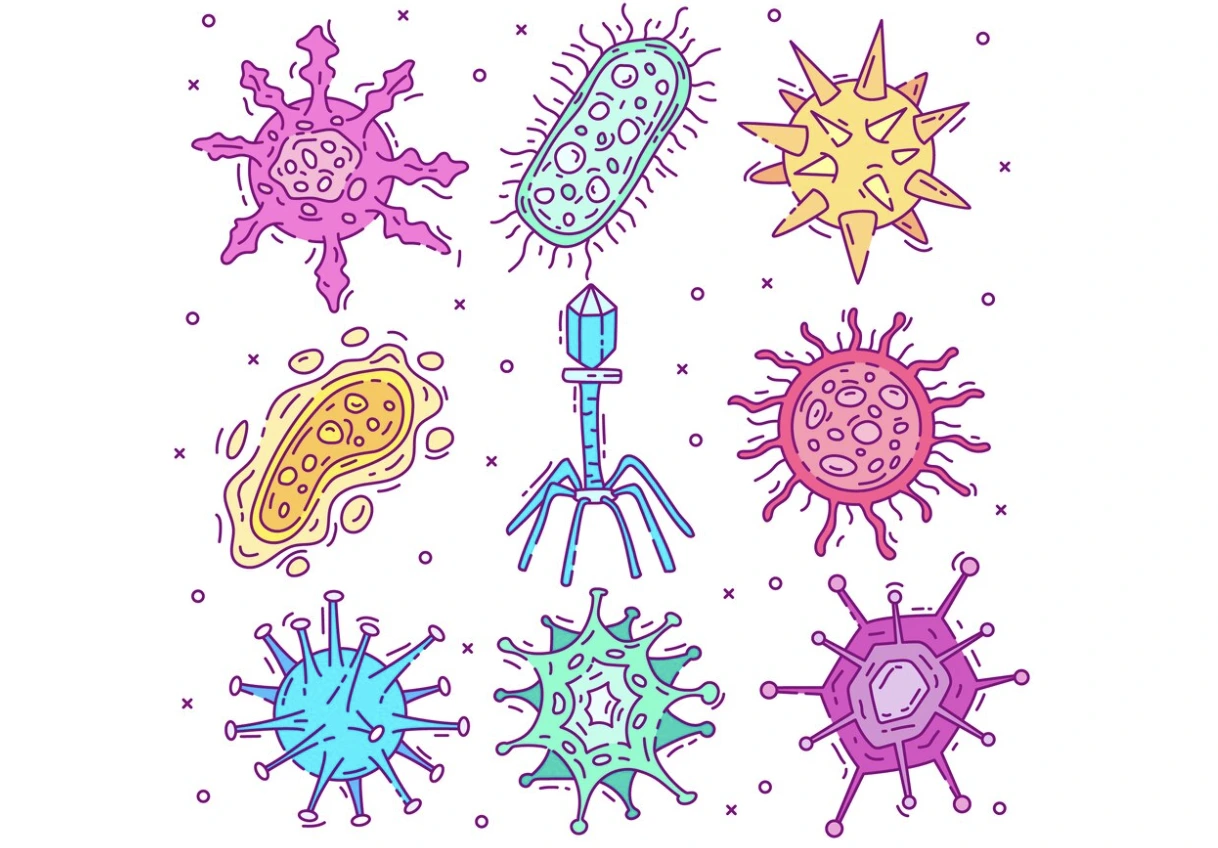
Image from Freepik
AI Advances Virology: 70,500 New RNA Viruses Identified
- Written by Kiara Fabbri Former Tech News Writer
- Fact-Checked by Justyn Newman Former Lead Cybersecurity Editor
In a Rush? Here are the Quick Facts!
- The study employs metagenomics to analyze genetic material without culturing viruses.
- Identifying new viruses is essential as some may link to human diseases.
- The AI techniques used in this study may revolutionize future virology research.
A new study published on Friday in Nature reports that researchers have used AI to identify 70,500 new RNA viruses, many of which live in harsh environments like salt lakes and hydrothermal vents.
This research applies a technique called metagenomics, which allows scientists to analyze the genetic material from various ecosystems without needing to grow individual viruses in a lab.
Viruses are tiny organisms that can infect animals, plants, and bacteria, but many remain unknown. Artem Babaian, a computational virologist at the University of Toronto, explains that there are still countless undiscovered viruses.
The article notes that identifying these viruses is important because some may be linked to diseases in humans, helping to shed light on unexplained illnesses.
Previous research has also used machine learning to find new viruses, but this study goes further by including predicted protein structures in the analysis. The AI model used here combines genetic sequencing data with a protein-prediction tool called ESMFold, developed by Meta.
This study follows the recent Nobel Prize win for Google DeepMind’s AlphaFold, which made significant advances in protein structure prediction.
Finding new RNA viruses is crucial because these viruses change quickly, making them hard to identify. Researchers typically look for a specific part of the virus’s genetic code that helps it replicate, called RNA-dependent RNA polymerase (RdRp). If the genetic code of a new virus is very different from what is already known, it might be overlooked.
In earlier work, Babaian and his team examined 5.7 million genomic samples available online, discovering nearly 132,000 new RNA viruses in 2022.
The current study builds on this by using a model called LucaProt, based on a transformer architecture similar to what powers AI tools like ChatGPT. This model helped researchers find around 160,000 RNA viruses , almost half of which had not been documented before.
In parallel, Microsoft recently announched innovations within its Healthcare platform , emphasizing AI’s role in advancing medical care. Their new healthcare AI models facilitate the integration and analysis of various data types, including medical imaging and genomics.
The application of AI in virology offers a way to explore the vast number of viruses that have not yet been studied, potentially leading to important findings for both public health and environmental science.

Image from Freepik
Hurricane Milton Survivors Gain Access To Broadband Discounts, But Challenges Remain
- Written by Kiara Fabbri Former Tech News Writer
- Fact-Checked by Justyn Newman Former Lead Cybersecurity Editor
In a Rush? Here are the Quick Facts!
- The FCC announced a six-month waiver for Hurricane Milton survivors.
- Survivors can access discounts on fixed and mobile voice and broadband services.
- Eligible individuals receive up to $9.25 off broadband and $5.25 off voice service.
In response to the devastation caused by Hurricane Milton, the Federal Communications Commission (FCC) has announced on Friday a six-month waiver aimed at providing significant discounts on fixed and mobile voice and broadband services to impacted residents.
This initiative allows survivors to access the Lifeline program , ensuring they can stay connected during their recovery process. The Lifeline program offers low-income households financial relief by providing monthly discounts on essential communication services.
Eligible individuals can receive up to $9.25 off their broadband internet access and up to $5.25 off their voice service, whether fixed or mobile. For residents on qualifying Tribal lands, the discounts are even more substantial, with savings of up to $34.25 per month.
Economic assistance is crucial for Hurricane Milton survivors, who need reliable communication to stay in touch with emergency services, coordinate relief efforts, and connect with loved ones.
To facilitate access, the FCC has waived certain Lifeline eligibility rules, allowing survivors receiving federal disaster assistance or participating in the Disaster Supplemental Nutrition Assistance Program (D-SNAP) to qualify for the program.
This streamlined approach broadens access to affordable communication services for those who need it most in the wake of the hurricane. The Universal Service Administrative Company (USAC), which manages the Lifeline program, has implemented a simplified application process for survivors impacted by Hurricane Milton.
Those receiving individual assistance from the Federal Emergency Management Agency (FEMA) can apply through this new eligibility category.
While these discounts can help alleviate some financial pressure, it is important to recognize that $9.25 is not a life-changing amount for many families grappling with the aftermath of a natural disaster. For those facing significant expenses related to housing, food, and healthcare, such a small discount may barely make a dent in their overall financial burdens.
Elon Musk is also offering free internet access to victims of Hurricanes Milton through his company, Starlink. While Musk claims that this service has been “accelerated” for disaster-affected areas, victims must still purchase a Starlink starter kit for nearly $400, as first reported by The Register .
This requirement raises questions about the overall utility of the assistance, as many survivors may struggle to afford even this initial cost.
